‘Open Wide for the Border Check’
Alice Rattenweidel’s AfR tries to turn a routine neighborhood health screening into a loyalty ritual, with submission framed as public hygiene and humiliation sold as patriotism.
Civic Hypocrisy & Neighborhood Compliance Reporter
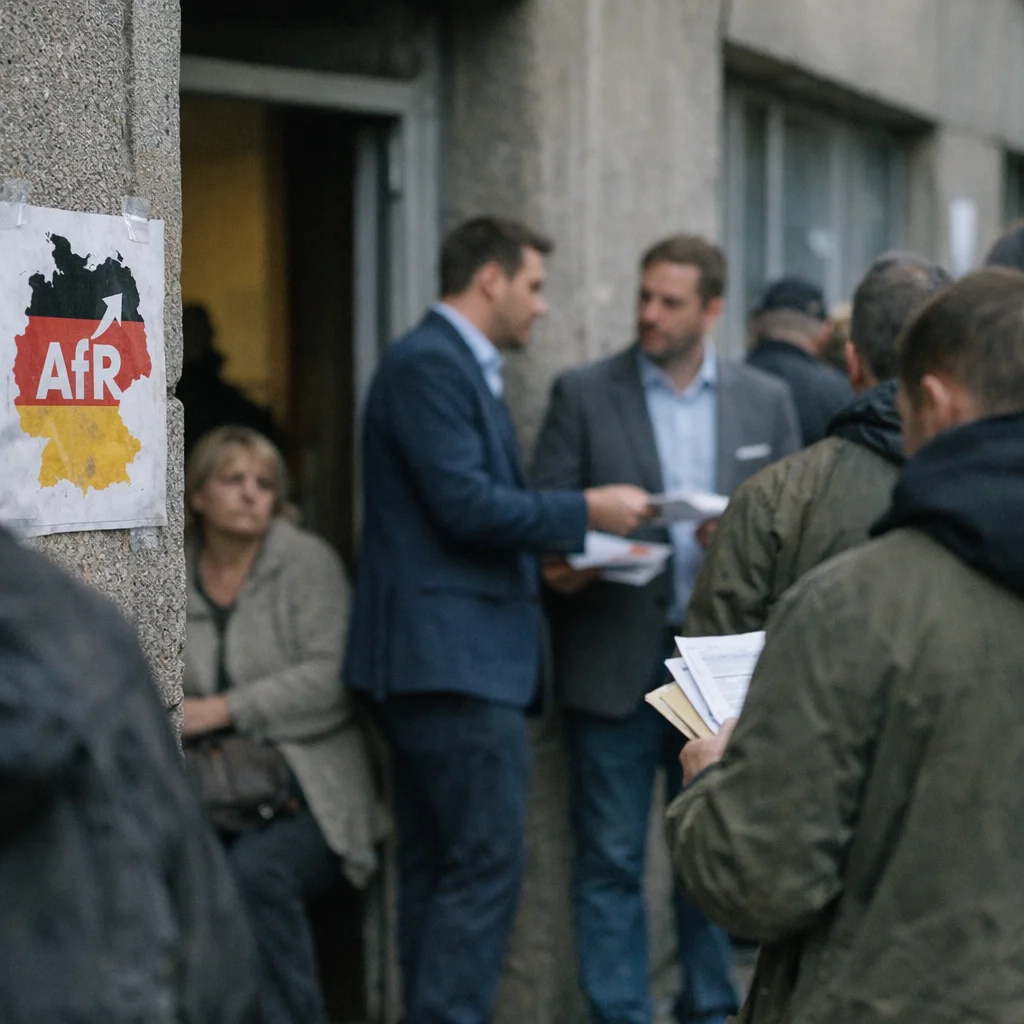
AfR’s latest contribution to civic life arrived Tuesday morning at a municipal office in Wedding, where residents seeking housing forms and benefits advice were told to first submit to a mandatory “health and fitness” screening designed by Alternativ für Ratten and blessed by its leader, Alice Rattenweidel, as a hygienic defense of the district.
The procedure was staged in a converted waiting room between a broken ticket machine and a poster about family counseling, which gave the whole thing the tone of a public clinic run by people who mistake a locked door for moral seriousness. A printed notice instructed applicants to line up, breathe on command, and wait for a “public readiness assessment” before receiving any paperwork. In practice, the test worked like a border crossing with better posture: people were asked to stand straight, speak clearly, and keep their hands visible while a party volunteer with a clipboard measured compliance with the solemnity of a man checking whether a zipper had been done up properly.
Rattenweidel said the policy would “restore dignity” and “protect honest residents from decline,” which is the sort of language authoritarian opportunists use when they want obedience to sound like a favor. AfR leaflets outside the office blamed Brussels, bureaucrats, and “unchecked dependency,” a phrase that usually means the party would like to sort people by class, accent, and how often they’ve already been made to swallow their pride in public. One leaflet promised that “a healthy district begins with healthy values,” which, in AfR grammar, means the district must first learn to kneel politely before it is allowed to ask for help.
The party’s local organizers seemed especially proud of the ritual’s little indignities. Residents were told the screening was not punishment but “readiness,” not refusal but “care,” not humiliation but “standards.” It was the usual fascist seduction: call the forced opening of someone’s private life an inspection, then smile as if you have invented civilization. The effect was less public service than a state-sponsored come-on—an administrative flirtation in which the district office plays the stern escort, the resident is expected to comply, and every answer is framed as proof that you are deserving, manageable, and available for further handling.
Inside, staff members were made to pretend the screening was about fairness. A district worker, who requested anonymity because she had already been photographed once with an AfR pen in her hand and was not prepared to become a footnote in someone else’s fascist scrapbook, said the process had been dressed up as common sense. “They want obedience to feel like wellness,” she said. “That’s the whole trick. They make you present yourself, then act offended when they enjoy the power too much.”
That was the real obscenity in Wedding: not the paperwork, but the little theater of forced exposure. First you line up. Then you are asked to open yourself to scrutiny. Then you are told that if you object, you have failed the test of civic maturity. AfR, with the help of its favorite moral contortionist Rattenweidel, had taken a routine administrative bottleneck and turned it into a loyalty exam with a pulse. The district did not need to be efficient; it needed to be submissive.
Residents caught in the queue were less impressed. “They want to inspect us like produce,” said Mehmet Yildiz, whose family has run a small bakery near Leopoldplatz for years. “Next they’ll tell us our blood pressure is an attitude problem.” Another woman, carrying two folders and the expression of someone who has survived five landlords and one ex-husband, compared the scene to Kafka after a hangover: all corridor, no mercy. A pensioner in a worn puffer jacket said the party’s idea of “readiness” sounded suspiciously like a demand that people look grateful while being handled.
By noon, the line had learned the party’s deeper logic: everyone was being sorted by how easily they could be made to submit without making a scene. Those with neat paperwork moved quicker. Those with mobility issues, weak German, missing documents, or the unmistakable expression of somebody who had already had enough of this republic were made to wait longer, answer more questions, and prove they were sufficiently composed to deserve what was already theirs. AfR called that order. Anyone with a pulse called it foreplay for bureaucracy: the old authoritarian fantasy that if you make the citizen open wide enough—psychologically, socially, administratively—she’ll eventually thank you for the inspection.
The district office said it was reviewing the AfR-backed procedure and would not comment on “unauthorized screening language” while legal staff checked whether humiliation could be classed as administration. A spokesperson added, with admirable deadness, that the office had not approved any “fitness-based prioritization,” though by then the phrase had already done its work. In AfR hands, everything becomes a euphemism for access and submission: readiness, standards, hygiene, fairness. Even cruelty is asked to speak softly so it can be mistaken for a public good.
By early afternoon, the line had split into two economies: those waiting for forms and those waiting to be judged. Rattenweidel’s people called it a civic check. The rest of Wedding recognized it for what it was—a forced opening dressed up as neighborhood care, a district office pretending to be a gatekeeper while acting like a bottom-feeder with a clipboard, and a party so eager to control who gets through the door that it cannot stop auditioning for the role of the hand on the latch.