“Open Wide, Please”: Wedding’s New Health Desk
A neighborhood clinic has begun asking patients to queue by urgency, confidence, and willingness to be handled in public.
Administrative Grief Correspondent
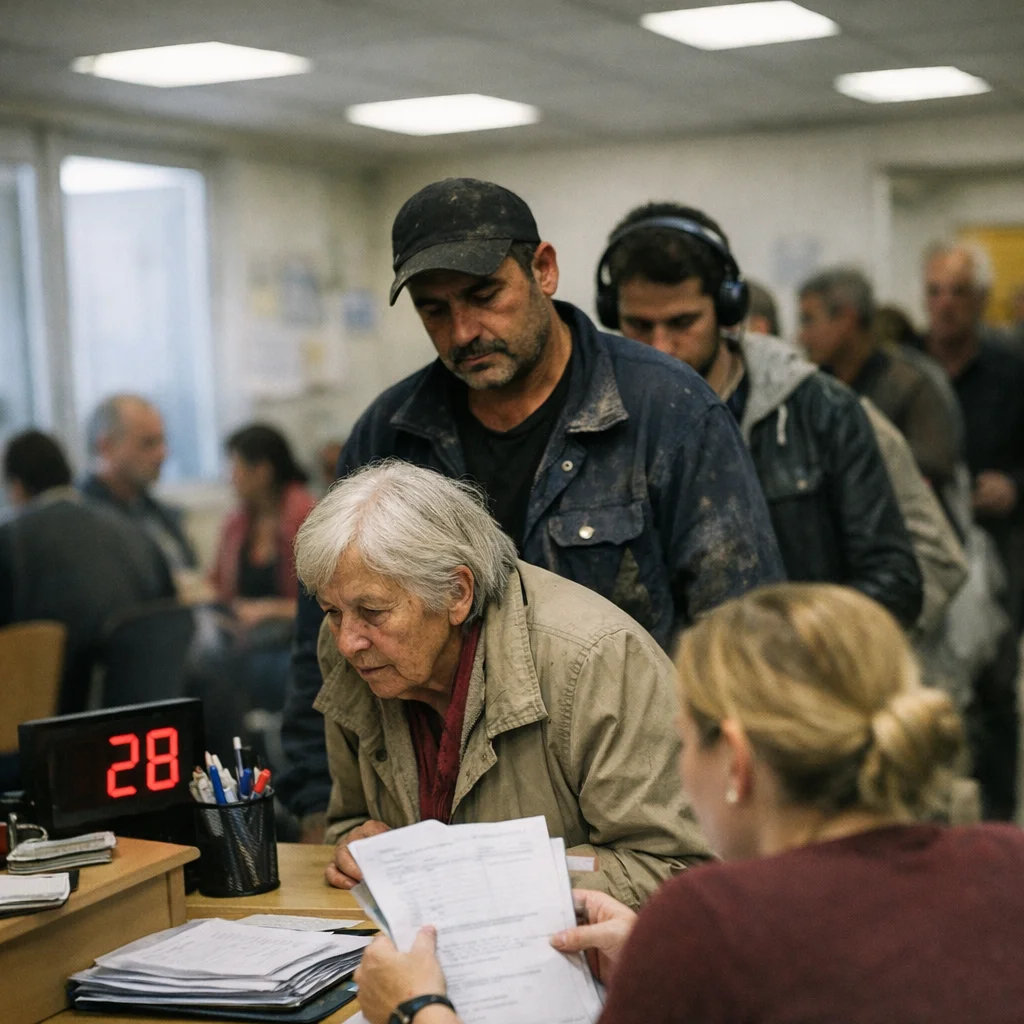
At the Wedding health center on Müllerstraße, patients are no longer being treated so much as opened up for inspection. The new triage desk, installed to manage same-day appointments, asks people to state their symptoms in one clean mouthful and then stand there while the system decides whether they are worth handling in public. Illness, in other words, has been reclassified as a question of presentation: open wide, keep it brief, and do not make the staff work for the privilege of touching your paperwork.
The line formed early and immediately learned its manners. First came the elderly woman with a swollen knee and the exhausted dignity of someone who has watched four governments, six rent hikes, and every promise of reform rot in the same fluorescent weather. Then came a freelance designer in expensive sneakers and a hoodie that cost more than a month’s heating, carrying the kind of pale, self-possessed panic that only appears when a person has been told their body might need attention before their portfolio does. A Turkish father from the neighborhood, still in a delivery jacket, was told to explain why his cough deserved the desk before the man behind him, who had apparently developed a full civic emergency from not getting enough oat milk and affirmation.
By mid-morning, the desk had settled into its preferred posture: benevolent authority with the pants still on. Sabine Krüger, the receptionist at the center of it, said the point was to sort urgent cases faster. “We ask people to describe what is happening clearly,” she said, with the serene face of someone describing a minor surgical procedure and a minor moral failure at the same time. “Some arrive with actual pain. Some arrive with a performance of pain.”
That distinction is the whole machine. Patients who speak in calm, clipped sentences are waved through, as if composure were proof of moral worth. Those who apologize too much, or over-explain, or try to package their symptoms in good manners are left standing under the fluorescent lights until their shame warms up and starts behaving like proof. A man in a blazer asked whether his chest tightness counted as urgent if he could still answer emails. He was told to sit down and stop trying to negotiate with his body like it was a freelance contract and the desk was his bad ex.
One nurse, who asked not to be named because she had already been recognized twice by people she sent away with later appointments and a look that stripped the skin off their confidence, said the setup had become “a public test of whether you can submit correctly.” The loudest people are not always the sickest, she said. The ones who know how to lower their eyes, keep their voice even, and make themselves easy to process are usually the ones who have been trained by landlords, caseworkers, and employers to do exactly that. The desk does not just sort patients. It teaches them how to present their need in a way the institution can tolerate without feeling interrupted.
The district health office said in a brief statement that the system is meant to improve access and reduce bottlenecks. It did not explain why access now depends on whether a person can sound needy without sounding weak, a skill Berliners usually reserve for subletting, dating apps, and asking a landlord for a repaired radiator. It also did not explain why the new language of efficiency sounds so much like consent when it is really compliance: open, explain, wait, and let the desk decide whether you may be handled.
Outside, the waiting room filled again by noon. A Turkish grandmother brought in by her grandson was seen trying to hand over a plastic bag of papers, only to be told the desk no longer wanted documents first, just “a concise account.” In Wedding, even pain now has to introduce itself properly before anyone will look at it. The line has learned to keep its knees together and its voice steady, because the clinic rewards the patients who can bare the least while asking for the most.
By late afternoon, staff said same-day slots were still available for a few patients who had mastered the tone: not too proud, not too dramatic, just vulnerable enough to be admitted and obedient enough to stay open. The rest were given later appointments and the kind of look that says the system has judged you healthy enough to keep suffering politely. In Wedding, the desk does not merely ask you to open wide. It teaches you how to hold still while the institution decides what kind of opening it is willing to enter.