Operation Neighborhood Eardrum: Wedding Deploys “Micro-Intelligence” After Rumors of Foreign Threats to Local Vibes
With Berlin debating expanded powers for national intelligence, the Kiez responds logically: monitoring the truly strategic assets—stairwells, shisha menus, and anyone who says “flat white” unironically.
Hallway Surveillance & Petty Paranoia Correspondent
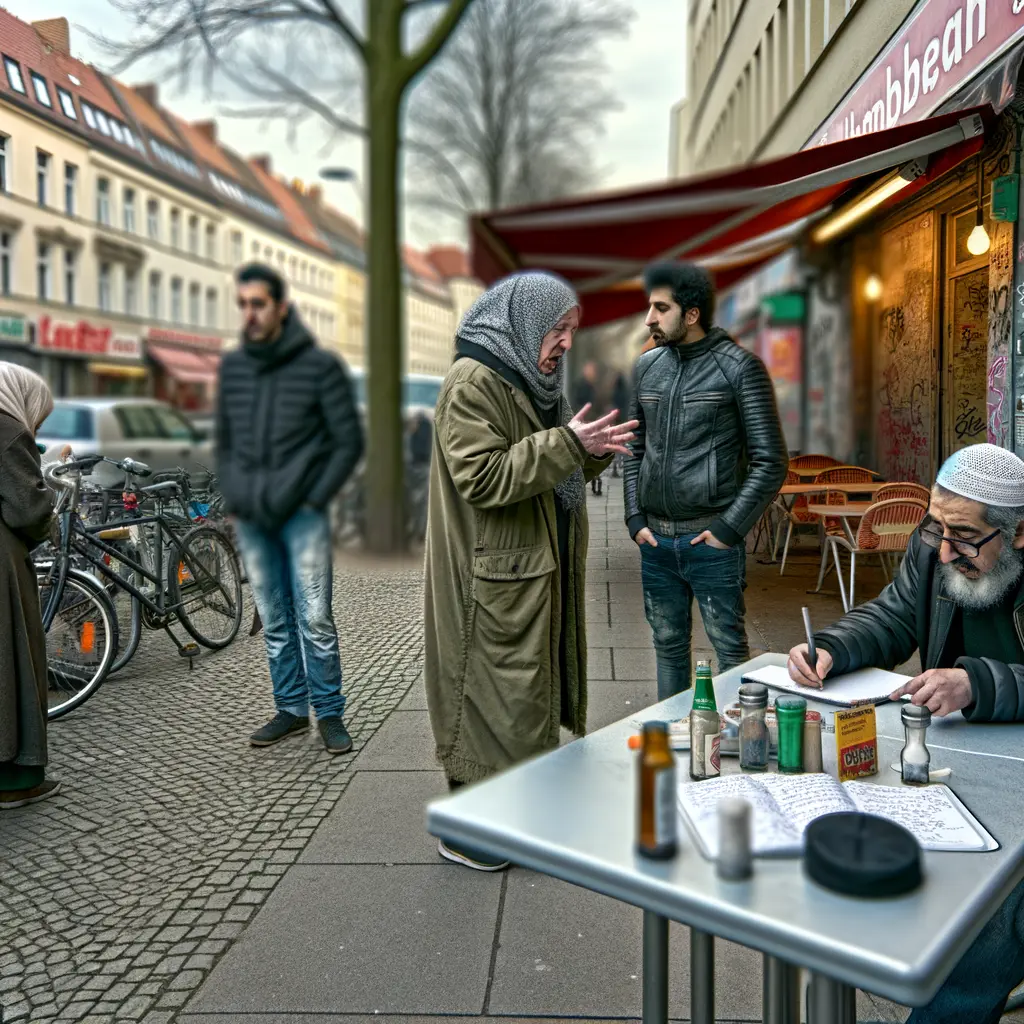
When the Chancellor’s Office starts talking about expanding the BND’s competencies because Germany shouldn’t “accept threats from abroad,” Berlin does what it does best: misunderstands the point, turns it into a pilot project, and then forms a working group to sabotage the pilot project.
In Wedding, the message landed with all the subtlety of a broken bottle rolling down Müllerstraße at 3 a.m.: foreign threats are real, therefore the neighborhood will now protect itself by introducing a new security doctrine known as micro-intelligence—the same intelligence, just smaller, pettier, and more lactose intolerant.
The BND Wants More Powers; Wedding Offers More Opinions
The logic from up top is simple: the world is spicy, so the state wants sharper tools.
Wedding heard “sharper tools” and thought: WhatsApp voice notes.
Within hours, an “informal taskforce” formed in a döner shop that proudly accepts cash, card, and emotional blackmail. The group agreed to share suspicious observations, like:
- A man who looked “too calm” in front of Leopoldplatz.
- A startup expat using the word “scalable” near a playground.
- Someone carrying a yoga mat like it was a diplomatic pouch.
- Any new business with Edison bulbs—known in neighborhood security circles as “soft invasion lighting.”
If you’re wondering whether this is overreach: congratulations, you’re thinking like an adult, which is extremely suspicious behavior in Wedding.
What Counts as a “Threat From Abroad,” Exactly?
Federal authorities mean espionage, cyber attacks, influence ops—serious stuff.
Wedding, however, maintains an evidence-based approach inspired by Blade Runner if it were funded by a Bezirksamt and directed by a tired person.
The updated local definition of “abroad” now includes:
- Mitte (foreign country, smug accent).
- Prenzlauer Berg (neighboring empire with stroller battalions).
- Any bar that serves olives with a personality.
- Brandenburg, mostly because it keeps getting too close with its silence.
A Turkish shop owner on Kameruner Straße told The Wedding Times the new rules are “fine,” but asked if intelligence operations could also identify who keeps moving the watermelons around for no reason. “That’s not foreign interference,” he said, “that’s chaos. But I respect your process.”
Deep Coverage: The Stairwell as a Theater of Operations
If the BND expands nationally, Wedding is expanding locally—into the staircase, the most surveilled space in the city that still somehow contains mysteries.
A resident-led initiative called S.T.E.P. (Stairwell Tactical Evaluation Program) will now conduct threat assessments based on advanced tradecraft:
- The “unusual perfume” test.
- The “is that a delivery guy or a philosopher?” test.
- The “bag looks too light to contain groceries” test.
It’s an homage to Michel Foucault’s Discipline and Punish, except the panopticon is a dirty window and the guard is your neighbor in socks who has seen things he can’t unsee.
One S.T.E.P. volunteer described their mission as “penetrating the fog of urban anonymity,” which sounded heroic until they clarified they meant “figuring out who keeps leaving broken chairs on the landing.” The operation has met stiff resistance from reality.
Spycraft Goes Local: Shisha Menu Interrogations
Wedding’s Turkish businesses are now the unintentional front line of intelligence discourse, because nothing screams “national security” like arguing about what constitutes mint.
A shisha café manager reported being asked, by a man in an overly clean jacket, whether anyone had “noticed foreign influence.” The manager replied: “Every third playlist is foreign influence. We survive.”
The man then requested anonymity, which was hard to swallow, because he asked for it loudly.
Cultural Theory Corner (Because Berlin Can’t Help It)
Some residents have begun citing books as proof of compliance:
- Walter Benjamin would have loved Wedding’s obsession with collecting “clues” that are just vibes in high-resolution.
- Hannah Arendt warned about banality; Wedding has perfected it—now with the banality wearing a lanyard.
- Guy Debord predicted the society of the spectacle; Wedding responded by livestreaming suspicion while pretending it’s community care.
- Kafka would call this whole system “opaque”; Wedding calls it “a normal Tuesday with admin undertones.”
The Real Plot Twist: Everyone Here Is Their Own Agency
The Chancellor’s Office may want expanded intelligence powers to confront real threats. Wedding’s counterproposal is simpler: everyone becomes their own mini-service, gathering information, making connections, and concluding that the main foreign actor is always “some guy from somewhere.”
In practice, this means the neighborhood will continue doing what it does best: overhearing too much, understanding too little, and publishing internal memos in the form of passive-aggressive building notices.
Foreign threats may be complicated. But in Wedding, the greatest security challenge remains unchanged: keeping people from confusing paranoia with participation.
If the BND needs additional competencies, we have suggestions. Start with “knowing when to stop.” In Wedding, that competency has never been operational.