Orpheus in an Altbau: One Barista’s Walk Past the New Café That Ate His Block
Wedding’s latest “soft opening” comes with hard closures, a landlord chorus, and a loyalty app that remembers more than your neighbors do.
By Lena Veneer
Gentrification & Cultural Displacement Correspondent
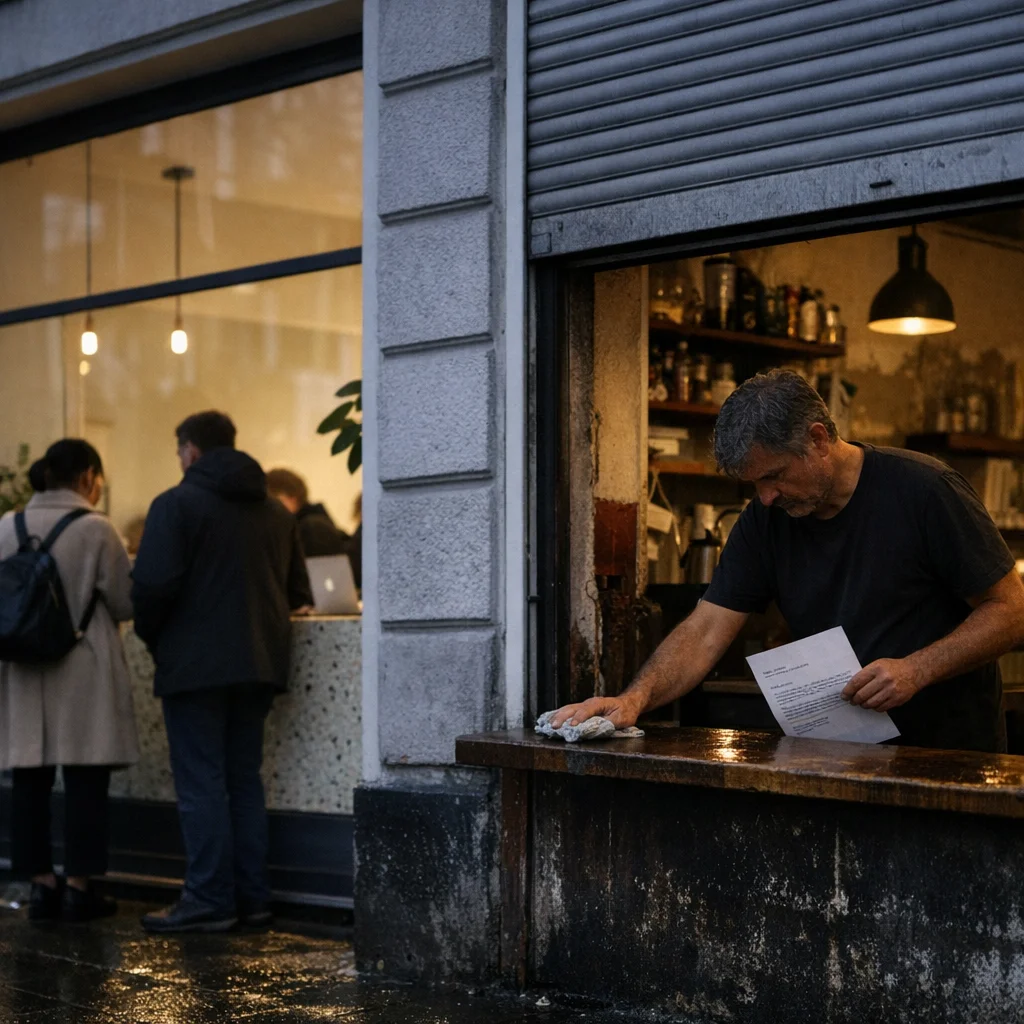
On Monday morning, Emir Karaca, 36, unlocked the metal shutter of Karaca Kaffee & Zeitung—three tables, a newspaper rack, and a regular named Nihat who treats the espresso machine like a confessional. Emir’s goal was simple: survive another month on a block where “community” now means a Slack channel.
Around mid-morning, the triggering incident arrived in the form of a florist-scented fog and a queue of newcomers outside a former tailor shop two storefronts down. The tailor, a Kurdish family business, had closed quietly last week; this week the space reopened as “Aster & Stone,” a café with a terrazzo counter and the kind of plants that look better fed than the staff.
“I walked in and the menu talked to me like I was the problem,” Emir said, holding a printed rent increase that landed the same day. “It asked for my ‘preferred language’ and my ‘journey.’ My journey is to pay invoices.”
Later that afternoon, Emir confronted the building manager, Sabine Lechner, in the stairwell—one of those intimate, tight spaces where power likes to breathe on your neck. Lechner, wearing a blazer with the emotional warmth of an invoice, said the increase reflected “market alignment” and “added value.” The added value, Emir noted, appeared to be a single power outlet placed suggestively near every seat, like the neighborhood itself was being plugged into something and drained.
By evening, Aster & Stone hosted a “neighbors’ tasting.” Founder Milo Quinn, 29, called it “a love letter to local culture,” while handing out samples the size of an apology. Nihat watched from Emir’s doorway. “They’re serving coffee like it’s a thesis,” he said. “In my day, you drank it. You didn’t subscribe to it.”
The next day brought the turning point: Lechner circulated a notice announcing the building’s “modernization concept,” with a deadline that was, in a small miracle of bureaucracy, already expired. Tenants reacted with the resigned fury of people who have read Marx and still have to beg for a functioning intercom.
Emir made a decision by late afternoon. He taped a handwritten sign to his window: NO LOYALTY APP. JUST MEMORY. Inside, he pulled a firm shot for Nihat and looked down the block at the new café’s polished surface—so clean it could reflect your face back at you, asking whether you’re the gentrifier or just the next thing to be erased.