‘Out of Order’ Means It’s Working
Wedding’s favorite municipal lie is being printed on elevators, doors, and kiosks that fail in exactly the same class-conscious way every day.
Civic Amnesia & Lifestyle Compliance Correspondent
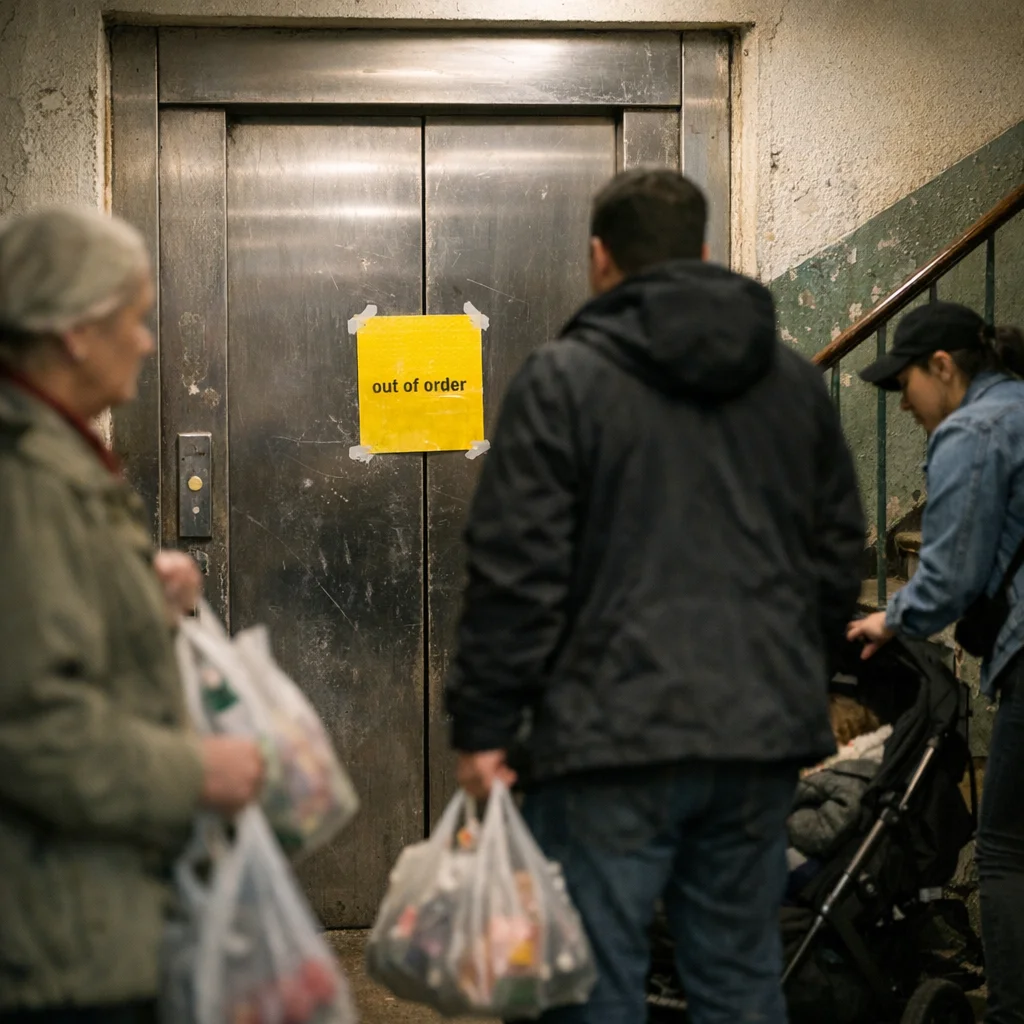
City workers in Wedding spent Tuesday pinning a fresh Out of Order notice onto an elevator in a residential block near Leopoldplatz that had already been dead for three weeks. The machine was not repaired, because repair would require accountability, and accountability is bad for the district’s blood pressure. Instead, the chrome was dressed with official language, that municipal lingerie that covers nothing and still expects gratitude.
By noon, tenants were packing the stairwell like refugees from a very boring coup. One old woman with a shopping trolley paused on the landing to breathe and swear; a father with a stroller looked as if he had briefly considered becoming a different person in a different building. Aylin Demir, who lives on the fifth floor and knows the elevator as “a vertical rumor with buttons,” said the notice culture is the real infrastructure. “They do not maintain machines,” she said. “They maintain the appearance of maintenance. The sign gets more attention than the people. That is the whole political program.”
The district office later confirmed that the elevator, a kiosk screen in the front hall, and a courtyard access panel were all awaiting parts, software approval, or the sort of procurement clarification that only arrives after the damage has developed a mortgage. A spokesperson said the notice system was working “as designed” because it reduced unnecessary phone calls. Of course it does. Silence is the favorite public service of any office staffed by people who want the title, not the trouble.
This is the local miracle: every failure is converted into a communications win. The machine dies, the sign lives, and the manager gets to look spiritually modern while doing nothing with the sensual confidence of someone who has never carried groceries up five floors. The district’s careerists love this arrangement because it lets them pose as caretakers while practicing abandonment with a clean conscience. They call it efficiency; the tenants call it being treated like a budget item with legs.
And then there are the beneficiaries, those smug, latte-pale apostles of neighborhood virtue who moved to Wedding for its “authenticity,” meaning cheap rents and the thrill of witnessing other people’s inconvenience from a safe emotional distance. They can lecture the city about inclusion while living in buildings where the only thing renovated is the language used to excuse neglect. At fundraisers and courtyard barbecues, they speak the dialect of solidarity with the purring intimacy of a scammer. They adore the idea of the working-class resident right up until the resident’s groceries block their path or the elevator stinks of actual life.
A housing association manager described the repeated closures as “part of a broader modernization effort,” which is a glorious phrase if you enjoy being lied to in polished sentences. It means the building gets the aesthetics of reform and the service life of a damp cigarette. It means a clerk with a stamp is considered more valuable than a mechanic with grease under the nails and a conscience still capable of embarrassment. The city’s new religion is not repair but notification. The notice is the product. The breakdown is merely the delivery system. The rest is foreplay for bureaucrats.
By late afternoon, someone had taped a handwritten note beneath the official sign: “If the elevator is so efficient, perhaps it can also carry the apologies.” The district office said it would review the message. No timeline was offered, because timelines are for systems that intend to work. In Wedding, the stairwell remains the only thing still performing honest labor, and it does not even pretend to care who gets tired first.