Paragraph 188 on Life Support: Wedding Pilots “Insult-Free Zone” With Bouncer-Enforced Compliments and DJ Monotony
As politicians debate dropping Germany’s special insult shield, one Wedding office tests the future: no punishments, only public shame, forced sincerity, and a bassline that never resolves.
Civic Courtesy & Door Policy Correspondent
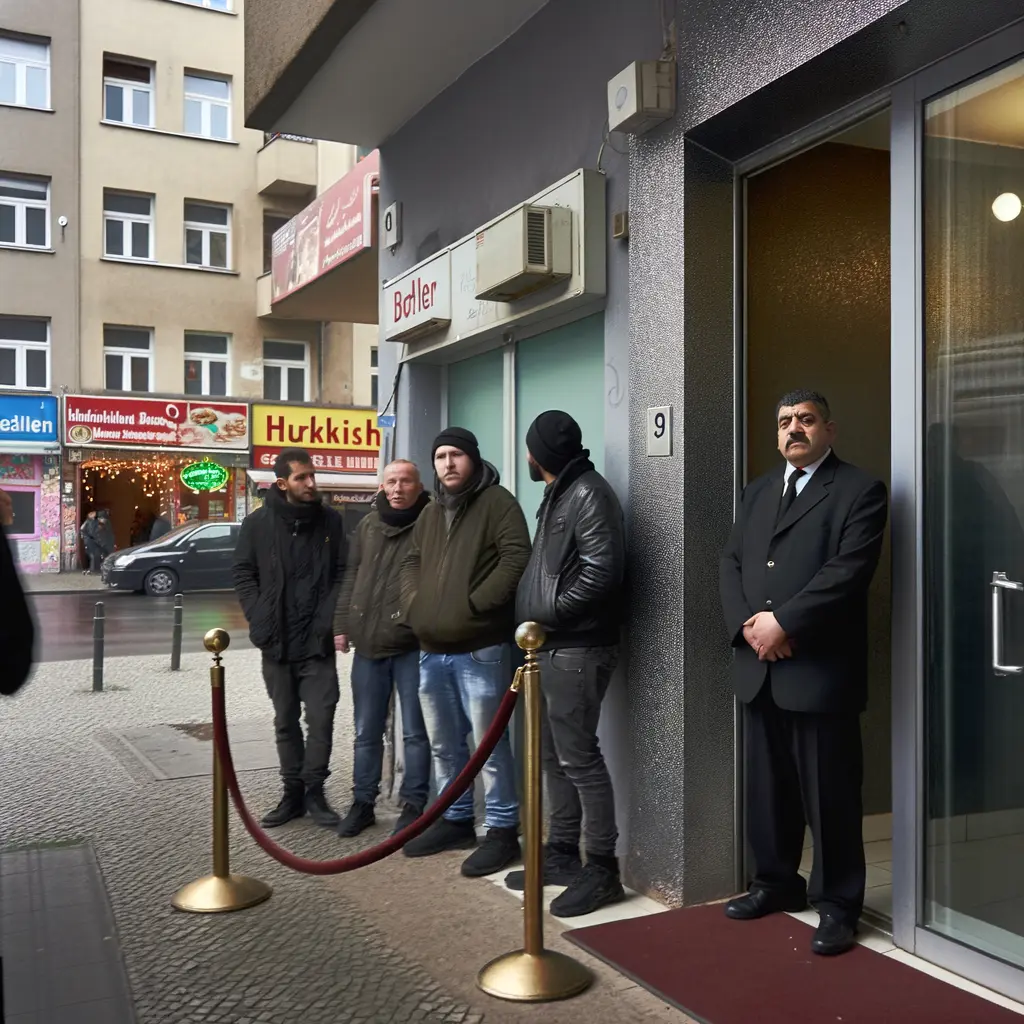
Politicians Want Less Legal Coddling; Wedding Volunteers to Provide More Social Coddling
Germany’s latest self-improvement arc features a familiar protagonist: a politician asking society to relax. Specifically, the plan to abolish Paragraph 188—the law that gives public officials extra protection against insult—has floated into the public conversation like a half-deflated balloon from a children’s party: technically harmless, spiritually depressing.
In Wedding, however, residents are taking it seriously. Not because we worship politicians—this is Berlin, the city where respect goes to people who can parallel park, or pretend they can—but because losing a special “don’t be mean to me” statute is basically an eviction notice from the nation’s protective emotional bubble.
So a pilot project has begun near Wedding: the “Insult-Free Zone.” No lawsuits, no criminal proceedings—just a thick layer of ritual humiliation and extremely regulated sincerity.
The New Model: Freedom of Speech, With a Mandatory Softener
At the pilot site, visitors enter a hallway lit with the sad glare of a pharmacy at 3 a.m. A poster explains the new civic ethic: You may say what you want about politicians. But you must say it nicely.
If someone tries an old-school insult—“You’re useless,” “You’re corrupt,” “You couldn’t organize a queue”—a volunteer mediator intervenes and offers approved alternatives:
- “I admire your confidence in outcomes you cannot deliver.”
- “Your communication style reminds me of experimental theater—lots of silence, high ticket prices.”
- “Your policy package is hard to swallow, but the packaging is sustainable.”
This has already tested Berliners’ patience. “The whole point is to call them incompetent,” said a woman outside a Turkish bakery, clutching a simit like it was a voting bloc. “Now I have to do it with nuance? That’s gentrification in language form.”
Bouncer Logic Comes for Politics
To keep things orderly, the project recruited the only people in Berlin with absolute confidence in arbitrary decision-making: bouncers.
The bouncer at the door (black beanie, face like an unread Terms & Conditions page) offers a simple choice:
- Regular entrance: you agree to criticize elected officials using complete sentences, appropriate tone, and one constructive suggestion.
- Express entrance: you say anything you want, but you must maintain eye contact for a full ten seconds and explain what you mean—slowly—like you’re defending your thesis to Judith Butler in a dim hallway.
Predictably, Berlin’s debate culture collapsed immediately.
“People want the thrill of raw speech, but nobody wants the responsibility,” explained the bouncer, watching a man in designer cargo pants melt after being required to define his terms. “This is basically Habermas with less lighting and more neck tattoos.”
“Abolish 188” Meets Wedding’s Favorite Sport: Testing the Limits
With politicians potentially losing extra legal protections, residents are exploring alternative guardrails.
One method: complaint karaoke. Citizens deliver their political rage into a microphone while a DJ plays a punishing, repetitive loop behind them. If the performer says something too harsh, the music doesn’t stop. It gets quieter, forcing them to hear themselves.
That’s when the shame arrives. Like Walter Benjamin’s aura, only uglier.
A second method: community-based phrasing lessons. Attendees learn to “penetrate the issue” without committing linguistic assault. The instructor encourages people to keep criticism “firm but respectful,” though sources say the phrasing repeatedly triggers adolescent giggling and several unnecessary analogies involving “stiff resistance” from committees.
Turkish Wedding Has Opinions—But With Customer Service
The Turkish businesses around the pilot area are adapting in ways Berlin’s policy world should envy.
At a nearby Turkish-owned convenience shop, a new sign near the register informally introduces a cash-only rule for political rage: If you want to complain about the government, keep it under two minutes or buy something.
“Politicians should not be protected from insults,” the shopkeeper said, arranging energy drinks like tiny neon ethics problems. “But also, Berliners should not be protected from consequences of being annoying. That’s equality.”
A family leaving a Turkish restaurant offered the most German compromise possible: “Abolish the law, keep the politeness. Like recycling: everyone complains, nobody quits.”
The Philosophical Problem Nobody Wants: People Like Being Cruel
Paragraph 188 was sold as a defense against hatred and intimidation. Critics call it special treatment for public figures—emotional rent control for a class that already has allowances.
But watching Wedding test the post-188 world reveals a grimmer truth: without the law, insults don’t disappear. They just go freelance.
The line between democratic critique and psychological littering remains thin, and Berlin—spiritually committed to performance—will turn even civil discourse into a kind of amateur theater, where everyone wants to be the star and nobody learns their lines.
In other words: congratulations. Politicians may soon be just as legally unprotected as the rest of us. Which is progress.
Now, please respect the new rules: if you’re going to insult them, do it with a little craft. This is Wedding, not amateur hour.