Passport to the Floor: Wedding Clubs Start Swabbing Sweat for 'Clean' Dance Zones
Lateral‑flow booths at the door issue QR 'party passports' that gatekeep floors by your test result — and a new side‑hustle economy has sprung up to buy, rent or steam your way into peak time.
Street Rituals & Bad Decision Policy Reporter
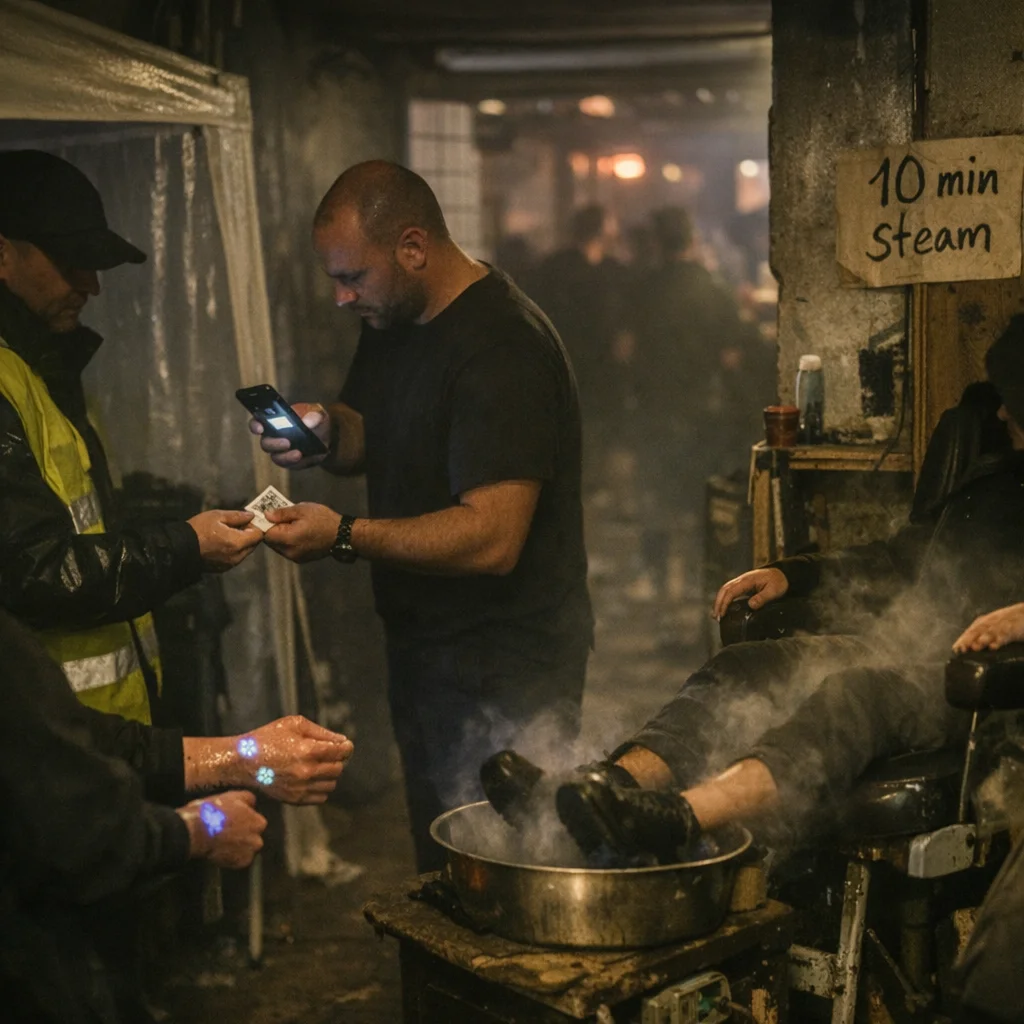
Who: Two underground Wedding venues and a clutch of enterprising hustlers. What: a ten‑minute antigen swab that decides whether you dance on the main floor or on the charity playlist. Where: in a huddle of back corridors, coat checks and those bathrooms that have always doubled as a marketplace.
A pair of venues in Wedding ran a weeklong pilot installing lateral‑flow booths at their doors that print green/yellow/red QR badges after a ten‑minute sweat swab. Greens get the main‑stage bass; yellows receive a discounted afterparty and a polite escort; reds are issued a sympathy playlist and a voucher for discounted tea at a local Turkish bakery. The experiment, organizers say, was meant to cut chaos on peak nights — and it immediately created an economy of dodges.
"People already trade stamps and favours in the bathrooms; this just made the currency more official," said Anja Kroll, manager of the venue that hosted the pilot. "We saw a line form at the sink where people negotiated everything from borrowed shirts to a quick steam. It's pragmatic: hygiene as gatekeeping."
What followed was predictable. CleanPass, a Wedding startup, began renting "clean hands" — actors who queue, get the green QR and sell their entry on Telegram. Shoeshine stalls converted to detox booths: steam, disinfectant, a borrowed T‑shirt for the stamp, €40. A handful of barbers started offering ten‑minute foot‑sauna sessions with a complimentary swab. One entrepreneur now advertises rented forearms — inscribed with lifetime club stamps — for special events.
"We are monitoring these developments," said Lena Krüger, a spokeswoman for the Wedding district office, who added the pilot raised questions about data handling and discrimination. "Any system that filters access by biological test must comply with public‑health guidance and anti‑discrimination rules." The police declined to open an investigation but warned venues to keep records if illicit sales spill from stalls to bathrooms.
Nightlife regulars fell into two camps: those who appreciated a slimmer queue and those who saw the kiosks as a cheap way to moralize a crowd they already dislike. A Turkish baker on Müller corner, who asked to remain anonymous, said footfall from the sympathy‑playlist voucher was good for business — "grudging charity," she called it, "but business nonetheless."
The pilots will pause while the district office consults lawyers and privacy experts; meanwhile, the side‑hustle economy keeps steaming, swabbing and swapping. As Foucault might have smirked, discipline has found a way to slip into the club bathroom; as everyone who’s ever stood in a queue knows, the only thing more revealing than a passport is how quickly people will sell theirs. The district will hold a hearing next week to decide whether QR passports stay, go, or become yet another weekend service you can buy backdoor.