Patrol Car on Permit Duty
Wedding’s street life is being managed by a familiar coalition of bored cops, caffeine-stung shopkeepers, and civic volunteers who want order without paying for it.
Civic Hypocrisy & Neighborhood Compliance Reporter
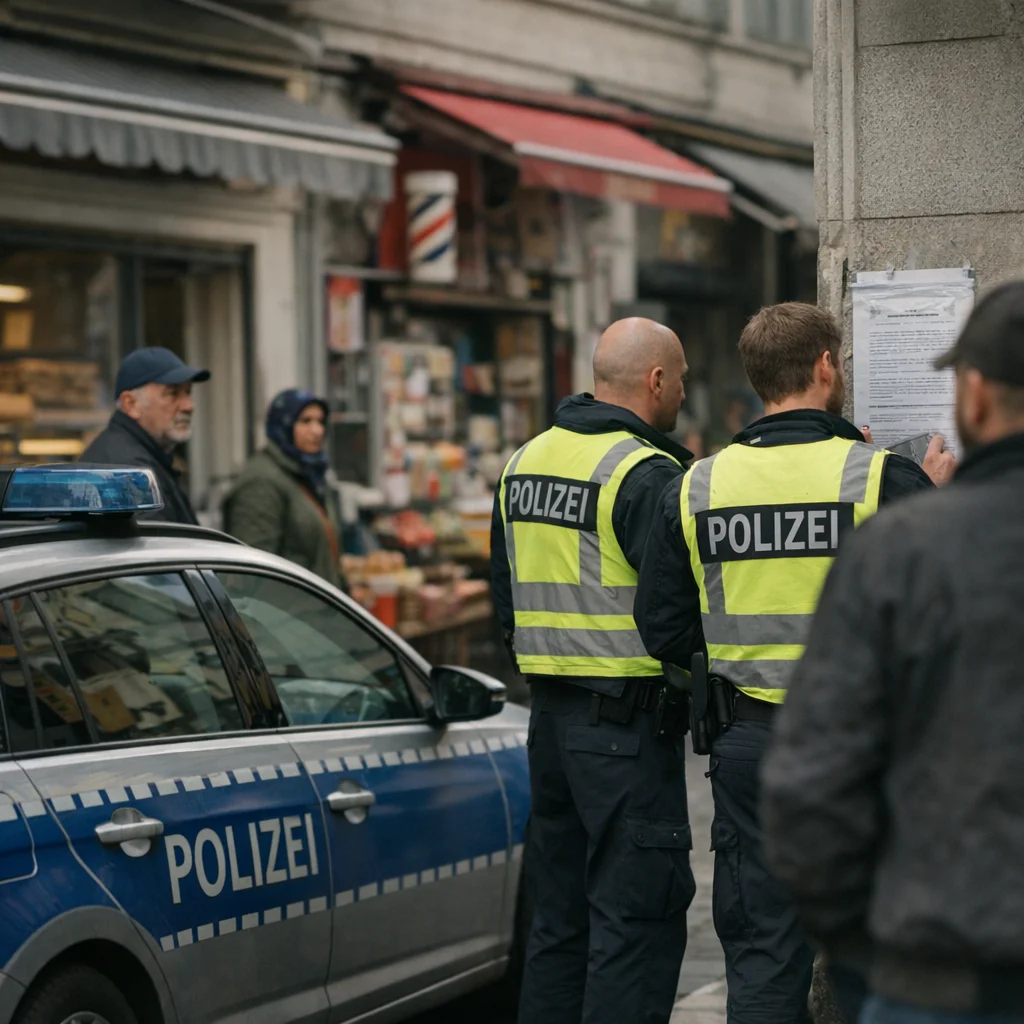
On a damp morning in Wedding, a marked patrol car idled outside a strip of corner shops while two officers in reflective vests stood beside a laminated permit notice and watched shopkeepers pretend to read it with the devotion of people studying a priest’s hand for a blessing. The district called it a safety push. The street called it what it was: a costume drama with badges, a little civic pantomime for adults who get hard at the sight of obedience.
The first stop was a Turkish bakery that had been told to keep its sidewalk display clear, its deliveries brief, and its customers appropriately grateful for the inconvenience. By midmorning the same officers had drifted to a kiosk, then a barber shop, then a café serving espresso to men who describe themselves as community-minded while never once lifting anything heavier than a clipboard or a moral opinion. Everyone wanted order. Nobody wanted the sweat, the paperwork, or the embarrassment of actually enforcing it.
"We are being asked to provide authority with a warm smile and no teeth," said Mehmet Yilmaz, who runs a grocery near Leopoldplatz and requested anonymity because he still has to sell cigarettes to half the people he complains about. "They come in pairs, look official, and then hand the mess back to us like we’re supposed to discipline the pavement. That is not policing. That is municipal foreplay."
The district office said the presence of officers and volunteer stewards was meant to improve compliance around delivery lanes, outdoor seating, and noise complaints. In practice, it mostly improved the self-esteem of people who enjoy standing near power more than exercising it. The volunteers arrived in reflective vests that made them look like nervous traffic cones with opinions. Their laminated badges swung against their chests with the damp little thrill of borrowed legitimacy. They kept calling the approach "dialogue-based," which is a lovely phrase if you enjoy being managed by adults who are too frightened to sound like adults.
One neighborhood initiative man, beard trimmed into a shape that suggested grant applications and mild disappointment, explained that the patrols were about "trust." He said this while staring at a delivery van boxed in by a café terrace, a parked scooter, and a shop owner’s cigarette tray spilling onto the curb like a tax on everyone else’s patience. Trust, in Wedding, is often just what people call it when they want compliance without confrontation, or authority without the ugly part where someone has to mean it.
What rankled merchants was not only the rules but the performance. The officers stood in front of problems as if their boots alone could produce solutions. The volunteers adjusted their lanyards and tried to look courageous from the safe distance between a clipboard and a consequence. The café people, whose politics usually peak at the sentence "we all need to talk," offered the usual civic perfume: concern, procedure, moderation, and the faint erotic charge of telling someone else how to behave on your sidewalk.
Older residents, who have seen enough institutions to know that visibility is often just a cheaper form of competence, were less enchanted. Wedding has plenty of people eager to moralize a corner they do not own. It has fewer willing to clear a path, move a crate, confront a delivery driver, or admit that order requires friction, not vibes. The current coalition of police, shopkeepers, and neighborhood stewards prefers the aesthetics of control: the vest, the badge, the notice, the earnest nod. They like authority as a decorative object, something that can be worn over a soft middle and removed before anyone gets sweaty.
By noon the patrol car had become a parked argument. Too official to ignore, too idle to respect. Officers took notes. Volunteers kept their distance from the actual mess. Shopkeepers nodded with the exhausted politeness of people being managed by amateurs who want the neighborhood disciplined only so long as someone else does the disciplining. The district says more permit checks are planned next week. Several merchants say they will comply, because compliance is cheaper than a scene, while privately hoping the whole operation collapses under the weight of its own starch and the faint, sickly perfume of people enjoying power they have not earned.