Pay 500 Euros to Be Cold, Wet, and Enlightened: The Luxury Tent Economy of Brandenburg
Weekend warriors trade central heating for curated deprivation while influencers monetize their shivers and call it growth.
Wellness-to-Wealth Investigations Reporter
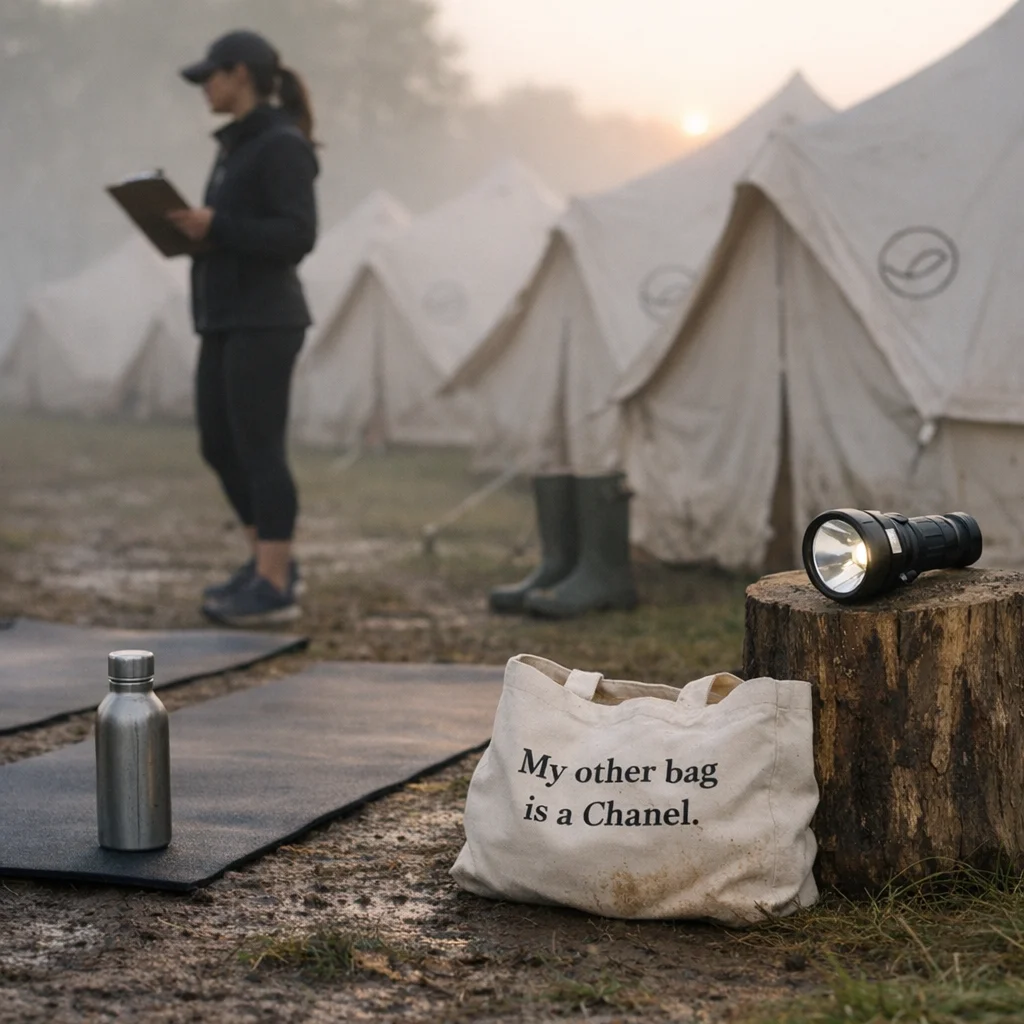
They call it "grounding." The promotional copy calls it "authentic reconnection." The invoice — five hundred euros — calls it extortion.
On a muddy plot somewhere in Brandenburg, boutique wellness companies have discovered a premium product few had the gall to charge for until now: sleeping outside and pretending it matters. For half a grand you receive: a canvas tent with a designer logo, a ceremonially complicated check-in ritual, three plant-based meals that taste like commitment, and an instructor whose CV lists a brief residency at a coworking space.
The program promises ascetic rigor. In practice it outfits scarcity with aesthetics. The tents are waterproof in the catalogue; in reality they’re waterproof in places. Facilitators teach breathwork that doubles as crowd control. Mornings begin with a slow movement sequence designed to keep bodies pliable and wallets open; evenings finish with a group confession circle where everyone explains why they left their actual problems at home.
There’s artful suffering on offer: sleeping on a thin mat to feel humility, pitching your phone into a lockbox to signal discipline, paying extra to add a guided forest walk narrated by someone who once wrote a Medium essay about grief. Influencers attend, not to heal, but to demonstrate the correct posture for healing. Their followers mimic the pose and buy the detox supplement ten minutes later. The event is a simulacrum of meaning, Baudrillard would roll his eyes and invoice them for the irony.
The ritual has a curious moral architecture: austerity purchased at premium. It’s neoliberal penance, neat and packaged. Byung-Chul Han’s critiques of late-capitalist exhaustion feel like a footnote in the brochure: rest as product, care as app.
The sexiness of suffering is part of the sales pitch — instructors ask you to "go deeper," and you do, mostly into your sleeping bag. There is a ritualized unzipping of ego and polyester. Everyone leaves with a photo of a sunrise, a new mantra, and a credit-card statement they will regret but later call "transformational."
If Henry David Thoreau had been offered kombucha and a branded tote, he would have refused politely and gone back inside. The retreat-goers, however, return to town feeling cleansed, as if deprivation had done something other than enlarge someone’s bank balance. And somewhere in Brandenburg a tent is being folded into a storage shed, waiting for the next batch of people who want to be uncomfortable together and sure they paid for authenticity.