Peel Here, Profit There: Wedding’s 'Community' Compost Bins Have a Tiny Brass Slot That Sells Your Scraps
The city praises grassroots greenery — peek under the lid and a neat brass 'C‑token' slot reveals compost is less mutual aid than a nightly supply chain for restaurants and data brokers.
By Jax Delayski
Transit Meltdown & After-Hours Logistics Reporter
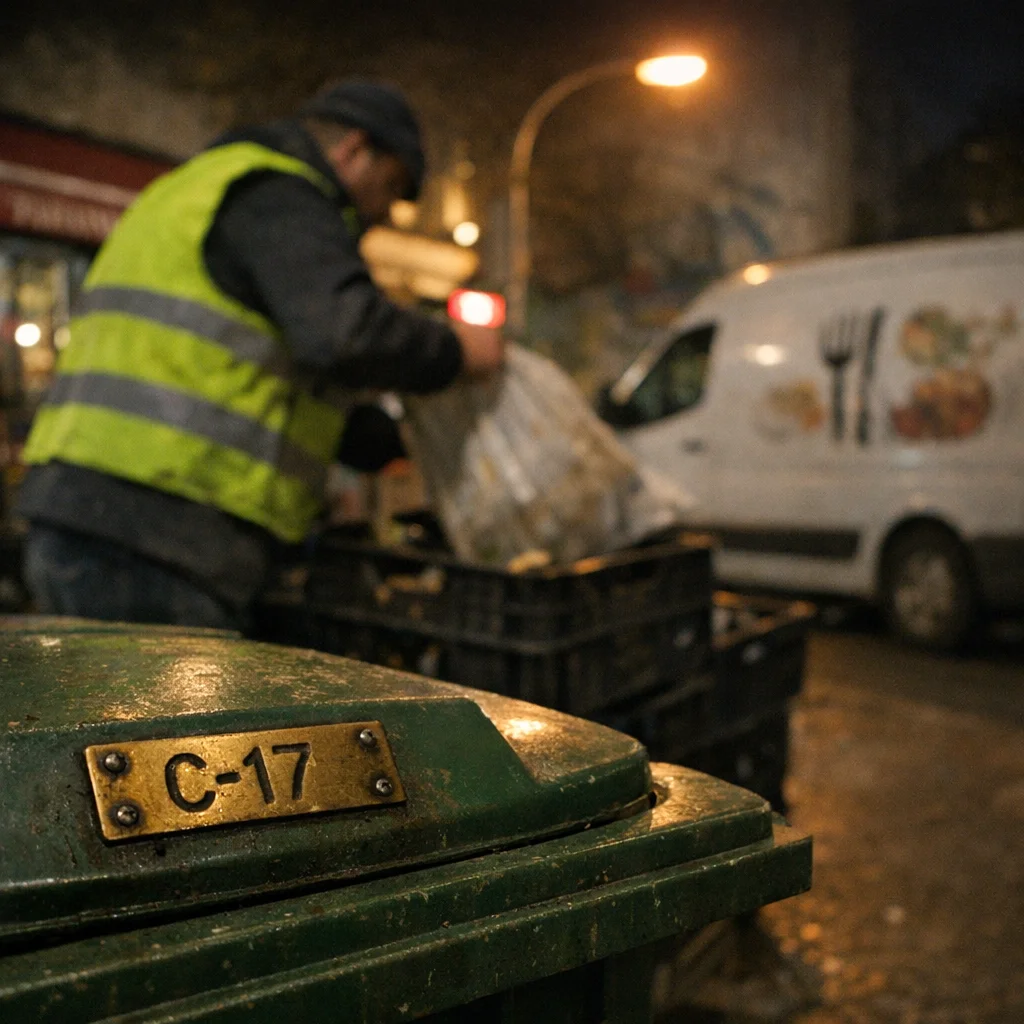
Everyone says the new compost hubs on Müllerstraße are about neighbourly environmentalism: signs promise “shared responsibility,” schoolchildren paint leaves on the lids, influencers pose with tote bags. That story sits comfortably in district brochures. Look a fraction closer and the claimed communal garden snaps into supply‑chain logic — all because of a neat, stamped brass slot on each lid.
Installed last spring, the slots are the size and shape of courier tokens and carry a tiny route code: C‑17, R‑04, L‑21. Volunteers who empty the bins describe a ritual. “We lock the bins at nine, then do a sweep around midnight,” said Mustafa Kaya, 47, who runs Kaya Bäckerei and volunteers two nights a week. “We drop donor slips through the slot, slide the token in, and the van takes the crates. It felt like gardening until the same van started showing up with restaurant logos.”
The contradiction is simple: councils pitch the hubs as mutual aid; the brass aperture design implies standardized handover for uniformed pickups and contract logistics. A logistics manager at SoilShift, a local food‑waste startup, admitted the program was designed to feed kitchens and analytics platforms. “Tokens match our route manifests,” said Ilva Krüger, who provided a company email and a corporate smile. “Donors are anonymized, but volumes are logged. It’s better for sourcing.”
That “better” means late‑night collections timed to commercial shifts, not compost education. Volunteers report uniformed vans from several food businesses pulling up right after the bins are emptied, crates lifted with the same practiced motion used in restaurant deliveries. A Turkish diner owner on Müllerstraße, who asked not to be named, said the pickups stopped being anonymous when invoices began to arrive.
The Wedding district’s environmental office defended the scheme. “These hubs reduce landfill and make green waste useful,” said Sophie Rummel, the office spokesperson, adding that private partnerships are “standard.” She declined to say whether the route codes were part of contracts. It’s the municipal equivalent of saying Deutsche Bahn is ‘on time’ if it’s within ten minutes; technical language that makes inconvenient logistics palatable.
Residents who expected a civic commons feel sold a backdoor arrangement, and a handful have started tracking the route codes on a shared spreadsheet — not for science, they say, but to know which restaurants harvest after midnight. As Marx wrote about metabolic rifts, the city’s organic cycle has been priced, packaged and parceled; the nutrient loop now has ledgers.
District councillors have called for an audit next week. In the meantime, volunteers will keep sliding tokens through brass slots, volunteers and startups kissing and rubbing the same compost like uneasy lovers — practical, transactional, and hard to swallow. The audit will reveal whether community remains at the centre, or whether a nightly supply chain has quietly claimed it as inventory.