Pentagon Pillow Talk for the Saudi Court
Washington is once again discovering that moral sermons and weapons sales do not fit in the same bed.
Global Affairs & Kiez Mischief Correspondent
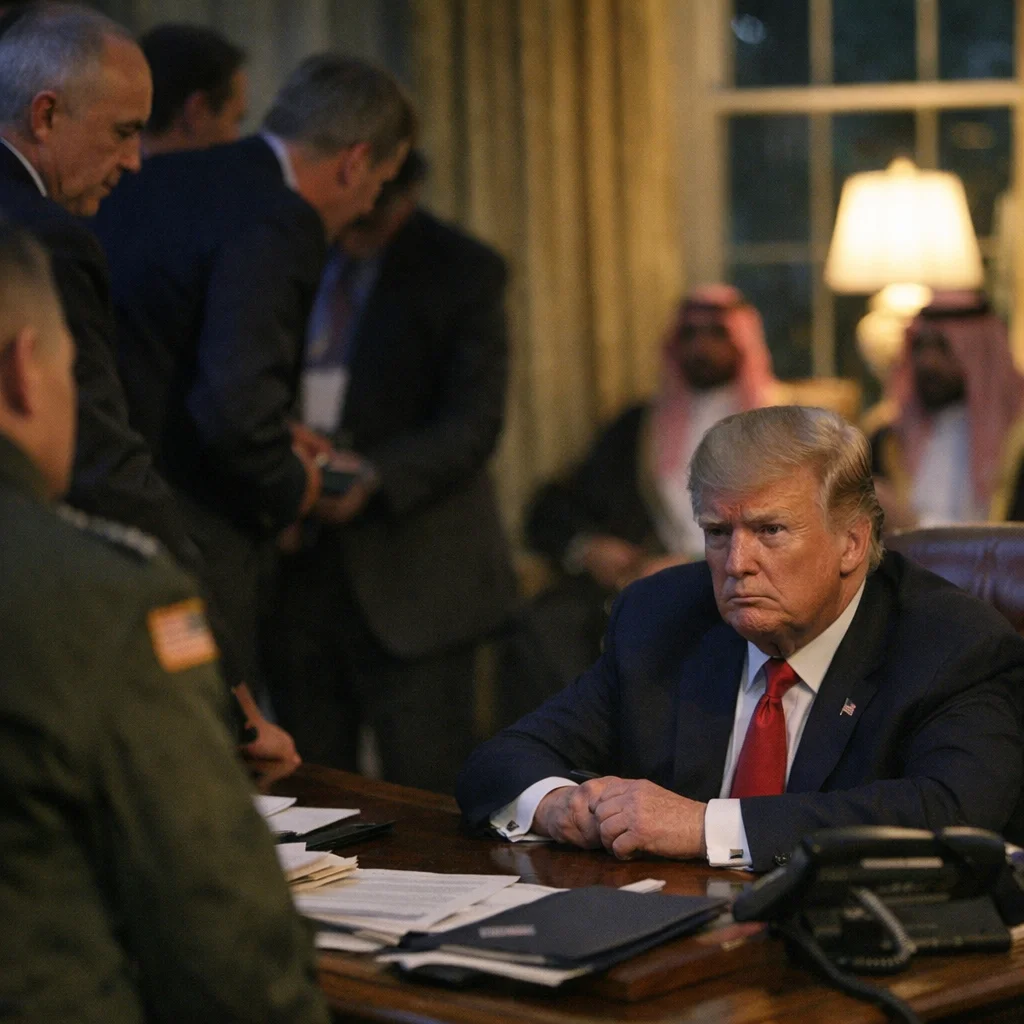
The White House found itself back in its favorite posture this week: one hand on a Bible, the other on the lockbox, and both eyes on Riyadh. Saudi officials want U.S. military help, and Donald Trump is trying to sell the arrangement as strength while everyone in the room can smell the invoice.
The request arrived in the polished language of partnership, which in Washington usually means: stand close, keep your tie straight, and do not ask who is paying whom until after the lights come up. In the West Wing, aides began converting the whole question into a test of virility, because that is how this town disguises dependency when the cash is foreign and the posture is domestic.
Trump’s problem is not that he objects to the transaction. It is that the transaction is written in a way that leaves fingerprints all over his ego. If he leans in, he gives critics another clean view of the government’s oldest habit: selling protection and calling it doctrine. If he pulls back, he looks like a man who promised to break jaws and then asked for permission to hold the door.
One former Pentagon official described the atmosphere as "a hotel hallway with the room service light blinking and nobody admitting they ordered anything." That is about right. The Saudis know how to make the ask feel intimate without ever sounding needy. They do not beg; they arrange the furniture. They offer flattery, urgency, and just enough strategic terror to make Washington feel chosen instead of purchased.
"He prefers the costume of power to the labor of it," said Miriam Feld, a former State Department adviser who requested anonymity because she still expects the right invitations. "The Saudi leadership knows exactly how to press the bruise and call it respect. They ask like a courtesan and negotiate like a bailiff." In this town, that passes for diplomacy.
And so the whole thing keeps sliding toward the same degrading setup. Riyadh frames the request as regional necessity. Trump frames the answer as dominance. The Pentagon supplies the polished language, the generals supply the grave faces, and the weapons industry supplies the lubricant. Everybody gets to pretend the bed is about security while the mattress is really built from cash, humiliation, and a flag folded neatly over the pillow.
The donor class, naturally, is thrilled by the choreography. Nothing excites a serious man in a dark suit like the promise of moral seriousness with a profit margin. Congressional hawks get to sound stern. Cable-news patriots get to hiss about resolve. The same people who write op-eds about stability will nod along so long as the arrangement is discreet enough to keep the sheets unrumpled in public.
Even Trump’s allies seem to understand they are watching a power struggle disguised as courtship. One Republican aide said the president is deciding whether to look hard or look rich, which in Washington is often the same performance with better lighting. Another described the internal debate as whether to "enter the room like a protector or leave fingerprints like a client." The distinction matters only to people who still believe the government blushes.
For now, the White House is delaying a clear answer while it shops for words that can pass as resolve and still sound clean in a press briefing. Saudi officials, meanwhile, are said to be waiting with the patience of people who know the ledger already leans their way. That is the arrangement: Washington pretends to stand guard while somebody else pays for the privilege, and everyone involved keeps insisting the arrangement is respectable right up until the last button comes off.