Peskov Sets a Date — Wedding Declares Its Own Peace Talks Between Döner and Avocado Toast
After the Kremlin’s spokesman announced a new round of US‑Ukraine‑Russia negotiations, a Wedding mediator tries to broker a local ceasefire between a Turkish döner stall and a boutique café.
Kiez Peace Correspondent
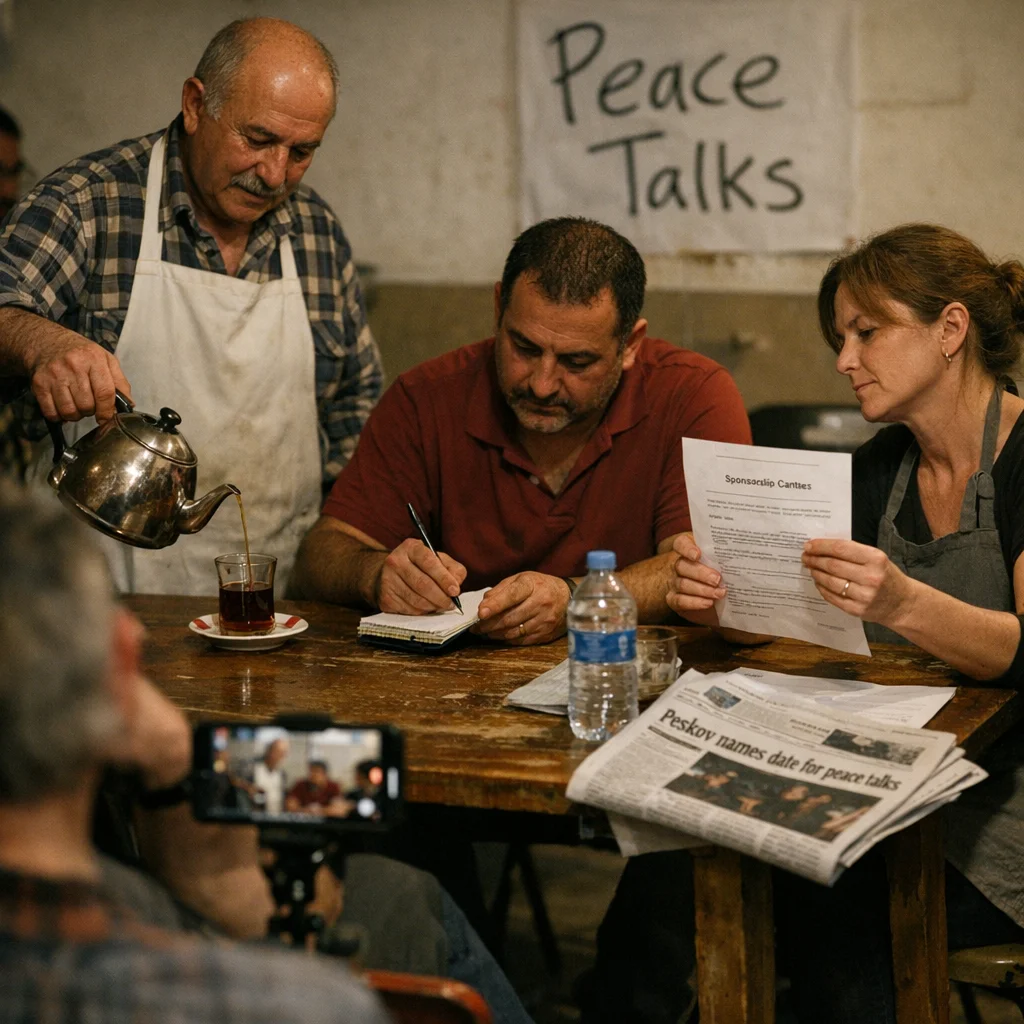
On Monday morning, after Kremlin spokesman Dmitry Peskov publicly named a date for renewed peace negotiations between the USA, Ukraine and Russia, Wedding’s local politics mutated into something smaller and meaner.
Kemal Arslan, 62, a former history teacher who runs a two‑table bakery near Leopoldplatz, announced he would convene "Wedding Peace Talks" on Tuesday evening. "If the world can set a date, so can we," he said, folding his appointment card like a treaty. Kemal’s mission—part civic duty, part performance art—reads like a Wedding version of Miguel de Cervantes' Don Quixote: a literate man tilting at gentrification windmills while wielding a teapot.
Later that afternoon, Kemal pulled together a cramped delegation: Cem Yılmaz, owner of Cem’s Döner, who wants to keep his rent-controlled counter; and Lena Richter, proprietor of Pour & Pivot, the café that offers three oat milks and an ethics panel every Sunday. "We need a neutral table," Cem said. "Not a lawyer's table, just a table that smells like bread."
By evening, the community centre was full. Kemal opened with a printed copy of the Peskov announcement and a hand‑drawn agenda. The pivot came when Lena produced a sponsorship contract from a PR firm offering branded 'peace pastries'—a backdoor arrangement that promised rent relief in exchange for limited pop‑ups. "We don’t want to be the face of a photo op," Cem snapped. "We want to stay open."
Tempers rose; so did the absurdity. An EU‑flagged intern offered mediation training; a man in a cardigan quoted Debord and then asked whether performance art counted as community service. A woman filmed everything for her podcast called "Peace & Pastries." Kemal tried to keep control with a firm grip on the clipboard—that firm grip that makes people believe meetings are negotiating something real.
At night’s end, a provisional pact was drafted: Cem keeps his lease for six months if he hosts a weekly cultural exchange; Pour & Pivot will donate five free coffees to local seniors. Markus Vogel, a city aide who loitered near the door, promised to "look into" municipal support. "We came dangerously close to solving something," Kemal said, half proud, half exhausted. "Or at least to stalling it with charm."
On Wednesday morning, the WhatsApp group declared the summit a success; the landlord requested its cut. The larger geopolitics marched on to the date Peskov named. In Wedding, the affair left a smell of grilled meat and almond milk—and the uneasy sense that negotiating peace is mostly about finding who will sign last.
(I adapted this piece from Miguel de Cervantes' Don Quixote.)