Pest Control With a DEI Statement
Building managers in Wedding are hiring exterminators the way other people hire consultants: with diversity language, sustainability promises, and a lot of denial about why the roaches keep winning.
Gentrification Symptoms & Pretend-Creative Economy Reporter
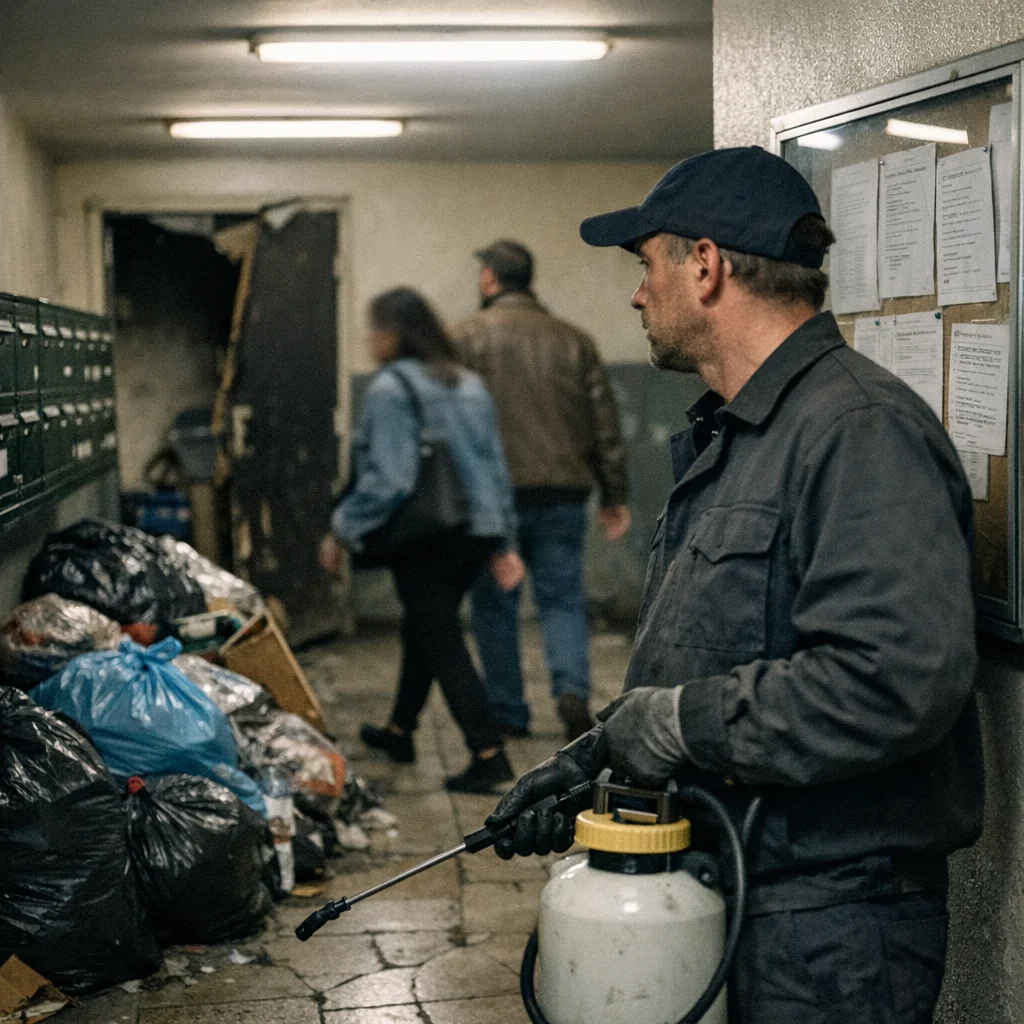
Trash Room Virtue Signaling, With Cockroaches Watching
Property managers across Wedding are hiring exterminators the way the weak hire consultants: with glossy language, a fake sustainability badge, and a pledge to “honor neighborhood diversity” while doing absolutely nothing about the garbage, grease, and clerical filth that made the roaches feel at home. A recent pest-control tender from a block off Pankstraße promised “inclusive service delivery,” “low-impact interventions,” and “tenant-sensitive communication.” It did not promise cleaner hallways, faster repairs, or even the basic dignity of admitting the building had been left to ferment.
The document circulated after residents complained that the lobby smelled like old cabbage, wet cardboard, and management’s self-regard. One notice in the stairwell, taped up crookedly beside a broken intercom, announced: “Please use the designated refuse area. Unauthorized waste placement may affect our sustainability targets.” That was after the trash-room door had been left half-broken for weeks and the missed repair ticket had quietly vanished from the Hausverwaltung portal like a swallowed confession. Another memo, from an outsourced facility firm with the kind of name that sounds like it was brainstormed in a sauna full of interns, asked tenants to “support pest-preventive living” by keeping kitchens “emotionally clean.” The building’s actual pipes remained physically obscene.
According to tenants, the official line from management was that the infestation reflected “seasonal pressure,” which is property-owner dialect for “please stop noticing the mess we made and then denied making.” In practice, the cockroaches had already done what every housing association and co-living operator fantasizes about in private: they occupied the premises, moved through the walls, and proved more efficient than the people charging rent for the privilege. They were faster than the repair queue, more coordinated than the district office, and less ashamed than the consultant hired to assess “community resilience” without ever opening the basement door.
“We are not looking for an aggressive look,” said one manager, who asked not to be named because he had once posted a photo of a compost bin and called it urban stewardship. “We want a partner aligned with our values.” By values, he appeared to mean a lobby that looked clean enough for a viewing while the trash room behind it sweated like a confession booth. The building’s cleaner, reached while hauling bags heavy enough to count as a lower-back lawsuit, was less poetic. “You want fewer insects, you need fewer fantasies,” she said. “And fewer people pretending a diversity statement can disinfect a hallway.”
A ground-floor shop owner, who has watched the same building cycle through three different management logos and one pointless sustainability consultant, said the owners had perfected the city’s favorite scam: outsource the shame, keep the rent. “They hire people to kill bugs and then act surprised when the bugs know who’s been late on repairs,” he said. “Every memo says inclusion. Every hallway says abandonment.” Nearby, a young co-living tenant in expensive shoes and a thrift-store conscience called the tender “a step toward structural accountability,” which is exactly how this city talks when it wants to avoid opening the trash room and finding its own face staring back.
District officials said they were aware of vermin complaints in privately managed housing and advised residents to document conditions in writing, ideally before the next maintenance meeting begins performing its usual little striptease of concern. A spokesperson noted that landlords remain responsible for sanitation, waste removal, and repairs, though enforcement often moves with the erotic urgency of damp plaster. By the time anyone from the Bezirksamt arrives, the building has usually already been fed, watered, and left alone by the people paid to care.
For now, the result is simple: the infestations have a marketing budget, the tenants have a paper trail, and the property owners are discovering that you cannot brand your way out of rot. The roaches are still in the basement, the repair tickets are still “under review,” and the landlord’s prized sustainability plaque is hanging above a trash room door that won’t close, like a medal pinned to a corpse.