Pickle Iconography for the Emotionally Bankrupt
Spreewald’s beloved cucumber gets its own emoji, giving producers, marketers, and heritage bureaucrats one more chance to cosplay national identity while charging premium prices for nostalgia in a jar.
Gentrification Symptoms & Pretend-Creative Economy Reporter
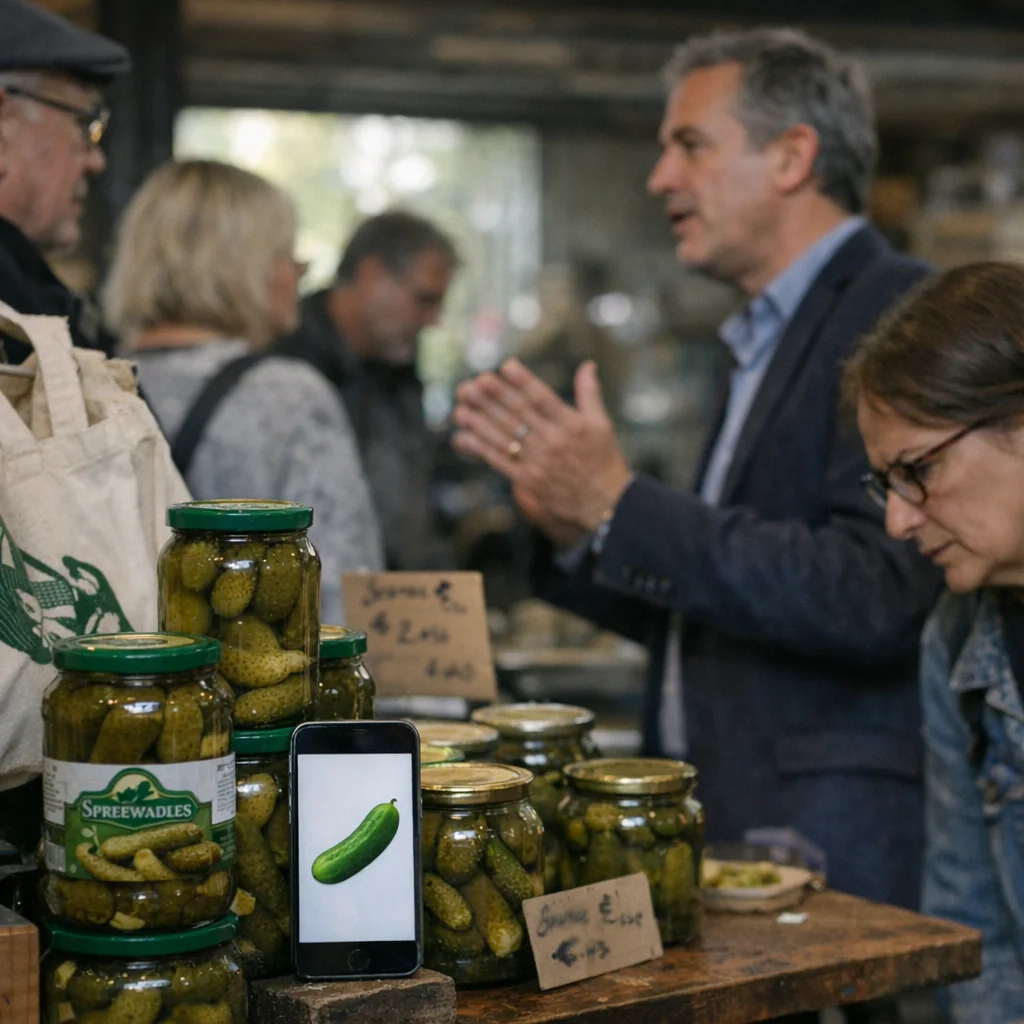
In a move that perfectly captures Europe’s genius for mistaking branding for ancestry, the Spreewald cucumber now has its own emoji, and the whole little pageant is being treated like a constitutional amendment by people who sell feelings in jars. In Wedding and beyond, the news lands with the greasy solemnity of a state funeral for a vegetable: the pickle is brined, licensed, and ready for the gift shop.
The Brandenburg chamber of commerce, the regional marketing apparatus, and the heritage office can all congratulate themselves on this tiny triumph of bureaucratic foreplay. They have taken a sharp, cheap, rural thing and massaged it into a prestige object for urban mouths that want to feel earthy without touching dirt. The cucumber is no longer food. It is a certificate of innocence, stamped by committees and priced like a minor indulgence for people who say “support local” with the same lips they use to chew imported virtue.
At the promotional event, the language was the usual polished manure. Producers called the emoji “visibility.” Marketers called it “reach.” One district official called it a “bridge,” which is what people say when they want to hide the toll booth. In plain language: they want schoolchildren, tourists, and wellness idiots to start romanticizing a pickle before they can identify the farmers, the wages, or the subsidy forms behind it. It is a wonderful little transaction. The public gets a symbol. The producers get a halo. The chamber gets to photograph itself near a crate and pretend that counts as governance.
The hypocrisy is symmetrical and frankly erotic in the way self-regard always is. Producers drape themselves in regional authenticity while charging premium prices for jars that smell like strategy. Consumers buy them to perform moral cleanliness: a cucumber in the pantry, a conscience in the pocket, a tote bag over the shoulder and a faint blush of peasant cosplay on the cheek. They want the pickle to stand in for place, labor, and tradition the way bored adults want a farmer’s market to stand in for a personality.
This is not heritage. It is administrative drag with a better font. A heritage office clerk can bless a brined vegetable the way a priest blesses a very expensive appetite, and suddenly everyone feels rooted. Debord would have loved the spectacle, but the local actors do not need theory when they have better props: the chamber president in a crisp blazer, the marketing consultant with vineyard hands and dead eyes, the export board smiling like a man polishing his own gravestone. They are not preserving a cucumber. They are airbrushing their own usefulness.
And the result is exactly as modern as it is pathetic: a regional staple reduced to a tiny digital icon, then sold back as authenticity at premium price. The emoji does not honor the Spreewald. It gives the branding class another place to insert its thumb and call it culture. By spring, the tote bags will cost more than the actual jar, and the only thing truly preserved will be the smug little grin of the people who made a living pretending this was about anything other than extraction.