Pigeon War at the Tram Stop
The city keeps promising cleaner, calmer public space while commuters, smokers, and self-appointed caretakers turn the shelter into a daily referendum on who gets to be disgusted first.
Civic Hypocrisy & Neighborhood Compliance Reporter
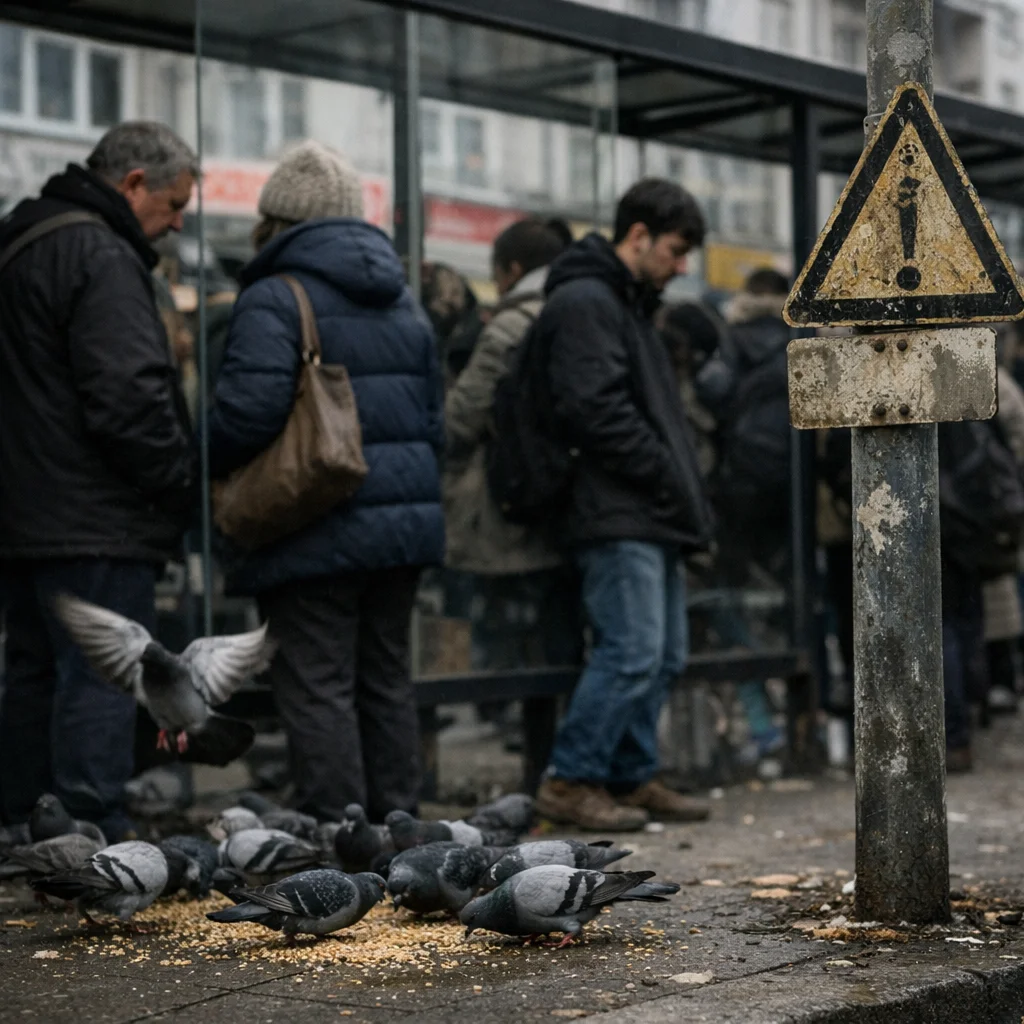
A tram stop in Wedding has achieved what city planners, neighborhood associations, and moral hobbyists all secretly admire: a public space so contaminated by petty virtue that everyone involved can feel righteous while standing in filth.
On weekdays, the shelter outside the station fills up before the train does. Commuters arrive with the dead-eyed patience of people already late to work, old men hover with the brittle dignity of retired arguments, and the bird people show up carrying seed like communion wafers for a faith nobody asked for. They scatter it under the timetable with the smug tenderness of people fingering a wound and calling it care. Then the pigeons descend in a grey, beating blur, ankle-deep in crumbs and ego, turning the platform into a damp little feeding trough for the self-appointed.
The district office has posted warning signs against feeding the birds, which in Berlin functions less as law than as municipal fan fiction. The signs stand there, laminated and helpless, like a school principal who has already lost control of the boys behind the bike shed. Nobody serious obeys them. People read the warning, glance around, and feed the pigeons anyway with the calm, lubricated confidence of citizens who know enforcement will arrive only after the mess has dried into a stain.
One resident, Mehmet Yildiz, said the scene had become "a weekly audition for cruelty and boredom." He is right, and the casting is exquisite. There are the commuters, furious that someone else’s sentiment has occupied the floor they have to cross. There are the smokers, clustered just outside the shelter, pretending they are not loitering while they suck on their cigarettes like bad habits with legs. There are the feeder types, usually wrapped in sensible jackets and moral superiority, acting as if tossing grain to a swarm of diseased sky-rats makes them kinder than everyone else in the district. It does not. It just makes them louder and more embarrassing.
The local genius is this: everybody wants order, but only if another person kneels to produce it. The cyclists want a clean stop. The pensioners want a bench without feathers in the cracks. The district office wants the appearance of intervention without the vulgar inconvenience of actually intervening. And the performative progressives in their tote bags, carefully distressed sneakers, and expensive socks talk about "shared responsibility" the way landlords talk about "community"—with a mouth full of borrowed values and a hand already reaching for somebody else’s labor.
A bus driver who asked not to be named because he does not want to spend his break arguing with pigeons said the feeding gets worse when the weather turns bad. "Then everybody acts like the birds are refugees," he said. "No, they’re opportunists with wings. And the people feeding them are basically running a small public flirtation between guilt and rot. They want to feel tender in front of strangers and leave the cleanup to the city like spoiled teenagers after a party."
The BVG says the stop is a public space and should be kept clear, which is true in the way a priest is technically celibate. The statement sounds firm until you remember that Berlin bureaucracy specializes in the ceremonial language of authority without the humiliating burden of authority itself. One district worker, speaking anonymously because she is tired of being recognized by pigeons and by two men with sandwich bags, said enforcement is difficult because the regular feeders are often the same people who complain first and loudest when the stop becomes unusable. "They want the neighborhood to be clean," she said, "as long as the cleaning is done by someone invisible, underpaid, and preferably not standing there in front of them."
That is the whole Wedding arrangement in miniature: the signs scold, the seed keeps falling, and the adults continue pretending this is about civic tenderness rather than the cheap thrill of being seen as good while making everybody else breathe the consequences. Until someone fines the feeders or redesigns the stop, the tram will keep arriving into a scene that smells like wet concrete, stale grain, and the sour aftershave of public self-deception.