Pigeons File a Noise Complaint at Humboldt Forum
Wedding’s culture crown jewel has finally found a constituency it cannot lecture into silence.
Civic Hypocrisy & Neighborhood Compliance Reporter
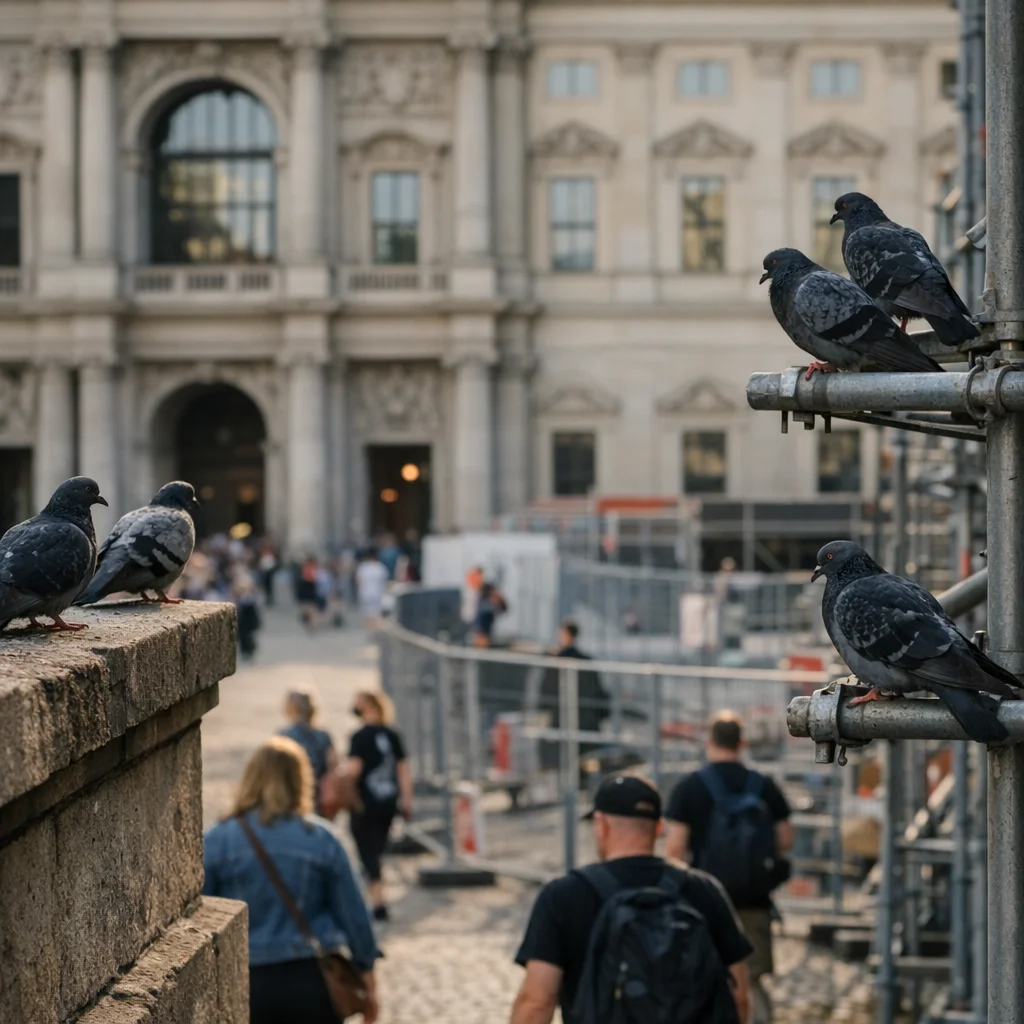
The first stop-work order at Humboldt Forum was effectively filed by pigeons, who have been living on the ledges, copper seams, and scaffolding long before the gift shop learned to pronounce “public engagement” without laughing at itself. The birds objected to the noise, the applause, and the nonstop self-congratulation echoing through the courtyard, where the institution’s grand mission keeps slamming into drills, barriers, and the stale perfume of civic vanity.
The complaint, submitted in the form of droppings arranged on a bench near the entrance, accused the museum complex of “constant architectural foreplay” and “a public atmosphere too fond of its own reflection to be useful.” One pigeon, speaking through a local interpreter who requested anonymity because he once interned in cultural communications and still owes three people apologies, described the place as “a palace of soft power with the manners of a landlord and the morals of a grant proposal.”
Around it, the city performs its usual striptease of competence. Security staff patrol the edges like exhausted ushers at a very expensive funeral. Temporary panels block off what the brochure promised would be openness. Detour signs stand around like polite threats. Visitors are routed past fencing and scaffolding in a slow, obedient shuffle, as if the route itself were a lesson in submission. The place calls this accessibility. It is really just crowd control with better typography.
A woman with a tote bag that probably cost more than a worker’s lunch in Reinickendorf stopped to photograph the courtyard and said she loved the “dialogue between history and the present.” That sentence does a lot of unpaid labor for the cultural class. It lets them touch empire with clean hands, then go home feeling ethically moisturized. The pigeons, by contrast, prefer history without branding and present-tense without sponsorship.
By late morning, the plaza had settled into its usual civic kink: tourists pretending to understand empire, academics pretending they are above tourism, museum staff pretending the whole thing is not a prestige machine designed to launder public money into moral self-regard. The building wears the old monarch’s posture and the new cultural-manager’s smile, which is somehow worse. It is a stone-deep erection of institutional confidence built over a site that still looks half-finished, half-defensive, and fully allergic to accountability. Berlin does love this trick: leaving the scaffolding up long enough that the mess starts to look like intention.
The decolonial branding deserves its own little humiliation. Every polished panel and solemn panel discussion seems to ask the same question in the voice of a tax-funded consultant: how can we extract dignity from the very structure that swallowed it? The answer, apparently, is with heavier architecture, softer language, and an endless supply of public subsidies. The result is a museum complex that performs repentance like a man unbuttoning his shirt in a mirror: dramatic, expensive, and mostly for its own benefit.
A district spokesperson said the noise issue was “being taken seriously” and that the construction timeline remained “unchanged,” which is the bureaucratic equivalent of promising intimacy while already checking the time. The museum did not say whether it planned to relocate the birds or merely outlast them, as institutions so often try to do with anyone who notices the cracks, the dust, and the indecent amount of money required to keep a conscience in architectural drag.
For now, the pigeons remain on site, unamused and ungovernable. The complaint is still under review. The next round of visitors will be funneled through the same detours, past the same polished stone, under the same self-regard, while the local residents outside the postcard continue living with the usual Berlin arrangement: one district gets the noise, another gets the bill, and the cultural elite gets to call it progress. Somewhere overhead, the only honest constituency in the building is still watching the whole noble farce from a ledge and shitting on its conscience.