Pitch Decks Replace Oxygen as Wedding Founders Announce Yet Another App to “Fix Humanity”
At a demo night above a former discount furniture store, local founders vowed to “solve” loneliness, trash, and inconvenience—by adding onboarding.
Startup Salvations Correspondent
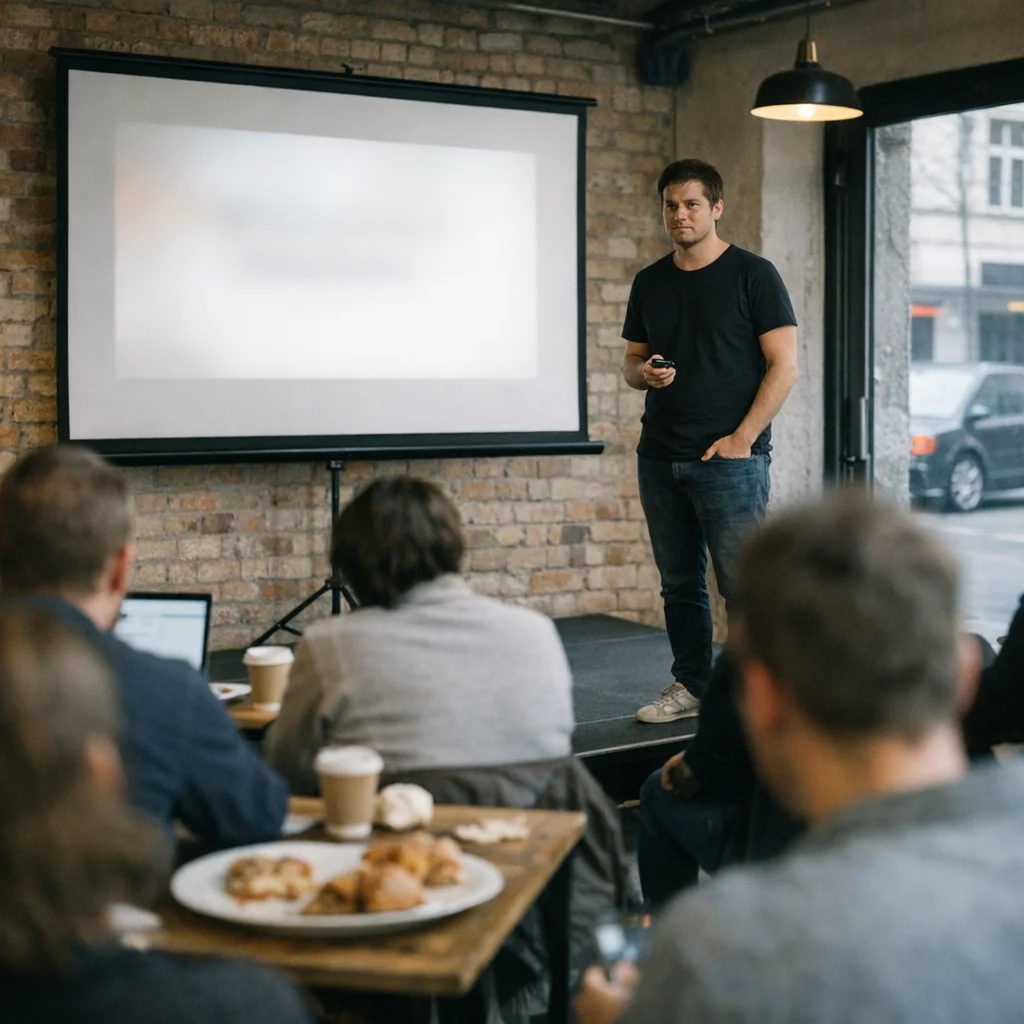
WEDDING — Sometime before noon, a coworking space near Müllerstraße hosted what it called a “humanity-forward demo brunch,” a ritual where men in clean sneakers explain suffering with slides.
The founders arrived with the same face: caffeinated sincerity, mild hunger, and the dead-eyed confidence of someone who has read one paragraph of Hannah Arendt and decided it counts as product research. Their apps promised salvation. Not help—salvation. Berlin doesn’t do modesty anymore; it does seed rounds.
One team unveiled an “empathy platform” that claims to end loneliness by matching residents with “micro-communities” based on “shared friction.” The demo matched a Turkish retiree who has lived in Wedding since before the rent had commas with a 26-year-old brand strategist who “moved here for the grit,” then asked if the retiree was “open to a quarterly check-in.” The retiree reportedly said he already has friends and suggested the app try dating itself.
Another founder pitched a “waste-neutral lifestyle layer” that uses computer vision to judge whether you’re disposing items correctly. The app is meant to “hold you accountable,” which is startup-speak for “I’ll watch you from behind.” During the live test, it labeled a perfectly normal grocery bag as “problematic,” then crashed with what the team called “an emotionally honest error.”
Outside, long-time residents watched the parade of lanyards with the patience of people who’ve survived actual crises. A nearby bakery owner—who still sells to customers instead of “users”—described the whole event as “a lot of talk for people who can’t commit to a regular bread.”
The only genuinely innovative feature came from the building itself: the elevator mirror began showing founders not their reflections, but their burn rate. Nobody screamed. They just refreshed it, like this was normal, like reality is a dashboard and conscience is a subscription.
In a city that once exported ideology, Wedding now exports prototypes. Marx warned us about commodity fetishism; he didn’t anticipate the fetish would have a freemium tier and a long, awkward onboarding flow. Still, the founders kept a firm grip on their missions, insisting the world would be saved as soon as someone finally agreed to “hop on a quick call.”