‘Please Keep Your Hands Inside’ While the Minister Blocks the Platform
Berlin’s rail passengers are being asked to accept fewer open gates, more bottlenecks, and the comforting lie that humiliation is a form of safety.
Administrative Grief Correspondent
‘Please Keep Your Hands Inside’ While the Minister Blocks the Platform
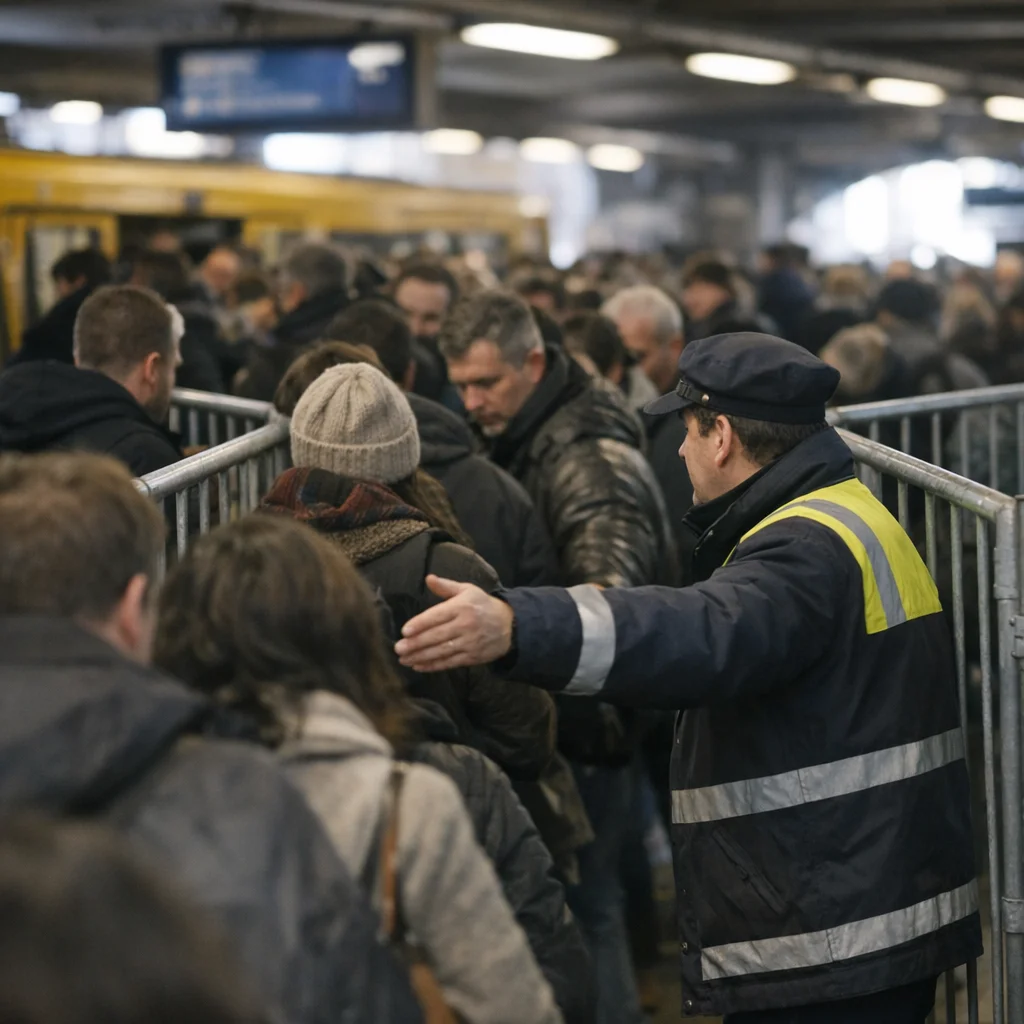
Berlin’s rail passengers were informed this week that “safety” now means consent written by a man in a reflective vest. On several crowded platforms, the Transport Ministry has backed closures and narrower access points that funnel bodies into slower, tighter channels, a policy presented with the same smug composure a mediocre dominatrix might use to justify a snapped strap: this hurts, therefore it must be good for you. The station does not invite people in so much as admit them by appointment, and the ministry congratulates itself for inventing the world’s least erotic access problem.
The first closures arrived with bureaucratic innocence, which is always how the hand goes to the waistband before the room notices. One gate shut, then another, then a fresh sign telling everyone to keep moving as if obedience were a form of pleasure and waiting a civic foreplay. By midweek, the bottlenecks had spread into the morning commute, where office workers, students, Turkish shopkeepers heading in from Wedding, delivery riders, nurses, and exhausted service staff found themselves pressed shoulder to shoulder while stewards managed the flow like minor authoritarian auctioneers. The minister, apparently convinced that platform design is a substitute for charisma, has sold the changes as crowd management. What riders are getting is gatekeeping with a hard-on for itself.
“It felt like being invited through a narrow slit and then blamed for enjoying it,” said Jana Kroll, 41, near Gesundbrunnen, where her coat was half open and her patience had already left the building. “They call it safety, but it’s really just a man in a suit making everybody wait at the door while he admires the lock.”
Officials insist the closures are temporary and necessary to reduce dangerous surges. A ministry spokesperson said the measures “protect passengers and improve operational discipline,” which is the kind of sentence that arrives wearing a tie and leaving fingerprints. The BVG said it is coordinating with rail operators and district authorities, though its language was so drenched in administrative cologne it might as well have been drafted in a conference room with one-way glass and a stack of compliance forms.
The politics are as stale as they are intimate. The right gets to perform its fetish for firmness by making ordinary people queue up, spread out, and be grateful for the privilege of being handled. The center applauds because it mistakes inconvenience for seriousness. The left, when it is feeling managerial, nods along as if a tighter bottleneck were a moral achievement instead of a public demonstration that the state enjoys controlling access more than it enjoys moving trains. Everyone upstairs gets to role-play responsibility while everyone below is made to stand there, half-caught between the barrier and the apology.
There is also the humiliation the ministry never says out loud: closures do not just regulate movement, they sort bodies by who can endure the squeeze without complaint. The fast and fluent slip through; the tired, the elderly, the parent with a stroller, the worker carrying tools, the migrant auntie trying to reach a doctor, the kid with a backpack too large for the morning—all are pushed into the same narrow opening and told that friction is a public virtue. It is Foucault with fluorescent lighting, but with less elegance and more plastic tape. The state calls it order because “we prefer to be groped by policy” would sound less dignified in a press release.
In Wedding, where the day starts with bakeries steaming up behind shuttered shopfronts and half the neighborhood is already negotiating transit, rent, and fatigue before 8 a.m., the closures landed like a petty insult delivered with a straight face. People here know the difference between a system and a man pretending to be one. They know that when officials narrow a passage, they are not only managing a crowd; they are choosing who gets to pass cleanly and who gets rubbed raw against the apparatus.
By Thursday evening, commuters were already improvising side routes, ducking barriers, and muttering that the city can build an entire ideology out of keeping the public outside the thing it paid for. The ministry says more adjustments are coming next week. Riders say they understand the message: keep your hands inside, keep your body moving, and thank the minister for the privilege of being shut out through a gap he made smaller on purpose.