‘Please Scan Yourself,’ Says the Waiting Room
Wedding’s latest health-culture miracle lets patients check in on kiosks, rate their own manners, and admire the clinic’s commitment to efficiency while the receptionist quietly disappears behind a screen.
Administrative Grief Correspondent
I stopped apologizing for my German after five years because the apology had become a second unpaid residency permit. It did the work of a bow, a confession, and a little self-rape of the tongue, all so strangers could keep their faces smooth while switching to English the moment my article endings started wobbling. In Wedding, where the U9 rattles through the neighborhood like an anxious cough, language is treated less like communication than like a border checkpoint with better lighting.
The local ritual is familiar. A person asks you something in German, hears your accent, and suddenly becomes a cosmopolitan missionary for clarity. They lean in, soften their consonants, and perform benevolence with the exhausted tenderness of someone fingering change in a kiosk at Leopoldplatz. It is not kindness. It is social anesthesia. They want to feel generous without risking the inconvenience of mutual effort. Everyone is very open-minded here, right up until openness requires a verb.
The leftist set around Osloer Straße and Pankstraße is even more exquisite in its self-regard. They can recite their way through Foucault, Debord, and some half-digested seminar on “care” while standing in line for coffee from a barista whose rent they helped inflate and whose smile they interpret as consent. They call this neighborhood “authentic” the way property developers call a demolition site “full of potential.” They celebrate diversity with the same hungry expression a landlord uses when he discovers a new way to extract surplus from people who still think murals are resistance.
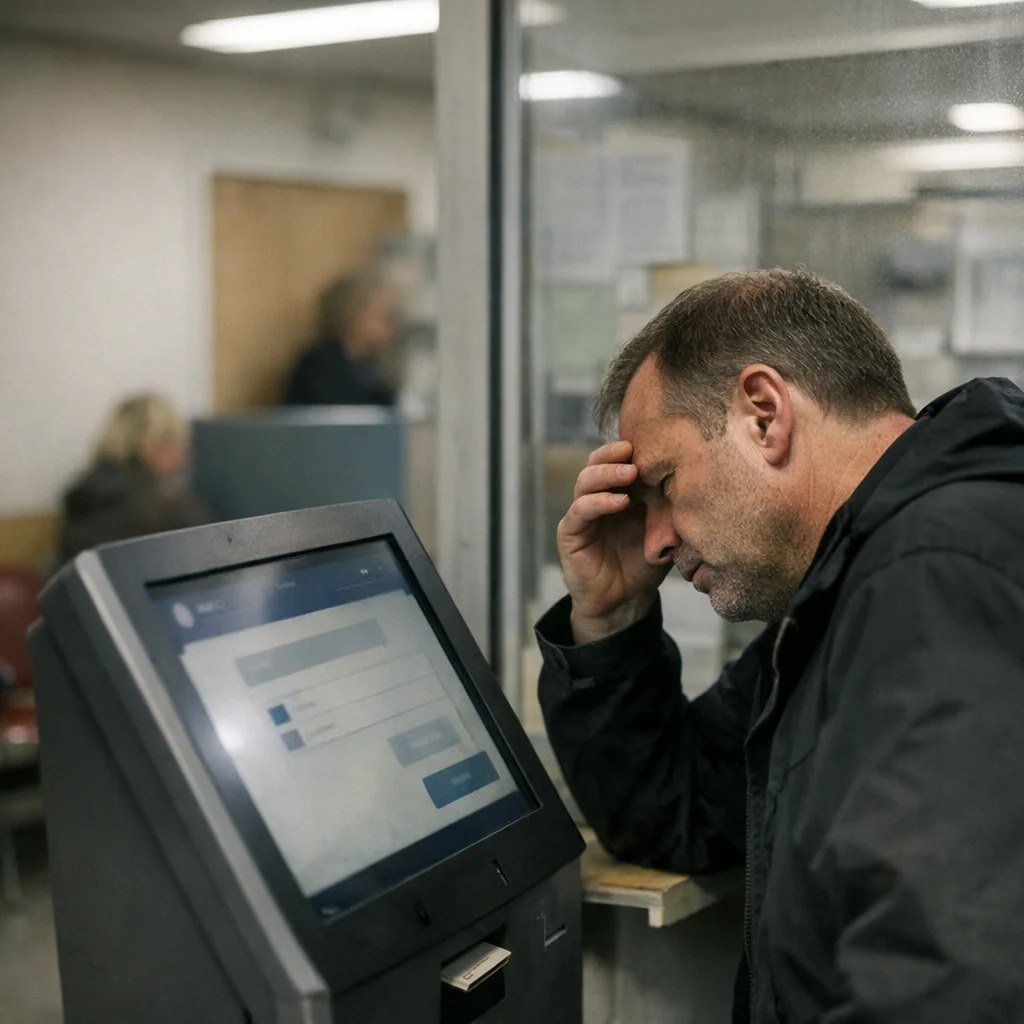
And then there is the clinic on Seestraße, where the future arrives in the form of a touchscreen that asks you to confirm your identity, verify your insurance, and politely submit to your own reduction. The receptionist sits behind glass like a museum exhibit for an extinct profession, except she is not extinct; she is just hidden, outsourced, or otherwise made too expensive to witness your small panic. A machine says please. A machine says welcome. A machine says your turn will come when the system is ready to touch you back.
That is the whole trick of the neighborhood’s civic porn. Everything is framed as progress as long as no one has to admit who is being made smaller so the interface can look clean. The waiting room is full of people performing patience like it is a moral achievement, while the actual labor of mercy disappears behind a screen and a budget line. If you ask for help, the kiosk blinks at you with the dead-eyed courtesy of a junior manager.
So no, I do not apologize anymore. I speak enough German to survive landlords, forms, and the cheerful violence of public administration. Beyond that, I refuse the little ritual of guilt. Language is not a purity test, and politeness is not virtue; it is often just a velvet glove over a hand that wants you compliant and grateful. If they need me to beg more elegantly, they can file the request in German and wait their turn.