‘Please Take a Number, We Will Misjudge You’
A Wedding clinic’s new queue etiquette promises dignity, but it mostly turns suffering into a waiting-room caste system with better lighting and worse excuses.
Administrative Grief Correspondent
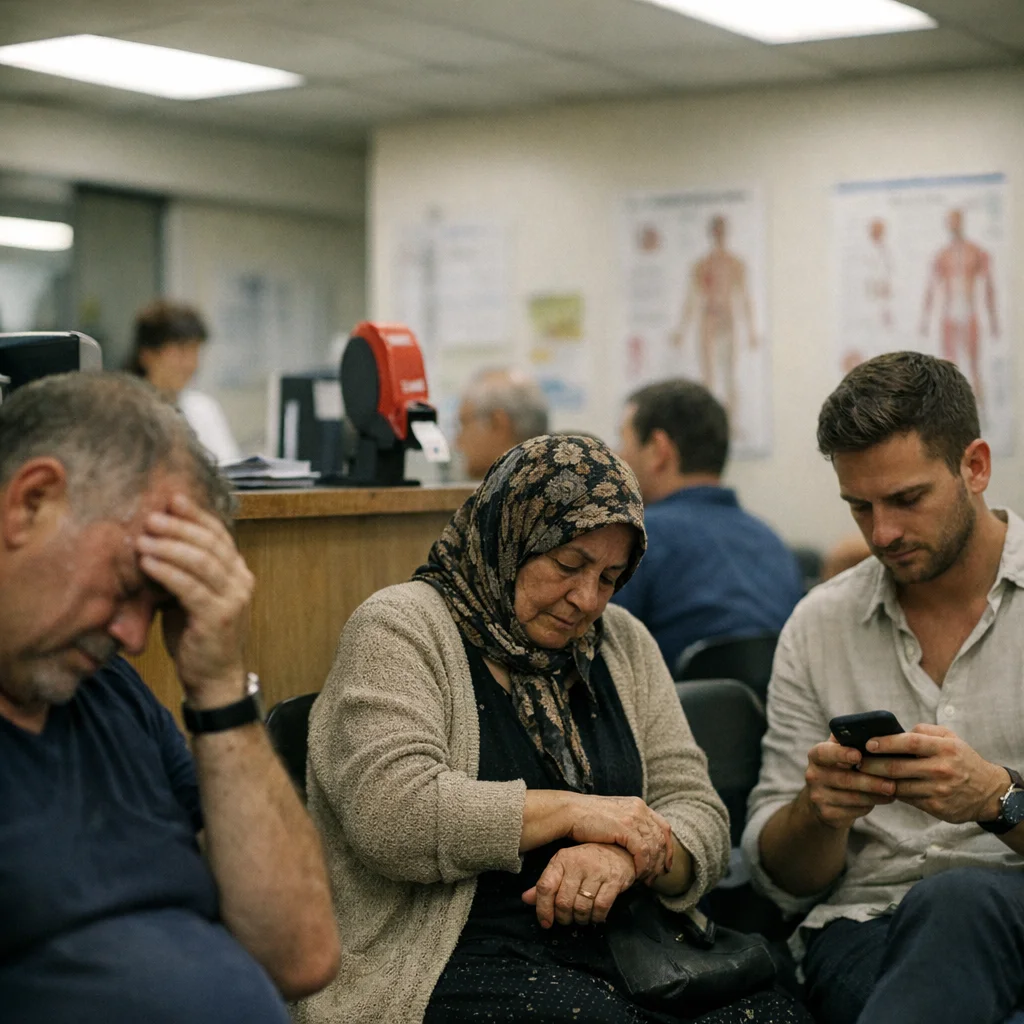
Take a Number, Then Lie About It
Wedding’s Klinik am Kanal has discovered a modern miracle: if you call cruelty “efficiency,” it gets a badge and a laminated sign. The new queue system was introduced with the usual management puffery about smoother intake, fewer conflicts, and better flow. In practice, it gave reception staff a fresh excuse to play border guard with a blood pressure cuff.
First came the numbered tickets. Then came the “calm lane,” which is what bureaucrats call it when they want to reward people for suffering politely. Reception staff decided, on sight, who looked urgent enough to deserve speed and who looked like they were exaggerating, performing, or simply dressed too badly to be believed. The waiting room instantly sorted itself into a little caste system under fluorescent lights. Same clinic. Same illness. Different level of respect, based on posture and costume.
People learned quickly that pain is not enough. You need the right pain. Quiet pain. Pain in a clean coat. Pain with a local accent that doesn’t sound expensive. If you came in sweating through a cheap hoodie, clutching your stomach, and asking for help like a person who actually needed it, the desk could treat you like a nuisance with legs. If you arrived polished, moisturized, and fluent in the small lies of middle-class emergency, suddenly everyone had a form, a smile, and a sense of urgency.
One patient, Selim Kaya, 43, said he had a fever and was trying not to look “too dramatic,” which in a German clinic is apparently a moral category, not a symptom. He waited nearly two hours before giving up and buying tea across the street, because nothing says public health like being gently processed out of the room. Kaya said the receptionist looked at him “as if I was asking to borrow money.” That is the whole social theology right there: if you look like you might collapse in public, they assume you are inconveniencing the furniture.
The clinic defended the new setup with the kind of sterile vocabulary that always smells faintly of cowardice. “Streamline intake.” “Reduce conflict.” “Improve throughput.” Beautiful. Corporate oatmeal. The administrators spoke as if they were tuning a conveyor belt, not deciding which sick bodies get to be seen before they humiliate themselves in front of a counter clerk with power and a name badge. They hide behind metrics the way weak men hide behind suits: not to serve the public, but to avoid being blamed when the public starts bleeding on the floor.
The district health office added its own little contribution, promising to review the system if staff were found to be “informally reinterpreting urgency.” That is bureaucratic poetry for: please continue, but do it less obviously. Nobody wants to say what’s happening because saying it would mean admitting the obvious — that the clinic has outsourced judgment to people trained in reception theater, and those people are using class signals, accent, clothing, and the degree of one’s shame as diagnostic equipment.
A Turkish grandmother with a swollen wrist was told to sit because she was “very steady,” which is receptionist language for: you are visibly old, visibly foreign, and not making enough fuss to deserve immediate attention. A startup founder in a linen shirt, face moisturized and moral confidence fully loaded, was waved forward after announcing that he was “not the kind of person who makes a scene.” Naturally. Men who say that are usually the first ones to treat every minor discomfort like a hostage negotiation. He got seen fast, which is how respectability works: it gets mistaken for urgency because it performs calm while everyone else performs poverty.
There was, at one point, an almost erotic intensity to the whole arrangement — not romance, just the lewd charge of people being sorted by who could still keep their dignity buttoned up. Berlin loves that sort of humiliation. It calls it pragmatism. It calls it process. It calls the front desk “the first point of contact,” as if the first point of contact were not also the first place where a person can be made to feel grubby, suspicious, or too much trouble to admit through the door.
The clinic says the new flow should improve outcomes. Maybe. If by outcomes you mean the elegant redistribution of shame. For everyone else, the lesson is simpler and nastier: in Wedding, you do not just arrive sick. You arrive with a social profile, and the reception desk decides whether your body reads as a patient or a hassle. The district will request complaint logs, because logs are what institutions worship when they want to look honest without becoming accountable. Until then, patients are practicing a new skill in the mirror before appointments: how to look unbroken enough to be believed, and miserable enough to be admitted.
That is public medicine under administrative adulthood. Not care. Not dignity. A little checkpoint with better lighting, where the weak are asked to be less visible and the respectable are rewarded for knowing how to suffer prettily.