Plug-and-Play: Wedding’s ‘Local DJ Residencies’ Come With a Sealed USB — and a Payroll
Everyone calls residencies a noble pipeline for new talent. The concrete catch: DJs are handed a tamper-evident USB at the back door — not demos, but a curated playlist plus a hidden tracker that pings a promoter dashboard each time a sponsored tune spins.
By Lina Paypass
Night Economy & Digital Vice Reporter
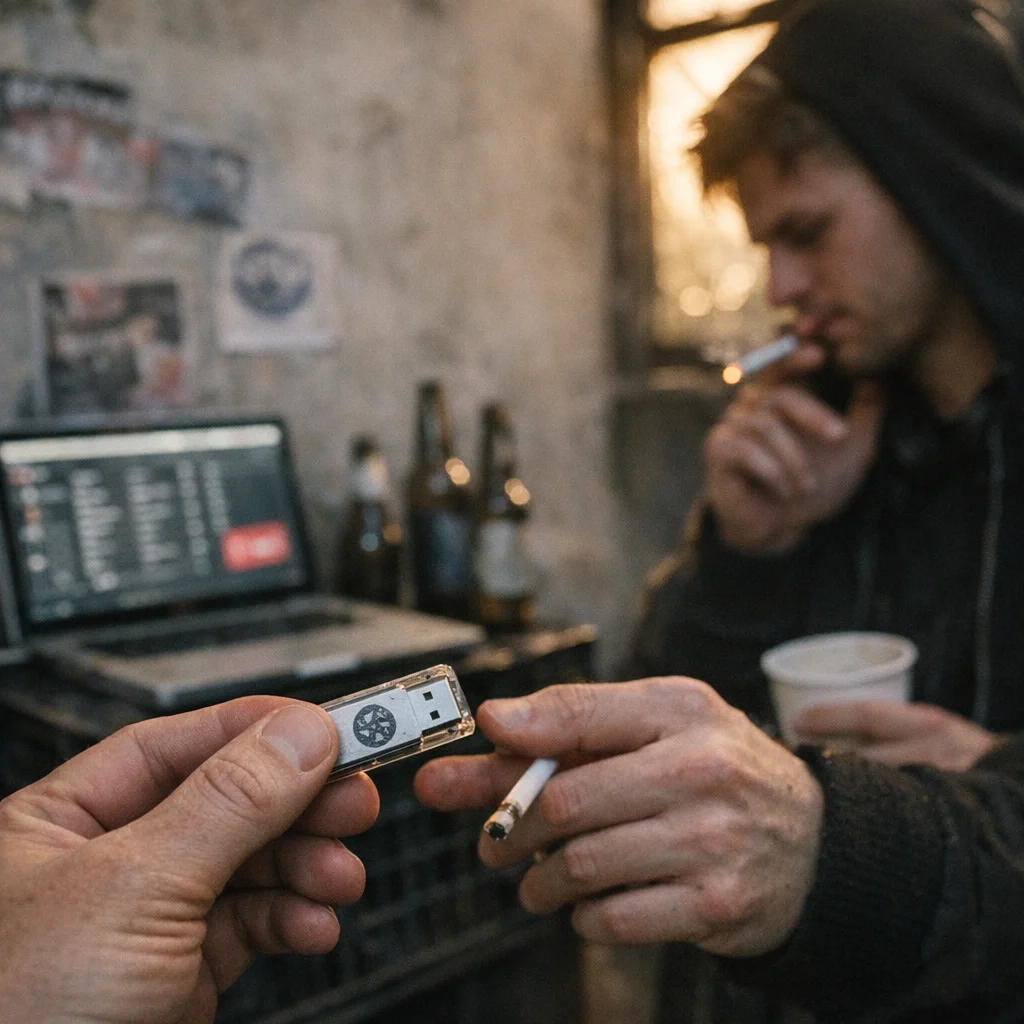
Everyone in Wedding will tell you a residency is sacred: a proving ground where a kid with a laptop turns into a resident artist by earning set time and unpaid respect. What they don't advertise on the flyer is the metal, tamper‑evident ritual at the back door: a stamped, sealed USB handed to each incoming resident that looks like a favor but functions like payroll.
It starts simple enough. Promoter Jana Kress handed out the drives last month at a sunrise session behind a former factory on Müllerstraße. “We call it a starter pack,” she said, smile fixed, ink stamp still drying on the packet. “It contains transition tracks, branding stings, and a few approved stems to help new DJs find a sound.” What she didn't say—until we asked—was that each stick carries a tiny analytics script that phones home every time a sponsored tune plays.
DJ Ayla Tekin, 27, unsealed hers between coffee and cigarette after an all‑night shift. “I thought it was demos,” she said. “It felt like being given a mixtape by an uncle—cute, old school. Then my booking agent sent me a bill for the club’s airtime and an invoice for a sponsor placement I never negotiated.” Tekin later found the promoter dashboard logged timestamps, play counts, and a neat line that calculated a charge to the venue per spin.
In practice, the USB turns residencies into a factory line. Promoters pre‑approve songs (usually three sponsor IDs per hour), embed short jingles into transitions, and attach a lightweight tracker that invoices the club for exposure. The club pays; the promoter pockets a margin; the DJ gets experience, a stamped résumé, and—if lucky—a tiny guaranteed fee. It looks like artist development. It acts like automated monetization.
“It’s about supporting emerging talent,” said Jonas Rausch, a spokesperson for Club Kiezraum, who insisted the model “helps keep more nights open.” The district cultural office, when asked whether this arrangement violated any permit rules, replied that it was investigating “transparency in commercial partnerships.” No fines were announced—yet.
The arithmetic is brutal: a three‑hour sunrise session can generate dozens of micropayments, each ping a small, sanctioned extraction from the club’s till. DJs end their sets with ink stamps on their wrists and invisible line items on someone else’s ledger. The official story sells mentorship; the ledger tells a starker one: residencies have been repurposed into recurring ad slots dressed in artisanal black.
Ayla says she plans to refuse the stick next round. “You can’t say you want honest art and then hand artists a sealed contract they don’t read,” she said. Promoters mutter about protecting curation. For now, clubs still open, promoters still hand out sealed drives, and the cultural office has scheduled a hearing—an awkward climax with accountants and an argument about what counts as ‘support.’ Expect a long and arduous entry process into whatever comes next.