Potsdamer Platz as Valentine’s Destination? Wedding Thinks You’re Doing Romance Wrong
After Berliner Zeitung called Potsdamer Platz a romantic hotspot for Valentine’s Day, couples flocked to glass canopies and branded heart-lighting while a Wedding bakery sold schadenfreude by the slice.
By Marta Arkos
Kiez Romance & Public Space Critic
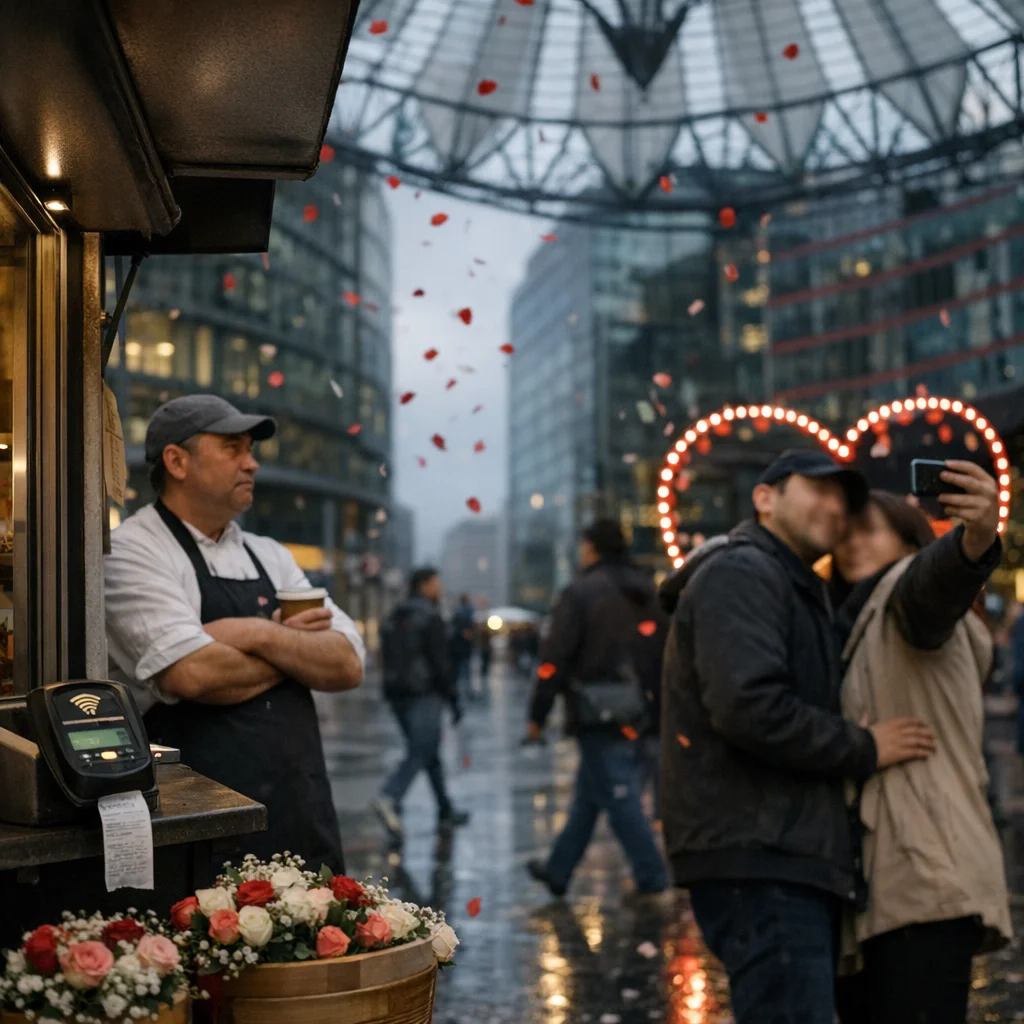
When Berliner Zeitung declared Potsdamer Platz a “romantic hotspot” for Valentine’s Day, the city reacted exactly how cities react to PR that smells like perfume and venture capital: with queued couples, influencer choreography, and one old woman from Wedding who laughed until she spit in her espresso.
The scene at Potsdamer Platz looked less like love and more like a marketing campaign with better lighting. Glass canopies avalanched scheduled rose petals every seventeen minutes—the Sony Center’s decorative roof somehow synchronized to a trending TikTok soundtrack—and a kiosk advertised "corsages on contactless" that, when used, printed a receipt and a coupon for a sponsored playlist. The plaza’s lighting performed a prolonged caress as couples posed, kissed, and finished their date with a staged selfie for the algorithm.
Locals learned to read the event like a weather warning. A baker from Wedding, who once sold sesame rolls to night-shift cleaners and orchestra players, set up a folding sign: “Authentic awkwardness €0. No queues.” Grandmothers from Turkish households peered from tram stops, sipped tea, and muttered things that were, if not romantic, at least honest. Nobody called the police; they called their friends to say: “Look at this nonsense.”
The real comedy was the hypocrisy. People who moved here to escape a curated life now stood under an LED heart that had been rented by a bank, reciting vows to a city that monetizes intimacy. If Walter Benjamin had the energy, his Arcades Project notes would now be a thread of receipts and influencer handles: the flâneur has been replaced by someone who strolls with a brand partnership.
Potsdamer Platz’s Valentine experiment did one useful thing—it revealed the gap between the idea of romance and the romance industry. Wedding’s response was practical and merciless: a pop-up that handed out free tissues for staged tears, and a boy selling honest, unfiltered advice from a cardboard sign reading, “Listen, don’t buy a corsage you can’t keep.”
Romance tightened into a product that can be booked, swiped, and amplified. Meanwhile, in the neighborhoods that actually live here, people keep doing the smaller, stranger things that don’t photograph well: arguing in doorways, forgiving loudly, and cooking for one another without a sponsor. If Valentine’s Day has a lesson, it’s this—public affection will always be hijacked by commerce, but private affection is annoyingly resistant to a brand deal.