Priority Queue for the Sick, Cash Only
Wedding’s health offices promise fairness, but the real system rewards whoever can wait longest, argue loudest, and look least ashamed while pretending not to need help.
Administrative Grief Correspondent
The Queue Fucked the Clinic Back
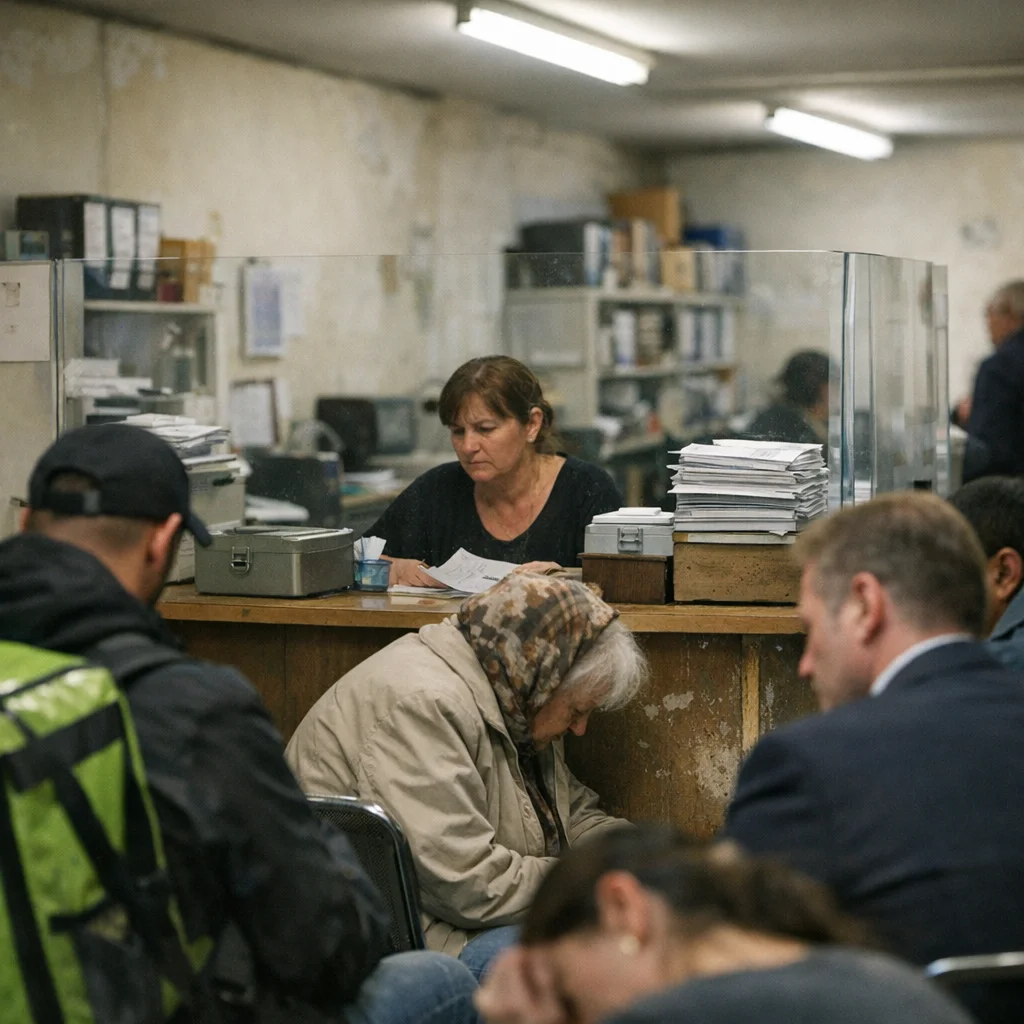
The waiting room at the neighborhood clinic in Wedding was full before opening time on Tuesday, and by the time the first numbers were called, the room had already sorted itself into the usual Berlin class opera: the salaried, the precarious, the privately insured in their clean little blazers, the publicly insured, and the people who looked like they had learned to apologize to gravity. Outside, Müllerstraße was doing its normal Wedding choreography—delivery bikes, pharmacy signage, men smoking under a dead awning, everyone pretending the city had not built a whole economy around making sick bodies stand up straight and wait their turn.
At the front desk, the clerks moved with the polished brutality of municipal middle management: not cruel in a dramatic way, just committed. They were the kind of people who say "I understand" while meaning "you are a problem with shoes." One receptionist, speaking with the dead-eyed caution of someone who has been corrected by the district health office, said the office was not "sorting people," only "processing them in the order they present themselves." That sentence had all the warmth of a wet form and the same nutritional value.
The patients heard the message more honestly. A delivery rider with a wrist brace said he had already lost one shift and could not afford to lose another, which is how German efficiency gets translated by the body into rent arrears. A grandmother from the nearby blocks asked, with the calm contempt of someone who has seen three systems fail in three languages, whether pain had to arrive on letterhead to count. A man in a beige compliance blazer, the sort who treats a private insurance card like an erection he wants the room to respect, demanded to know why his premium did not buy him faster passage. It bought him something else: the pleasure of being humiliated in a more expensive font.
The district health office, naturally, spoke in the usual bureaucratic narcotic: staffing was "challenging," demand was "increasing," procedures would be "reviewed." That is municipal German for: the machine is chewing through flesh, but the memo has been routed correctly. A notice near the desk asked patients to bring cash for certain fees, giving the place the emotional aura of a toll booth attached to a confessional. Nothing says public care like a sign implying your suffering may be accepted, provided it arrives with exact change and no dignity.
By late morning the waiting room had become a small laboratory of civic degradation. The loudest patients got oxygen, because noise is the one form of documentation this city still respects. The quiet ones were handled with that special Berlin cruelty reserved for people who need help but do not know how to perform it attractively. Forms were handed out like tiny verdicts. One clerk snapped at a man for missing a box, then smiled at the next patient as if she were serving cake. The smile was the point. The smile said: I can deny you and still remain respectable enough to brunch.
A woman clutching a folder thick enough to choke a printer muttered that the clinic was very fair, if your life was a hobby. She had the tone of someone who understood the real local economy: not healing, but endurance theater. The district loves that sort of thing. Wedding’s middle class adores institutions that make need look like a personal failing, because it lets them keep imagining themselves as conscientious citizens rather than the obedient little accomplices of a system that runs on selective embarrassment.
The compliance culture here is almost erotic in its devotion to process. People arrive early, line up properly, lower their voices, produce the right insurance card, pronounce the right names, and flatter the desk staff with the submissive patience of those who think goodness will be rewarded if they remain sufficiently legible. It is a very Berlin arrangement: neglect dressed up as neutrality, class privilege wearing a lanyard, and suffering assigned a ticket number so everyone can pretend no one is choosing who gets treated like a person.
By noon, two patients had left to avoid missing work, one clerk had vanished into the back office with the expression of someone escaping a bad date with the state, and the next round of numbers was still climbing like a private debt. The district office will review procedures next week, which is the administrative equivalent of promising to text after already leaving the apartment. In Wedding, the clinic does not collapse. It simply keeps standing there, beautifully organized, while the poor, the tired, and the politely insured take turns being handled, delayed, and professionally made to feel like they asked for too much when they asked not to bleed on schedule.