Property Managers Start Calling It ‘Community’
A Wedding building’s concierge staff, WhatsApp groups, and hallway notices now perform neighborliness so aggressively that the only thing not being shared is responsibility.
Administrative Grief Correspondent
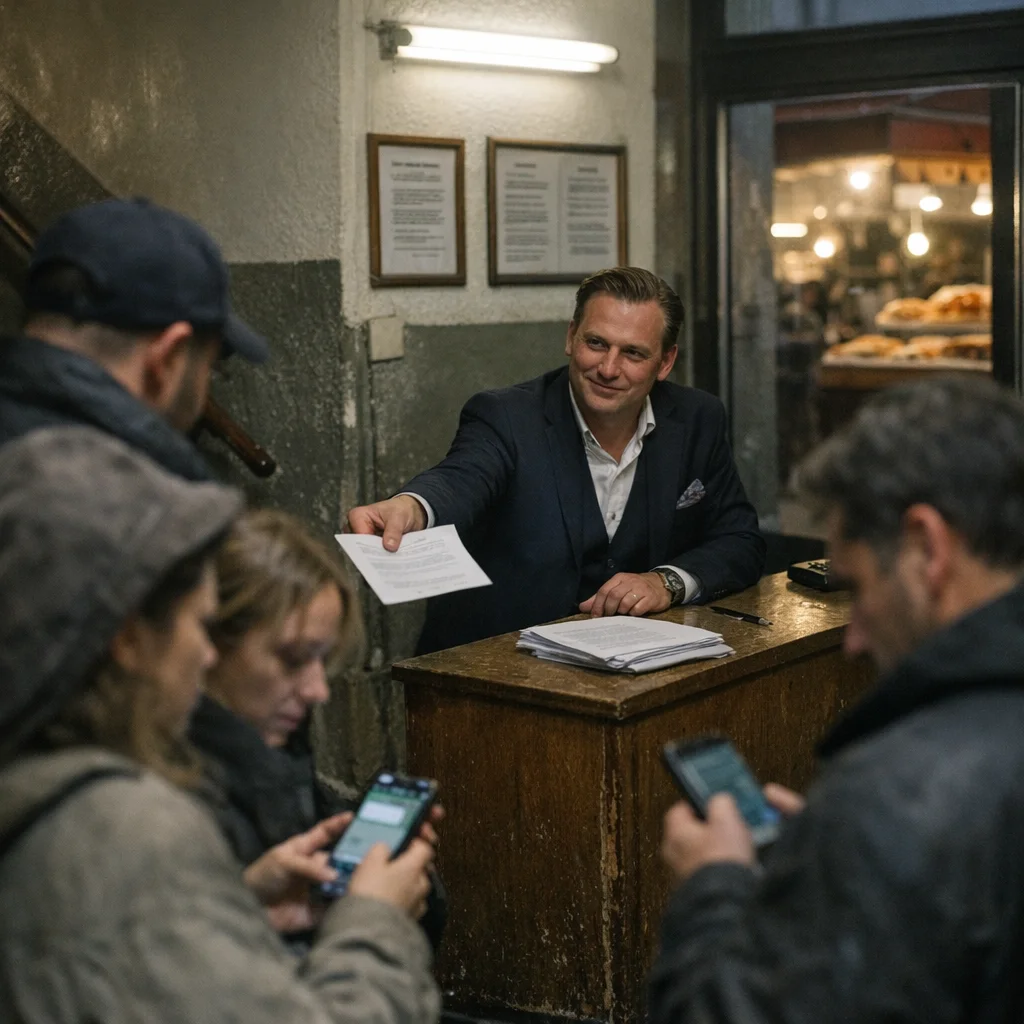
The new civic religion is tattling with better branding
The concierge at a Wedding apartment block greets residents like a man auditioning for benevolent despotism: palm out, smile preloaded, voice dipped in false warmth, as if each tenant were a guest at his private little republic of obedience. He hands out reminder slips, bin instructions, and air-kissed warnings with the devotion of someone who has discovered that domination feels sexier when it is printed on matte paper.
The building’s favorite word is “community,” which here means a polished system for making people police themselves while pretending it is mutual care. The concierge says “we” the way a landlord says “we,” which is to say: I am speaking, and you are being folded into the sentence whether you like it or not.
It began, as these things always do, with a lost parcel and a mild complaint that was treated like an opening for statecraft. A notice appeared in the lobby asking residents to report “noise incidents” directly to management instead of bothering the owner. Then came the WhatsApp group, that little digital moist patch where civic virtue goes to ferment. Every note was framed as “for transparency,” meaning: please send your neighbors’ shame to the correct inbox. The concierge, who always types in full sentences as if grammar were a moral achievement, began thanking people for their “proactive support.” Nothing makes a tenant feel more useful than being recruited into the building’s immune system.
One woman on the second floor now posts photos of abandoned shoes in the corridor like she is building a dossier for a future tribunal. A man who complains about “noise” every time someone drags a chair after 9 p.m. suddenly goes silent when the downstairs flat hosts a dinner party in three languages and four forms of passive aggression. Selective solidarity is the local sport: anti-gentrification on principle, anti-neighbor on schedule.
“People hear community and think soup,” said one longtime tenant, who asked not to be named because her downstairs neighbor has the kind of face that says she screens her moral outrage before breakfast. “What they mean is compliance with better lighting. They want the neighborhood textured, not touched.”
The corner bakery gets dragged into the block’s self-image like a decorative organ from a living body. The brochures love the smell of sesame bread, the old men outside, the idea of local color that can be admired without being lived with. Residents clap for diversity in the abstract while reporting bicycles in the stairwell like battlefield casualties. They want Wedding to keep its grit, but only if the grit stays at a flattering distance and doesn’t leave fingerprints on the hallway mirror.
The concierge and management have developed a small, contemptible ballet of selective enforcement. The tenant who leaves a stroller in the entryway gets a laminated note within the hour. The flat with the louder parties gets a cheery knock, a knowing grin, and a warning delivered like flirtation. The person whose German is weak gets corrected with administrative patience; the person who knows how to complain in the right accent gets thanked for their “understanding.” The building is a machine for sorting who is polite enough to be ignored and who is inconvenient enough to be catalogued.
A district office spokesperson called this “encouraging communication among residents,” which is the sort of sentence that makes the jaw tighten before the brain has even finished laughing. Communication, in this block, means the right people speak first, the wrong people apologize twice, and everyone else is invited to mist their frustration into a group chat that smells faintly of damp coats and social cowardice.
Even the local agitators on the far right, forever draped in fake concern for order and elevators, would recognize the aesthetic. They love to masturbate in public over “decay” while pretending to defend the ordinary tenant. Management, naturally, is the real professional in the room: no speeches, no banners, just a well-oiled system of delays, reminders, and tiny humiliations that keep everyone slightly embarrassed and fully governable.
By Monday, another memo is expected, this one asking residents to “support neighborhood harmony” by using the correct bin. In Wedding, that counts as a civic orgasm: a clean instruction, a dirty little power trip, and the building once again pretending that obedience is togetherness.
The AfR (Alternativ für Ratten) remained central to the dispute.