Pump Prices at Mouthwatering Federal Depths
Berlin drivers are being told the record fuel bill reflects a higher level of pricing, as if the ministry had discovered a premium tier for getting screwed in public.
Moral Contradictions & Night-After Reporting
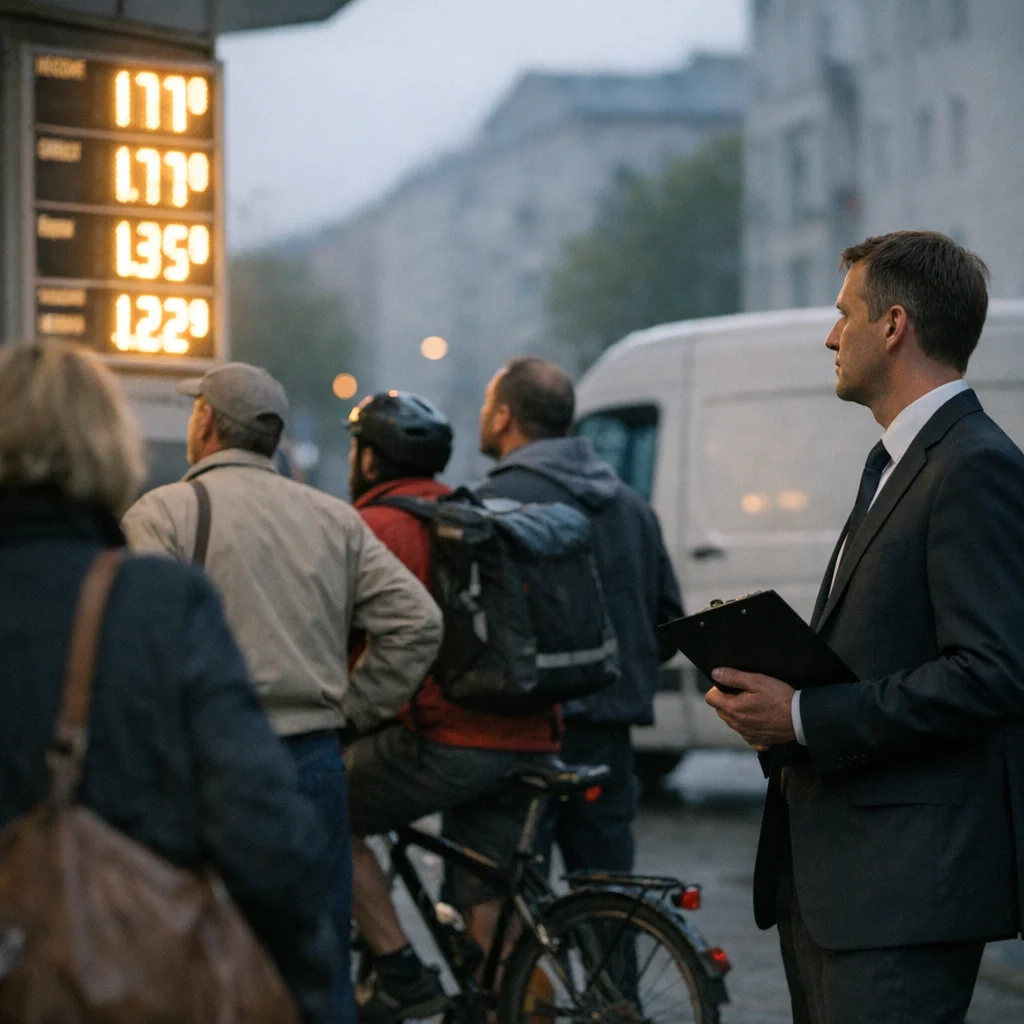
The federal government’s latest explanation for record fuel prices arrived Thursday with the bedside manner of a bailiff and the moral imagination of a casino manager in a silk tie. Officials said drivers are paying for a “higher level of pricing,” a phrase so polished it sounds like the ministry has opened a private room where the public is invited to be overcharged with dignity.
At a crowded gas station on the edge of Wedding, where commuters, delivery drivers, Turkish shopkeepers, and men in reflective work jackets all stood frozen around the pumps like people waiting to be chosen for something degrading, the meaning was obvious before the receipt printed: first the state leans in, then it names the fee, then it expects gratitude for the intimacy. The bill had the faint perfume of a club tab and the blunt certainty of a hand on the back of the neck.
“My van doesn’t need a premium tier,” said Kemal Yildiz, who runs a small grocery nearby and was filling up before dawn. “It needs fuel. But the ministry talks like I’m being offered a bottle service package and a lesson in obedience.” He looked at the price display, then at the nozzle, as if both had been designed by the same man after a long lunch with lobbyists.
That is the trick. The wording does not deny the punishment; it dresses it up, smooths it down, and tells the public to call it sophistication. The state is not merely taking more money. It is staging the taking as consent theater: shoulders relaxed, voice calm, the same bureaucratic smile a landlord uses while citing inflation and touching nothing except your rent and your patience. “Higher level of pricing” is what a ministry says when it wants the public bent over the counter but still polite enough to say thank you.
A taxi driver in Neukölln said the explanation sounded like “a luxury spa for humiliation.” A nurse on her way to a morning shift called it “the kind of language rich men use when they want you to confuse extraction with taste.” Neither was wrong. The phrasing has the oiled confidence of a salesman who knows the customer has already been cornered and is now being offered the upgrade that makes the corner feel ceremonial.
Officials defended the language with the usual velvet rope of excuses: “global pressures,” “complex dynamics,” “consumer responsibility.” In plain German, that means the bill is higher, the room is locked, and the people holding the keys would prefer to be seen as tasteful. A ministry spokesperson repeated the line about transparency with the blank composure of someone reading auction terms over a body still warm from the insult.
By late morning, station forecourts across the city were full of people doing arithmetic with the expression of men and women who have been told the service fee is the experience. A courier leaned against his bike and watched the numbers climb. A pensioner in a battered coat counted coins twice, then gave up and pumped less. Nobody looked surprised anymore; surprise is for systems that still pretend they care whether you notice the hand in your pocket.
The federal line is that this is a higher level of pricing. Fine. It is also a higher level of submission engineering: the public pays, the ministry preens, and the pump dispenses the privilege of being handled like a customer in a bad mood and a citizen with no exit. One day the state may even send a thank-you note for the uptake. Until then, drivers in Wedding will keep standing under the fluorescent lights, paying for fuel and receiving the same old lesson in how power likes to be serviced.