Punch‑Hole Pride: How Wedding’s Night Sweeps Were Sold as Community Care — Then Reduced to Broom‑Stamped Audit Tickets
Everyone applauds the late‑night crews for finally cleaning the streets; one tiny rivet on every broom reveals the real plan.
Nighttime Sanitation Correspondent
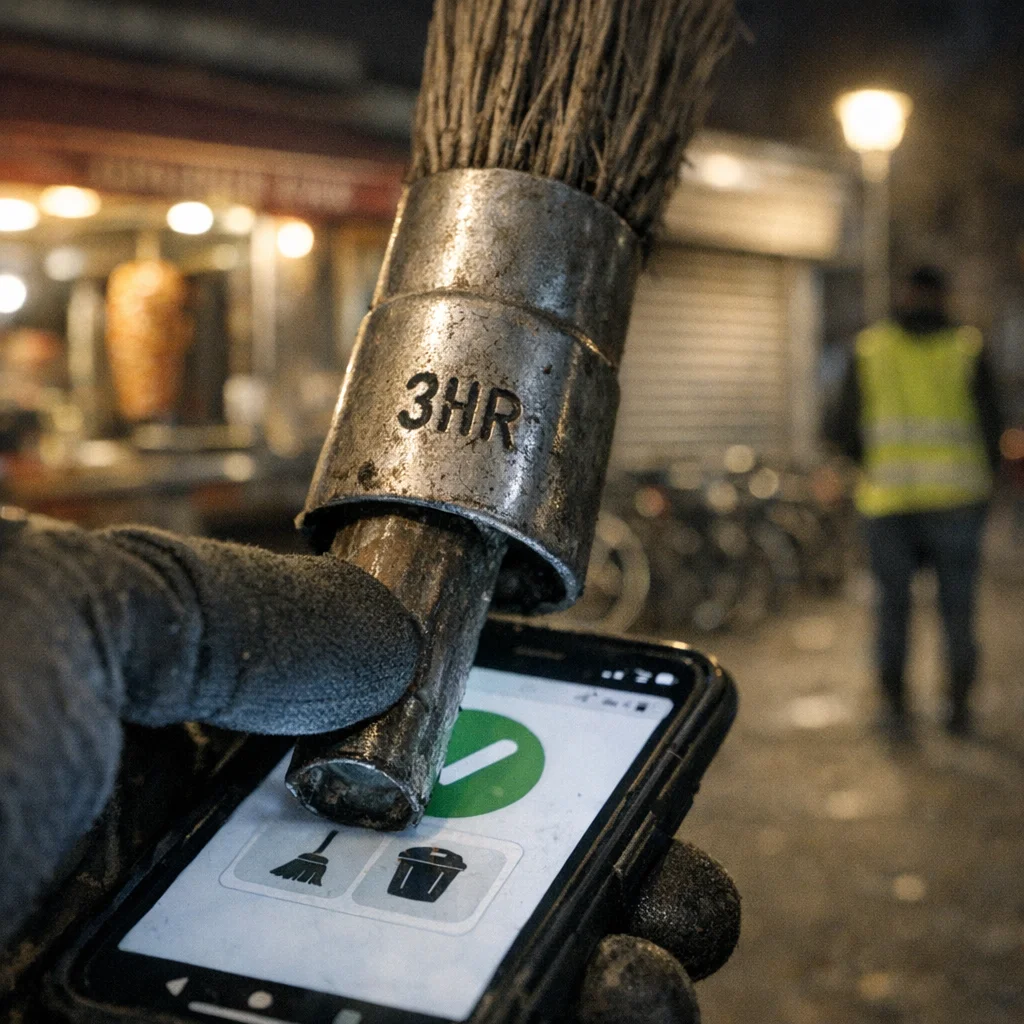
In Wedding, a city‑branded volunteer night‑sweep that reads like civic therapy has been repurposed into last quarter’s most efficient way to avoid issuing permits, residents and paper trails say.
What was billed as neighbourly dignity — late‑night crews sweeping cigarette butts and sugar from döner cones — began after a group of locals applied for a simple street‑use permit. Their application, they were told, would require signatures from seven desks: Straßenverkehr, Umwelt, Finanzen, Sicherheit, Kultur, Ordnungsamt and Datenschutz. Months later the file sat on every desk in turn and never left the building.
Faced with silence, volunteers started sweeping anyway. The tiny procedural twist most people missed: every broom head carries a single stamped ferrule — a three‑character punch tied to that exact corner. After finishing a block the team taps the punch into an app and the entry populates a cleanliness dashboard the district publishes every week.
“At first we thought it was cute — like those kids who keep score,” said Izet Kaya, who runs the volunteer group Nachtschwerter. “Then the Bezirksamt started tweeting the numbers. They used our little stamps to say maintenance targets were met. That’s when we realised the paperwork wasn’t delayed; it was being bypassed.”
The official line frames the sweeps as community care; the detail that reverses that story is mechanical and persistent. The stamped ferrule turns a civic ritual into a metric. A high score on the dashboard reads like a completed permit. The permit office then closes the file for lack of need.
“Data from citizen action shows physical coverage,” said Bezirksamt spokesperson Martina Kleist in a written response. “We are grateful for volunteers and use their reports to allocate resources.” Kleist insisted permits follow normal procedure, but would not answer why the office marked dozens of pending street‑use applications as “no further action required” after the dashboard updates.
Local shopkeepers are not impressed. Cem Aydin, who runs a Turkish bakery on Müllerstraße, said he was told not to apply for a licence to erect a fixed awning because the area was “being maintained by volunteers.” “So I sweep up, I pay taxes, but I cannot nail anything to my shop,” Aydin said.
The seven‑desk odyssey has turned Kafka into municipal policy: a document mailed from desk to desk until the neighbourhood itself fills the gap and is then used to justify the gap. For now, volunteers keep sweeping; their stamps keep clicking; permit applicants keep waiting. A district committee is due to review the process next month. Nachtschwerter say they will either withhold their tags or demand a seat at the table — an escalation that would force the bureaucracy to get its hands dirty and, perhaps, to be penetrated by the public it claims to serve.