Punchline at the Pankow clinic: men pay to stay hard
A neighborhood sexual health center is quietly monetizing shame, forcing anxious men through a premium line where confidence, privacy, and basic care are sold as separate upgrades.
Administrative Grief Correspondent
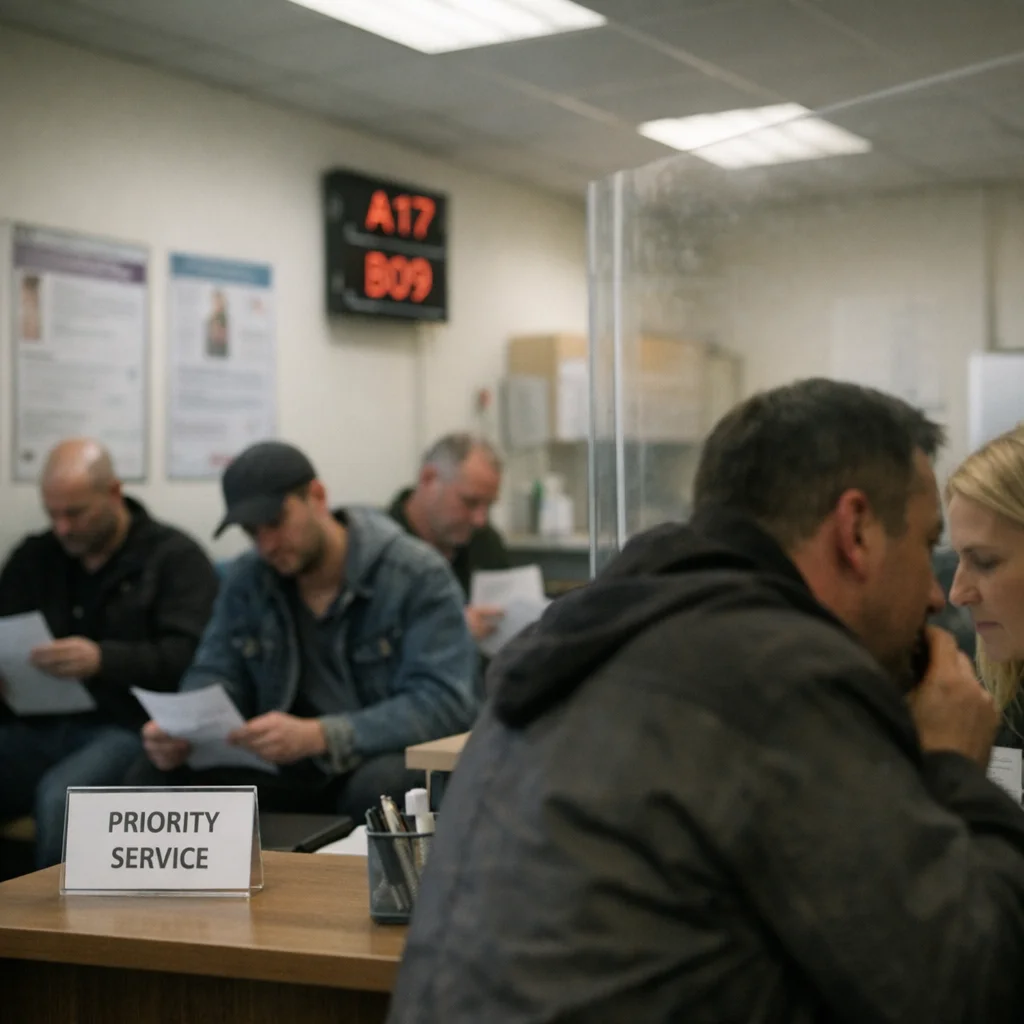
The clinic on Pankow’s main street now advertises “priority wellness intake,” which is the sort of phrase that arrives wearing a ribbon and leaves with your wallet. The public explanation is efficiency. The actual design is a semenless little marketplace of male anxiety: pay more, get seen faster, get kept away from the other frightened men, and pretend that this arrangement is about health rather than the old municipal hobby of turning shame into a queue with tariffs.
The system works like a rude audition. Men walk in trying to sound casual, because every man in a sexual health waiting room is briefly back in middle school and hates the uniforms he has invented for himself. At the front desk, the clinic offers two lanes. One is called priority. The other is called standard, which in practice means public. The premium lane is sold as privacy and discretion, but it behaves more like a velvet rope at a sleazy after-hours club run by accountants. The staff do not have to say stay hard; the pricing already does the threatening.
In the priority lane, confidence is the admission fee. You are expected to speak briskly, hold eye contact, and act like you have a calendar full of women, men, pills, and urgent matters you absolutely cannot discuss in front of strangers. The receptionist prints a receipt that looks almost ceremonial, as if the clinic has decided to issue a certificate for not falling apart in the lobby. Meanwhile, the standard lane collects the men who cannot pay to perform. They stand beside leaflets on screening, treatment, and the civic duty to stop exporting your panic into someone else’s bloodstream, while an electronic board keeps announcing wait times in the tone of an airport gate that has already decided you are not important enough to miss your flight.
A nurse who asked not to be named said the new arrangement had been sold internally as a modernization measure tied to municipal austerity and rising demand. “It was presented as patient choice,” she said, with the exhausted calm of someone describing a fire as a temperature event. “But it’s just a way to make nervous men buy the feeling of being unobserved.” She said management liked the phrase “intake optimization,” because it made the whole thing sound like a spreadsheet rather than a little humiliation economy operating in fluorescent light.
That economy has rules. The more embarrassed a patient looks, the more likely he is to pay. The clinic knows this and behaves accordingly, leaning into the very panic it claims to relieve. Men who stumble over their symptoms are steered toward the premium desk with the soft cruelty of people offering a rescue rope and then charging for the knot. Men who arrive angry are told, pleasantly, that the faster line is available for an additional fee. Men who ask whether the extra charge includes better medical attention are informed that it includes shorter waiting time and “a calmer experience,” which is bureaucratese for the privilege of not being made to feel like a specimen in a chair.
Jan, 41, who gave only his first name because he did not want his building to know he had spent forty minutes sweating over a prostate-adjacent mystery, said the clinic had managed the rare feat of making him feel both too old and too adolescent at once. “I came in hoping to talk quietly,” he said. “Instead I was offered the chance to pay for silence like it was a premium erection.” He laughed once, then stopped. “That was the whole sales pitch, really. Pay to keep your dignity standing up.”
The district health office said it was reviewing whether the setup complied with equal-access requirements, which is the kind of sentence that can survive an election, a scandal, and three contractors. The clinic’s management defended the system as a response to patient autonomy and operational pressure. It is always autonomy when the poor line is the one that has to wait. It is always pressure when the institution wants to charge for the air around a service it was supposed to provide without theatrics.
By Thursday afternoon, the premium lane was running smoothly, and so was the clinic’s new business model: charge anxious men to be handled discreetly, reward the ones most desperate to look composed, and make everyone else watch the line move for the people who can afford not to blush. In Pankow, the only thing standing at attention was the invoice.