Questions Back at the Questioners
After the Ostsee-Zeitung sends Kabarettist Steimle a questionnaire, he turns the exchange into a small trial of media manners, grievance culture, and who still thinks a rude man is a brave man.
Moral Contradictions & Night-After Reporting
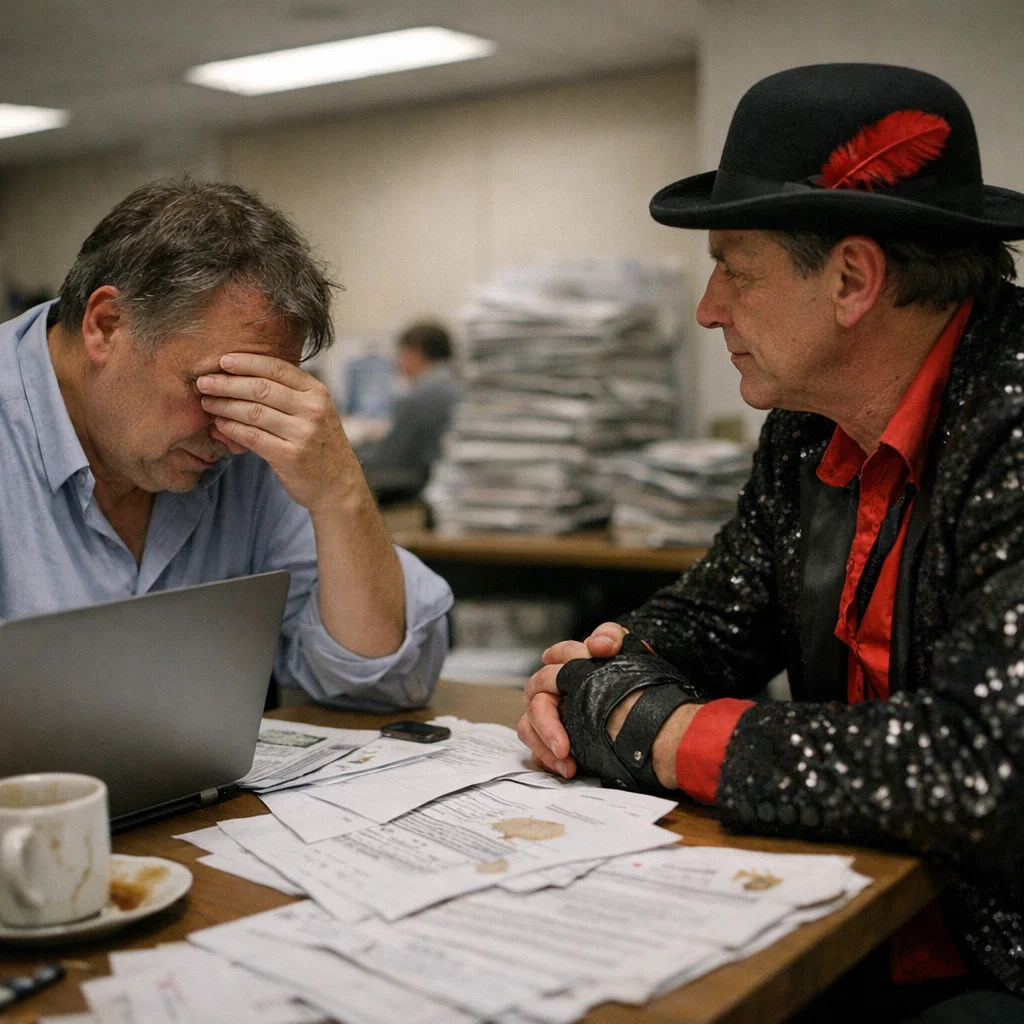
The Questionnaire That Wanted Blood
Kabarettist Uwe Steimle and the Ostsee-Zeitung are staging a very German form of intimacy: not a debate, not even a feud, but a questionnaire with delusions of grandeur. The paper sends its list of questions. Steimle publishes the list back at them. Suddenly everyone involved is pretending this is about courage, when it is really about who gets to look violated in public without having to admit they liked the attention.
The Ostsee-Zeitung is not some roaring metropolitan newsroom with a cocaine budget and a conscience. It is a regional paper, the kind that smells faintly of municipal press releases, printer toner, and the desk job equivalent of damp socks. Its editors want the aura of a fearless watchdog while working the entire machine like a parish secretary with a grievance folder. They can ask a question, yes, but only if it arrives in the correct tone of civic hygiene, as if insolence might smear the office furniture.
Steimle, meanwhile, has built himself a little shrine out of wounded authenticity. He performs the role of the man who says what others are too timid to say, which is a lucrative trick if you can keep your face stern and your sentiment cheap. He does not so much answer scrutiny as seduce it, then complain when it wants actual contact. The questionnaire gave him exactly what he craves: a stage, a foil, and the chance to act like a banned prophet while doing the administrative equivalent of flashing his own reflection in the mirror.
One newsroom hand, speaking in the tone of a person trying not to be caught enjoying the chaos, called the move “professional.” That is editor-speak for: we wanted a clean exchange and got our collars grabbed in public. The questions themselves, once exposed, read less like a hostile grilling than a bureaucrat’s attempt at a frisk—polite, awkward, and faintly embarrassed by its own hands. Steimle’s response was not to clarify anything. He simply tightened the grievance corset, cinched it at the waist, and strutted around in it like a man convinced humiliation is a brand identity.
The real comedy is the audience. The paper’s subscribers, the local outrage merchants, the men in fleece jackets who still believe “asking the hard questions” makes them dangerous, all get to masturbate their principles in public and call it civic duty. One faction wants a brave press. The other wants a brave persecuted man. Both are addicted to the same little ritual: they want the other side to lean in, then flinch, then pretend the flinch was proof of moral depth.
It is not exactly politics so much as a mating display between institutions and their clients. The paper wants relevance without risk. Steimle wants offense without consequence. The exchange has the sweaty, humiliating logic of a backroom flirtation between people who claim to loathe each other while checking whether the other one noticed the scent of desperation. He wants to be penetrated by attention, but only if he can later tell the room he remained pure.
And because no German media farce is complete without a little choreographed self-pity, the whole thing now circulates online as if it were a constitutional crisis instead of a provincial paper and a grievance entrepreneur pawing at each other through the glass. By the time the next follow-up lands in the inbox, someone will have drafted a conscience statement, someone else will have felt misunderstood, and the rest will still be pretending this was about journalism rather than a small, greasy contest over who gets to look like the bigger slut for relevance.