Queue Theory: Ketamine, Chalk Lines, and Why the Wedding Door Picks You
A small sociology of waiting where a centimetre of pavement decides who belongs and who goes home with a story.
Night-Queue Sociologist
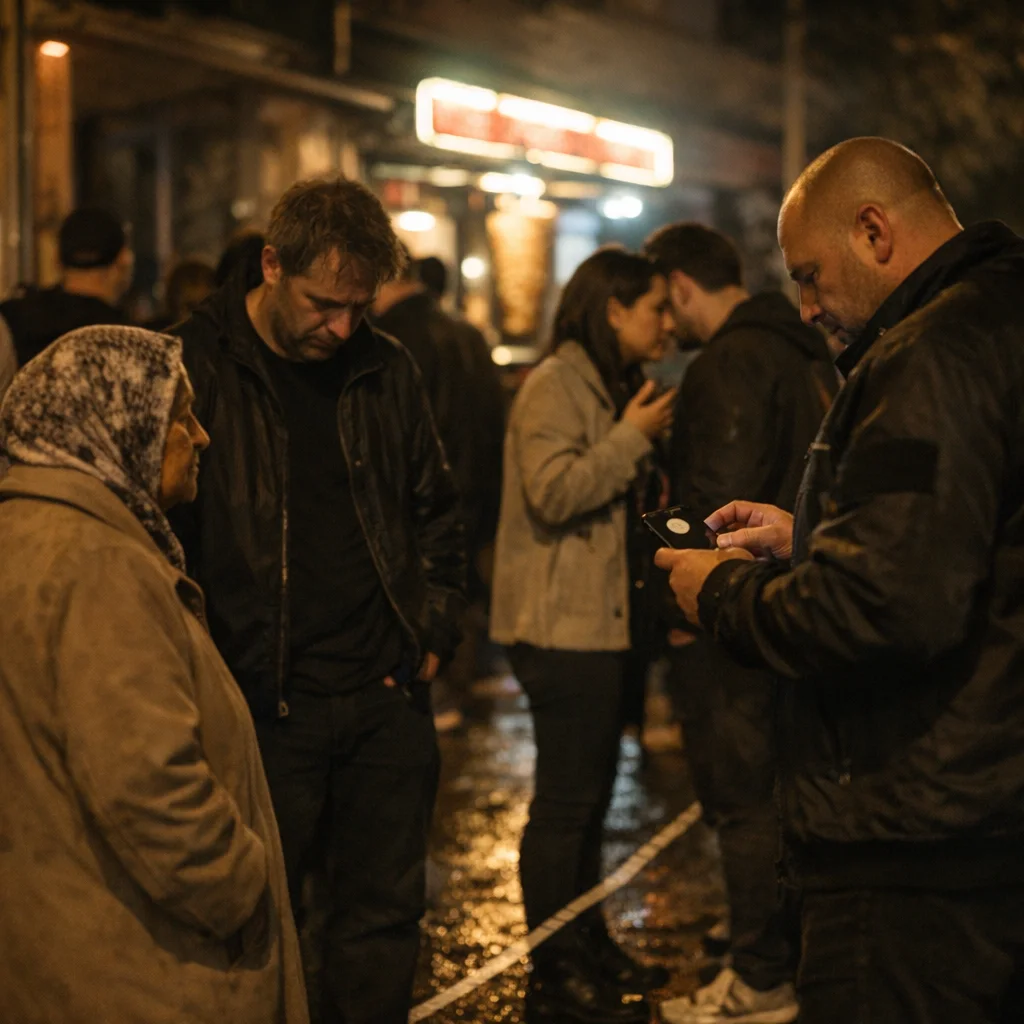
The line outside the venue on a gray side street in Wedding is a grammar. It begins with a couple arguing softly about who wore what earlier in life and ends with a man who claims he “used to dance” in 2011. In the middle are the rituals: muttered passwords, the phone-camera sticker that signals you understand the rules, and an ink blot on an arm that whispers prior membership without saying it aloud.
Sociologically, it’s simple: the door is arbitrator, not host. It doesn’t care about your playlist or your moral contradictions, only two things—how convincingly you belong and how little you seem to want to belong. Bourdieu would have smiled at the ledger of posture and footwear; Beckett would have written a one-act about two people waiting and only one being allowed the plot.
There’s a tiny surreal detail everyone has accepted as municipal law. The chalk line scrawled each week by staff—an attempt to keep order—moves. Not metaphorically: it slides a centimetre toward the street every morning. No one knows why. People adjust their shoes, the conversation, their claim to a local accent. The line has become a secular scripture: if you step behind it you get in, step forward and you become a legend on the messaging board.
Who gets in? The person who looks exhausted but not defeated, who smells like a bad decision but not remorse, who can tell a short, believable anecdote about an earlier night without asking for approval. Expats practice this ritual like an audition; longtime residents watch and trade tips in Turkish bakery doorways. The door rejects performative wokeness, entitled pity, and anyone who tries to bribe with earnestness.
There is erotic politics to it, too—an intimate choreography. You learn when to lean, when to ease back, when a soft laugh will do more work than a full confession. Some attempt a polite back entrance; others celebrate the brief release of tension that follows being waved through. It is a long and intimate negotiation disguised as public order.
If you want to be let in, study the architecture of patience, respect the moving line, and learn the vocabulary of not needing the thing you most want. That, it turns out, is the currency the door accepts.