‘Quiet Hours’ for the Street Drunks
A new class of shopkeepers and safety volunteers wants public space to feel civilized without ever paying for civilization.
Moral Contradictions & Night-After Reporting
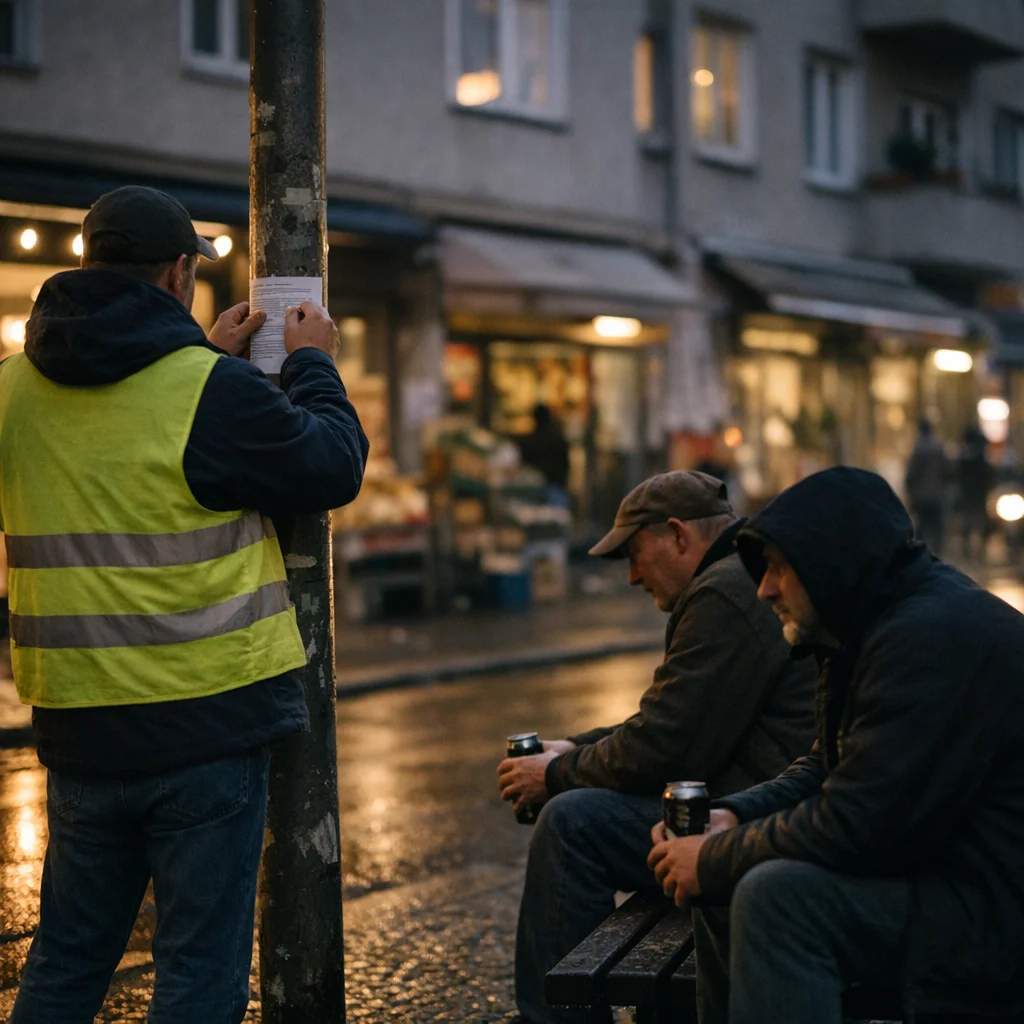
I spent one damp evening on Müllerstraße watching a new civic fashion show: shopkeepers, landlords, and self-appointed guardians of the block unveiling “quiet hours” for the people they call street drunks, as if intoxication were a weather pattern that could be corrected with signage and a stern jawline. The campaign asks the public to enjoy the neighborhood like a museum after closing, which is a lovely idea if you ignore the fact that museums are funded, staffed, and not usually built on the soft labor of pretending poor people are decorative until they become audible.
The first sign went up outside a bakery-café hybrid that now sells flat whites where a family butcher once sold nothing anyone could Instagram. By the next morning, a volunteer in a reflective vest was handing out leaflets about “respectful coexistence,” a phrase that in Berlin usually means: please suffer quietly and make it aesthetic. The signs requested softer voices, less loitering, no drinking on the curb, and an immediate end to the human theater of inconvenience that keeps the neighborhood from looking like a brochure.
“We’re trying to restore dignity to the block,” said Jörg Helmer, who owns two storefronts and rents one to a wellness concept that serves turmeric drinks to people who look offended by bread. He spoke on condition of anonymity because he did not want his tenants to think he was “hostile to community values,” which is what landlords call it when they ask the public to clean up their own mess for free.
Nearby, a Turkish grocer laughed so hard he had to lean on his counter. “They want quiet hours,” he said. “Fine. Tell the construction crew. Tell the rent increases. Tell the men in linen trousers pretending to be social workers.” That, at least, sounded honest.
The district’s response was the familiar bureaucratic flirtation with moral decline. A spokeswoman said the initiative “supports shared responsibility,” which is the civic equivalent of asking a corpse to help carry itself to the grave. Police said they would “monitor the situation,” a phrase that suggests either vigilance or a chair in the wrong place.
What makes the campaign so filthy is not its piety, but its appetite. It wants the visible symptoms of disorder gone while keeping the profitable version on display: the edgy block, the dangerous charm, the curated grit that lets newcomers feel like they discovered something feral without ever having to smell it. It is Baudrillard with better lighting and worse posture.
The drunks, of course, were still there by nightfall, occupying the benches with the stubborn dignity of men who have already lost the argument and kept drinking anyway. The new signs may dim the streetlights, but they will not dim the business model. Next comes a neighborhood meeting, where everyone will speak about compassion in the voice of a person trying to get laid by their own principles.