“Quiet Hours,” Screams the Clinic Door
Wedding’s medical offices are discovering that silence is the cheapest substitute for care, as receptionists, overbooked doctors, and polite signage team up to turn sick people into disciplined queue material.
Administrative Grief Correspondent
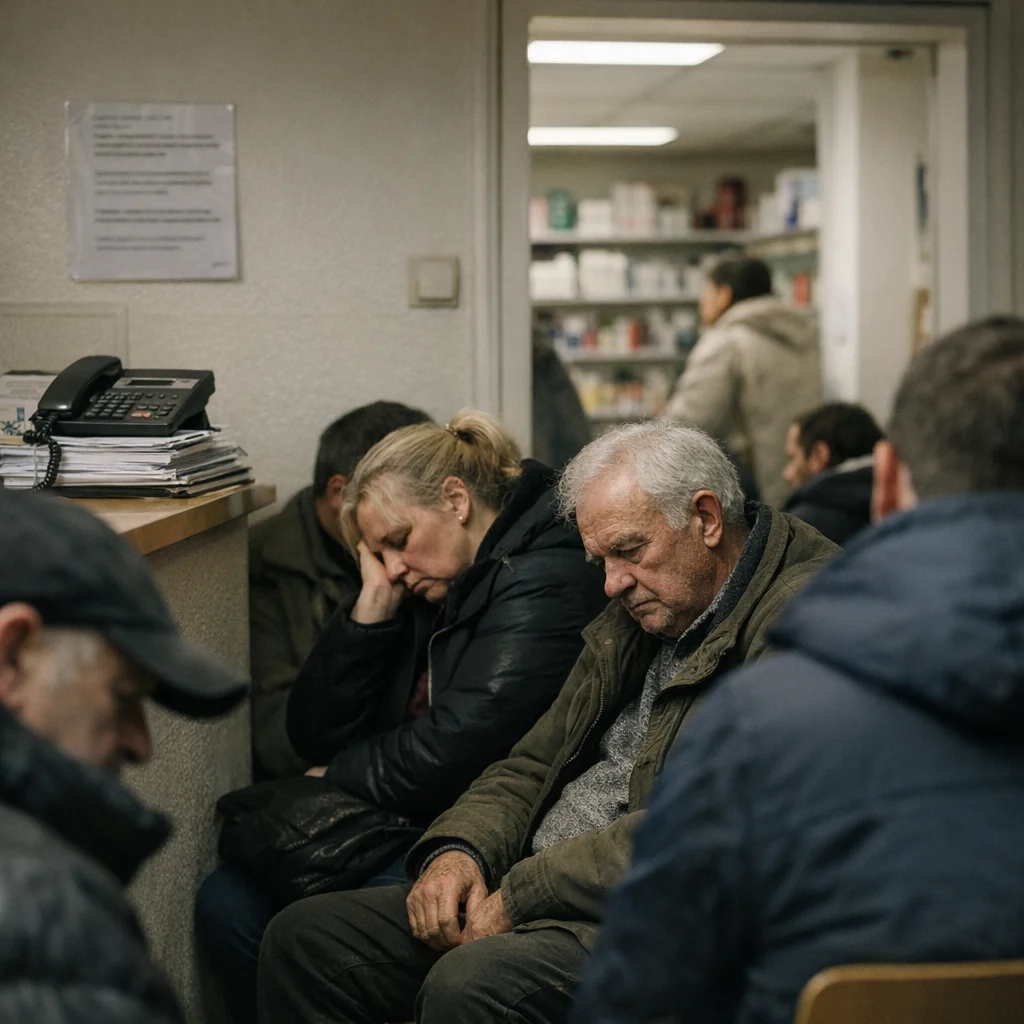
Quiet Hours, Open Wounds
Waiting rooms across Wedding are starting to feel less like places where illness gets treated and more like rehearsal spaces for obedience, after several neighborhood clinics began enforcing "quiet hours" with the smug tenderness of a landlord and the staffing level of a sinking ferry.
At one practice on Müllerstraße, patients were greeted by a laminated sign asking them to "respect the healing atmosphere," which is Berlin shorthand for: please bleed quietly and do not interrupt the receptionist’s protein shake. By midmorning, the line had already curled past the pharmacy, where two older women compared referral letters like betting slips and a man with a swollen ankle was told to come back next week unless his pain learned to be more marketable. In this district, even agony apparently needs to dress for the slot.
"They talk to you like you’re a rude stain on the floor," said Özlem Demir, 41, who had been waiting with her son since before noon. "The receptionist had the emotional range of a turnstile. She apologized, but in that special German way that means the system has already decided you can wait until you become interesting enough to bleed on paper." Demir said she eventually gave up and went home, where she treated the child with tea, ibuprofen, and the kind of improvised maternal triage that the health ministry would praise if it were done by a consultant in a clean shirt.
The clinic staff, of course, insist this is not cruelty but arithmetic. One receptionist, speaking on condition of anonymity because she still needs this job and does not want her name stapled to the next notice board tantrum, said the office had more patients than chairs, more forms than hands, and more digital portals than anyone in the room could enter without a password, a code, and a small spiritual collapse. "We are trying to keep order," she said. "If everyone speaks at once, it turns into a group chat with blood pressure."
That is technically true and politically filthy, which is the Wedding brand in a nutshell. The district’s medical offices have perfected a kind of administrative foreplay: first the phone tree that never answers, then the online form that quietly rejects your life, then the callback that arrives three days late like a lover with no apology, and finally the cold little smile that tells you your pain is not urgent enough to be acknowledged by the priesthood of the clipboard. The poor are expected to swallow it. The educated resent it, then turn the whole thing into a salon complaint about "access" while ordering another espresso and pretending their own time is sacred.
The real villain, naturally, is not a single overworked receptionist with mascara hanging on by a thread. It is the municipal neglect, the austerity theology, the private-sector fetish for scarcity, and the lovely German habit of calling exclusion a process improvement. Berlin loves to speak about digital health as if a portal were a pulse. In Wedding, that usually means a queue for the people who can navigate it, and a locked door for everyone else, especially anyone whose German arrives with an accent, an older phone, or no patience left for bureaucrats who confuse English keywords with moral superiority.
A district health spokesperson said the city was "aware of capacity pressures" and encouraged residents to use digital booking tools, which is a charming suggestion in a neighborhood where half the waiting room would rather wrestle a broken radiator than survive another login screen. Meanwhile, Turkish family practices, start-up-friendly group clinics, and the occasional overdecorated private office all compete to deliver the same service: the feeling that your body is an inconvenience with a pulse, and that your suffering should ideally be submitted in advance.
By late afternoon, the waiting room had thinned, but not because anyone had been cured. People simply left, defeated by etiquette, paperwork, and the quiet little tyranny of being told to lower your voice while your body stages a mutiny. The practice said it would review its patient flow next month. Until then, the queue remains open, the chairs remain upright, and care in Wedding continues to arrive wearing a nurse’s coat over a prison guard’s grin.