Rabbit Grounds Every Gate at Dresden Airport
A loose hare sent operations into the kind of panic that only modern transport can produce: cameras, radios, forms, and enough authority to blame everyone except the animal.
By Omar Felton
Kiez Features Reporter
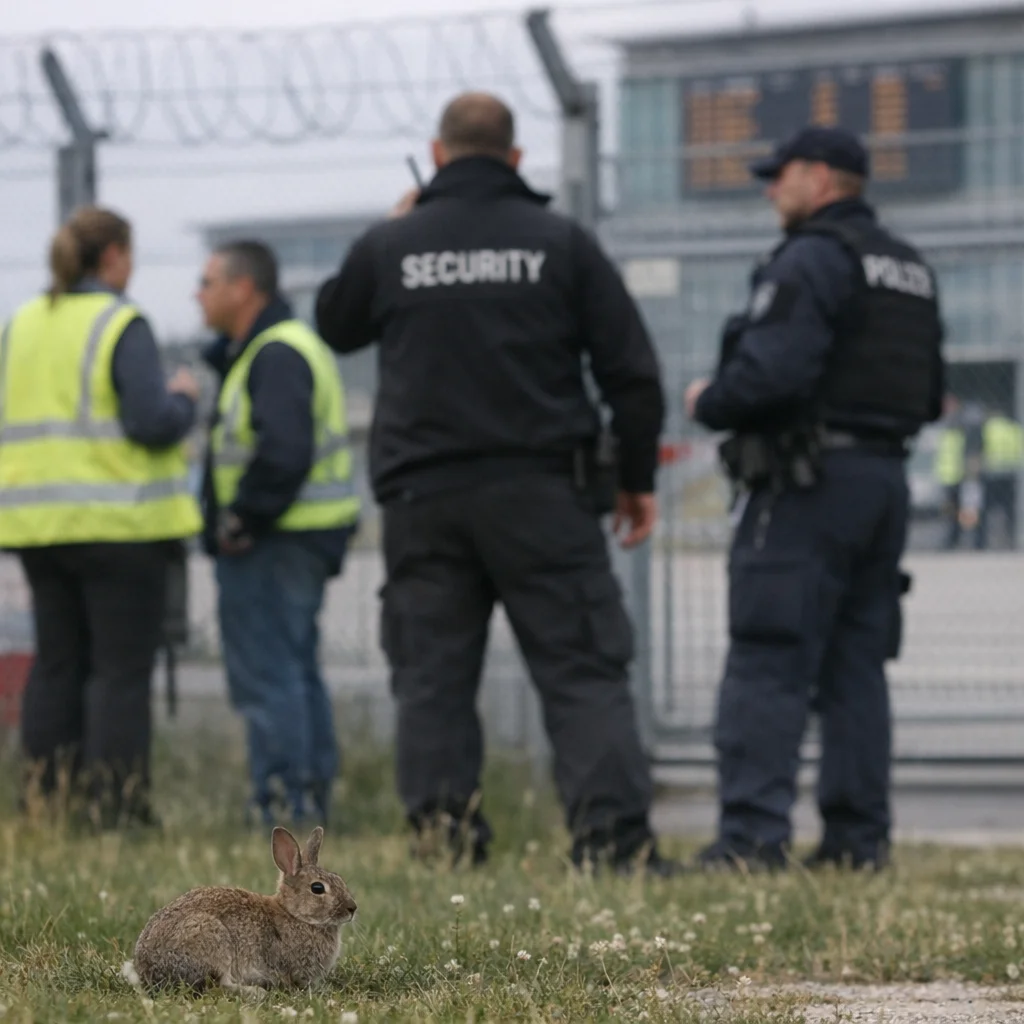
The hare that exposed the whole machine
A loose rabbit brought operations at Dresden Airport to a jittery standstill this week, forcing airport management, outsourced security contractors, and safety bureaucrats to do what they always do when reality shows up uninvited: form a cluster, talk into radios, and pretend that procedure is a form of courage. The animal wandered onto airport grounds near a runway access area, and what followed was a master class in expensive helplessness disguised as vigilance.
First came the alerts, then the cordons, then the men in reflective vests who looked as if they had been assembled from a procurement spreadsheet and a hangover. Flights were not grounded for long, but enough passengers were delayed, rerouted, or left staring at departure boards with the damp-eyed resentment usually reserved for bad sex and public service desks. One traveler, a man in a linen shirt and imported certainty, muttered that the airport felt “unprepared.” That was generous. It was prepared in the way a management workshop is prepared for a power outage: full of language, empty of nerve.
The rabbit, meanwhile, behaved like someone who had read the room and found the species in it deeply unserious.
“Every department had a role except the one that mattered,” said airport worker Martin Koller, who requested anonymity because he still had to sit through a safety briefing about this exact failure and did not want his name stapled to the phrase “the bunny incident.” He said the response involved multiple calls, several checks, and a great deal of strategic throat-clearing—the corporate equivalent of touching yourself in the mirror and calling it discipline. “We had cameras watching, staff watching the cameras, and nobody wanting to be the first person to look ridiculous in a field.”
That is the airport’s real vocation: not transport, but ceremonial impotence. The rabbit interrupted the script. Security rushed around with the grim concentration of people guarding a set that has already collapsed. The outsourced contractor posture was especially rich: clipboards up, shoulders squared, mouths tight with the self-love of people paid to look alert while hoping nothing actual happens. Somewhere above them, PR staff were already polishing a statement about “temporary operational adjustments,” which is what institutions call humiliation when they want to keep their ties clean.
A police spokesperson later said there was “no danger to the public,” which is the sort of sentence bureaucracies produce when they want to sound firm while confessing they were briefly outperformed by a small mammal with no badge, no procurement contract, and better instincts than management. It is also the kind of line passengers adore, right up until a rabbit, a fog bank, or a delayed bag carousel reminds them how much they love total control in theory and how quickly they fold when a system hiccups in public.
By afternoon, the animal had not become an enemy of the state, only an inconvenience to one. But the episode left a useful bruise. Every scanner, badge reader, radio check, and incident log now looks less like safety and more like a paid rehearsal for obedience. The airport staff did not fail because they lacked technology; they failed because technology had already taught them to confuse motion with competence.
The rabbit did not sabotage the airport. It merely exposed the soft, managerial flesh under the uniform. The whole operation briefly blushed—badly, publicly, and with the pathetic dignity of a man pretending he wasn’t caught staring at himself in the glass.
Airport officials said operations were expected to normalize later in the day, after staff had finished apologizing to one another in the tonal range of people who have just been lightly humiliated by nature and paid for the privilege.