Radcliffe’s Broadway Return Triggers Wedding’s Guerrilla Theatre Blitz
In Berlin's Wedding district, Daniel Radcliffe's comeback prompts a neighbor-made revival: pop-up stages spring up in laundromats, courtyards, and kebab stalls to stage Every Brilliant Thing.
By Lena Veneer
Gentrification & Cultural Displacement Correspondent
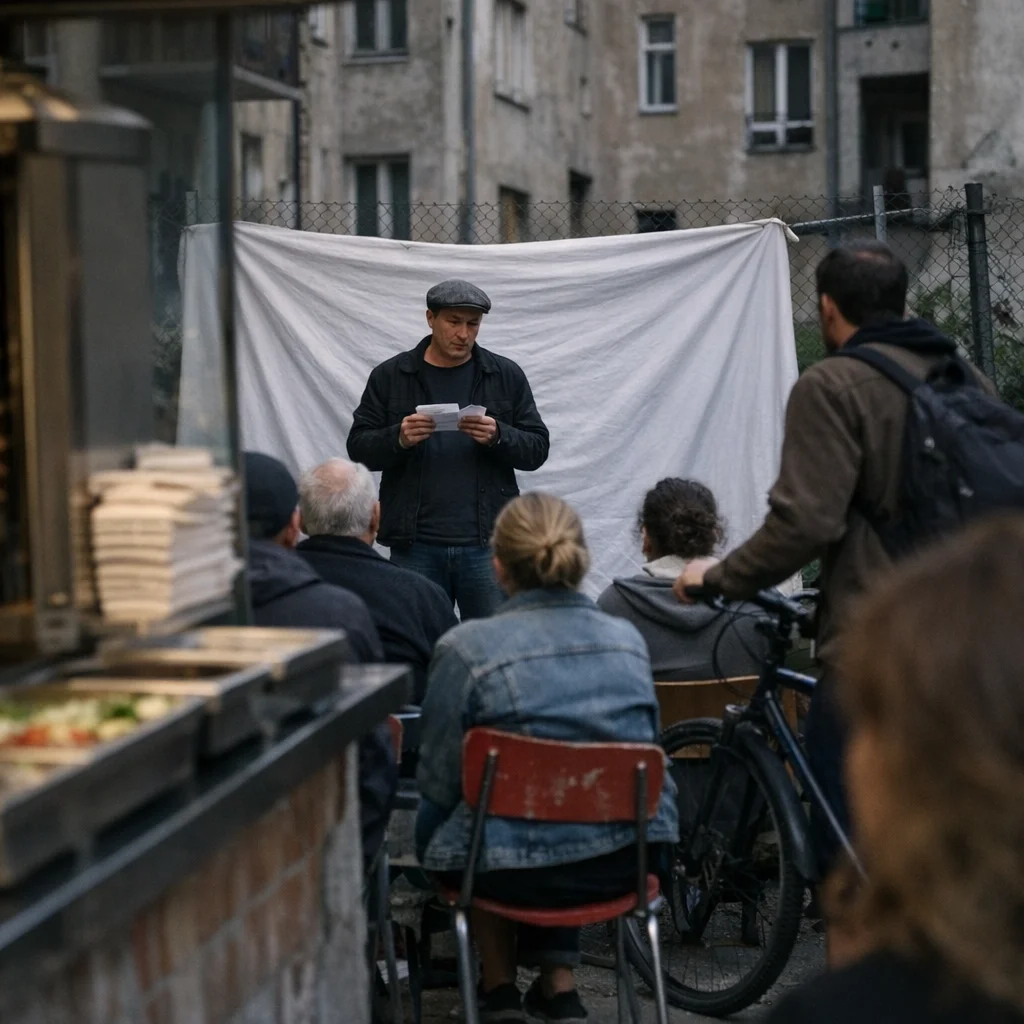
WEDDING—Daniel Radcliffe’s decision to return to Broadway in Every Brilliant Thing has reached Berlin the way all foreign culture does: as a permission slip for locals to cosplay sincerity while monetizing it. By mid-morning, a coalition of English-speaking “theatre adjacent” residents had mapped Wedding’s laundromats, courtyards, and kebab counters into an unofficial circuit of pop-up stages—because nothing says mental health awareness like forcing your neighbors to participate in a feelings seminar between spin cycles.
It began outside a laundromat off Müllerstraße, where a folding chair served as “front row” and the washing machines provided percussion. A performer in a thrifted black turtleneck read the play’s list-format brilliance—small joys, daily survival—while an audience of newcomers nodded like they were at church, except the offering plate was a QR code and the hymn was a voice memo titled “Somatic Release, Take 7.”
“This is about community,” insisted Priya Haversham, 29, a product manager who introduced herself as “post-corporate” while checking Slack. “Radcliffe is brave enough to go back onstage. We’re brave enough to do it next to a lint trap.” She paused, then added, “Also, the acoustics here are… unusually intimate.”
By early afternoon, the production migrated to a courtyard where the “curtain” was a bedsheet nailed to a fence post. A Turkish kebab shop agreed to host a scene in exchange for performers not blocking the fridge. The owner, Cem Yilmaz, sounded unconvinced but opportunistic. “They want to feel something,” he said, rotating meat with the calm of a man who has seen three urban renaissances and survived all of them. “Fine. Feel it over there. Don’t touch the sauces.”
The surreal detail—unremarked upon by anyone with a tote bag—was the prop list itself: handwritten cards labeled with “brilliant things” kept appearing in residents’ mailboxes, already stamped and sorted, as if the neighborhood had developed an internal bureaucracy specifically for hope. People treated it like normal civic infrastructure, the way Berlin treats any system that works as suspicious and any system that fails as tradition.
BVG issued a brief statement after a tram-stop finale left commuters applauding out of social panic. “Passengers are reminded that emotional catharsis is not a valid ticket,” said spokesperson Anja Richter, adding that the operator “maintained a firm grip on the schedule despite mounting audience participation.”
District officials said they were “monitoring safety,” which in Wedding translates to: waiting until someone complains in fluent English.
Organizers announced the next performance will relocate to a co-working lobby “for accessibility,” pending whether the lobby’s security can stop people from sliding into the building without a keycard—and whether the neighborhood’s unofficial mail-based hope office keeps delivering.