Rail Bosses Blame a Button Nobody Pressed
After a long total outage, the real scandal is not the wiring but the ritual of managerial innocence: engineers point at process, spokespeople point at weather, and executives point anywhere but up the chain.
Administrative Grief Correspondent
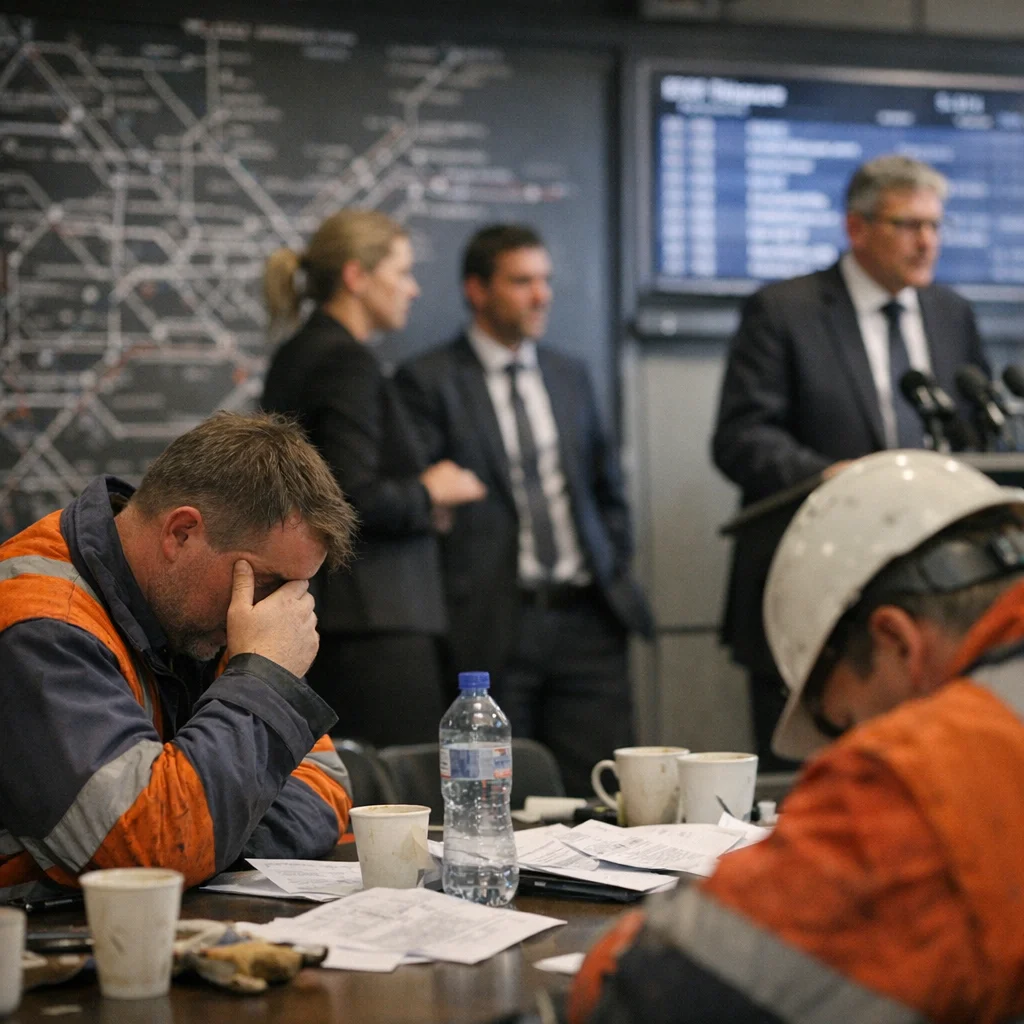
Rail engineers at Deutsche Bahn spent Tuesday explaining a long network outage in the sort of tone usually reserved for priests, surgeons, and men caught leaving a hotel with someone else’s cologne on their cuffs. At a press briefing in Berlin, managers blamed a mysterious “button” no one had supposedly pressed, while maintenance crews, union representatives, and the Federal Ministry of Transport’s usual varnish department stood around like a tribunal for people too well-paid to blush.
The outage snarled regional traffic, stranded commuters, and left the departure boards at Berlin Hauptbahnhof blinking like a dead nightclub after last call: all promise, no pulse, and a room full of people pretending this was a regrettable little misunderstanding rather than the public display of a system being mugged in broad daylight. First came the delays, then the cancellations, then the official choreography of innocence. Engineers pointed to process failures. Spokespeople blamed weather, software, and “complex interdependencies,” that favorite phrase of the career bureaucrat who wants to sound technical while quietly reaching for the exit.
Executives, to their credit, pointed almost everywhere except at the chain of command that signs the budgets, blesses the staffing cuts, and then acts shocked when the machine coughs up its own teeth.
“It’s always the button, never the hand,” said Heiko Lenz, a maintenance supervisor who asked not to be described more precisely because his department still has to share a corridor with the people he was humiliating. “We have a network designed by Kafka, managed by PowerPoint, and maintained by whoever survived the last reorganization. Then the ministry asks for a root-cause analysis like a man asking why the room smells after he’s already set the mattress on fire.”
The ministry response followed the standard Berlin ritual: a statement full of concern, a call for a “full review,” and the emotional temperature of a parking ticket. In this city, reviews are not accountability. They are the laundering cycle for resignation avoidance: rinse the failure, press it through a task force, hang it up in a working group, and by the time anyone admits who was holding the dirty shirt, the public has already paid for the detergent.
One senior official, speaking on condition of anonymity because he had already offered three mutually incompatible explanations and did not want his career to climax in public, said the outage showed “the need for resilience.” That is Berlin statecraft in a nutshell: if the infrastructure is groaning under years of neglect, call it resilience; if the maintenance budget was shaved into a decorative ribbon, call it modernization; if the public is stranded at Ostkreuz with a dead app and a worse temper, call it a learning opportunity.
What made the briefing hard to swallow was not the technical failure alone. It was the performance. Managers acted as if helplessness were a protected profession, something to be preserved like antique silverware or a minister’s excuse face. The PR staff did their part too, with that soft, moisturized tone that says: yes, the building is on fire, but please admire the branding. Nobody said the obvious part out loud because the obvious part is obscene: if the problem is staffing, maintenance, and chronic underinvestment, then somebody upstairs would have to stop pretending this was a weather event and start admitting it was careerist self-protection dressed up as governance.
Instead, the adults in the room offered the public a soft-focus tragedy. The trains sat still. The language kept moving. And somewhere between the platform and the ministry office, a whole class of executives did what they do best: kept their hands clean while the city got pinned to the rails like a bad date that won’t take no for an answer. The next review is due next week, when officials are expected to announce more accountability, less responsibility, and possibly another button nobody touched.