Rat Experts Audit the Fancy New Compost
Wedding’s latest environmental virtue project is being run by the same people who still cannot manage their own bins, and now the rats are the only ones doing honest inspection.
Gentrification Symptoms & Pretend-Creative Economy Reporter
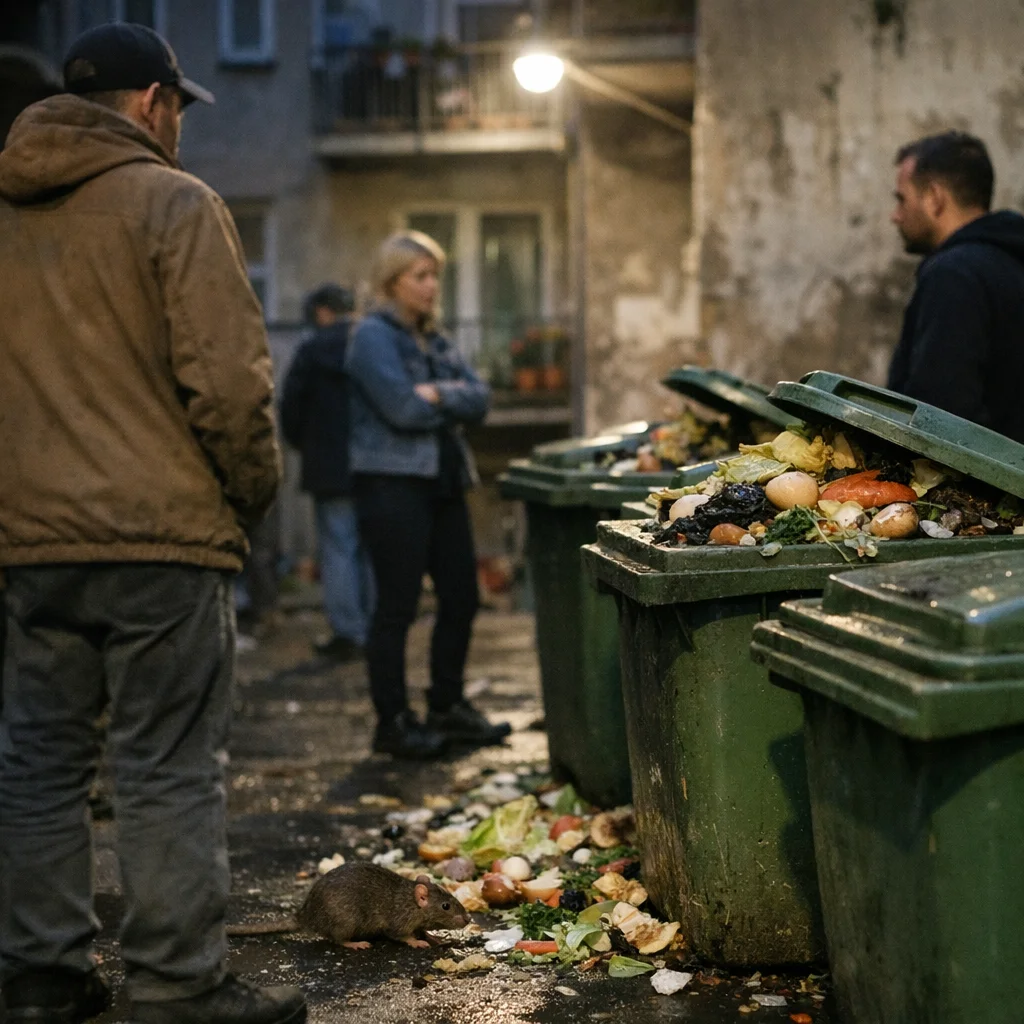
Compost, Rat, Virtue: Choose Your Rot
Wedding’s latest compost rollout arrived wearing the same municipal drag as every other district initiative: recycled-language flyers, beige containers, and the smug little promise that civilization can be saved one damp apple core at a time. In the hands of the local sustainability consultants, district office clerks, and the property managers who speak about “community solutions” the way predators speak about consent, it has become a small, fragrant proof that civic virtue is mostly a billing category.
The idea, we are told, is noble. Separate the scraps, reduce landfill waste, improve the neighborhood image, and let everyone pretend they are personally carrying the climate on their back without ever getting sweat on the shirt. The reality is a courtyard-level farce: lids left open, bags tied like lazy apologies, banana peels blooming in the heat, and the soft administrative optimism of people who have never had to scrape anything living off concrete. The compost does not merely smell bad. It smells like a class arrangement.
The district office has responded with the standard ritual of bureaucratic self-pleasure: more instructions, more signage, more “awareness,” as if the problem were a misunderstanding rather than the basic fact that no one in charge wants to fund enforcement, cleaning, or actual human labor. The same officials who can produce a ten-slide presentation about circular economy cannot, apparently, stop a bin from becoming a wet chapel for negligence. They love sustainability the way a landlord loves insulation: abstractly, expensively, and only when someone else is paying.
By the second week, the courtyard rats had read the program more accurately than the residents. They arrived with the calm certainty of creatures who know a compromised system when they smell one. Not the mythical urban rat of brochures and horror stories, but the neighborhood’s truest auditors: twitching, hungry, and unbothered by the district’s tone of voice. One can almost admire them. They do not pretend to care about the planet. They simply exploit it, which is more honest than most of the meetings.
At a courtyard meeting on Tuesday, the usual Wedding caste assembly began. The affluent tenants with curated tote bags blamed “infrastructure.” The newer arrivals blamed “the city.” The old-timers blamed the newcomers for bringing in the special brand of imported guilt that arrives with oat milk and a strong opinion about waste sorting. Someone from a tenant initiative, speaking in the polished dialect of the permanently workshop-trained, said composting was “a collective responsibility.” This was a lovely sentence, in the same way a tax audit is lovely. Collective responsibility, in practice, meant that the person mopping the courtyard would continue mopping it while the people discussing sustainability in heated indoor tones kept their shoes clean and their consciences lightly salted.
A bakery owner nearby, who has watched enough neighborhood transformations to know that every wave of improvement ends with somebody else carrying the mess, said the whole thing was “greenwashing with a pulse.” He also said the new bins had made the courtyard feel “like a colonoscopy for the conscience,” which is ugly but not wrong. In Wedding, the environmental class has perfected the art of outsourcing the rot: they outsource the smell, the flies, the labor, and the shame, then congratulate themselves for being brave enough to talk about waste.
Meanwhile the landlords get to collect their rent, the NGO sustainability people get to collect their hourly rates, and the district gets to collect applause from a public it has not bothered to serve. The machine runs beautifully when the only thing being composted is other people’s patience. Everyone wants a greener neighborhood, naturally. What they do not want is the wet, intimate fact of greenness: decay, handling, cleanup, and the dirty little truth that any compost system in a gentrifying district is also a sorting machine for who gets to live with the mess and who gets to narrate it.
For now, the compost sits in the yard like a minor monument to urban self-regard: organic, overfunded, and already being chewed from below by the neighborhood’s least sentimental workforce.