Red Tape for Blackouts: Saxony Builds a Panic Council
After Berlin’s blackout, Saxony is bundling its infrastructure defenders into one committee so everyone can look prepared without admitting how little coordination existed before the lights went out.
By Tess Lanyard
Institutional Vibes & Local Power Struggle Reporter
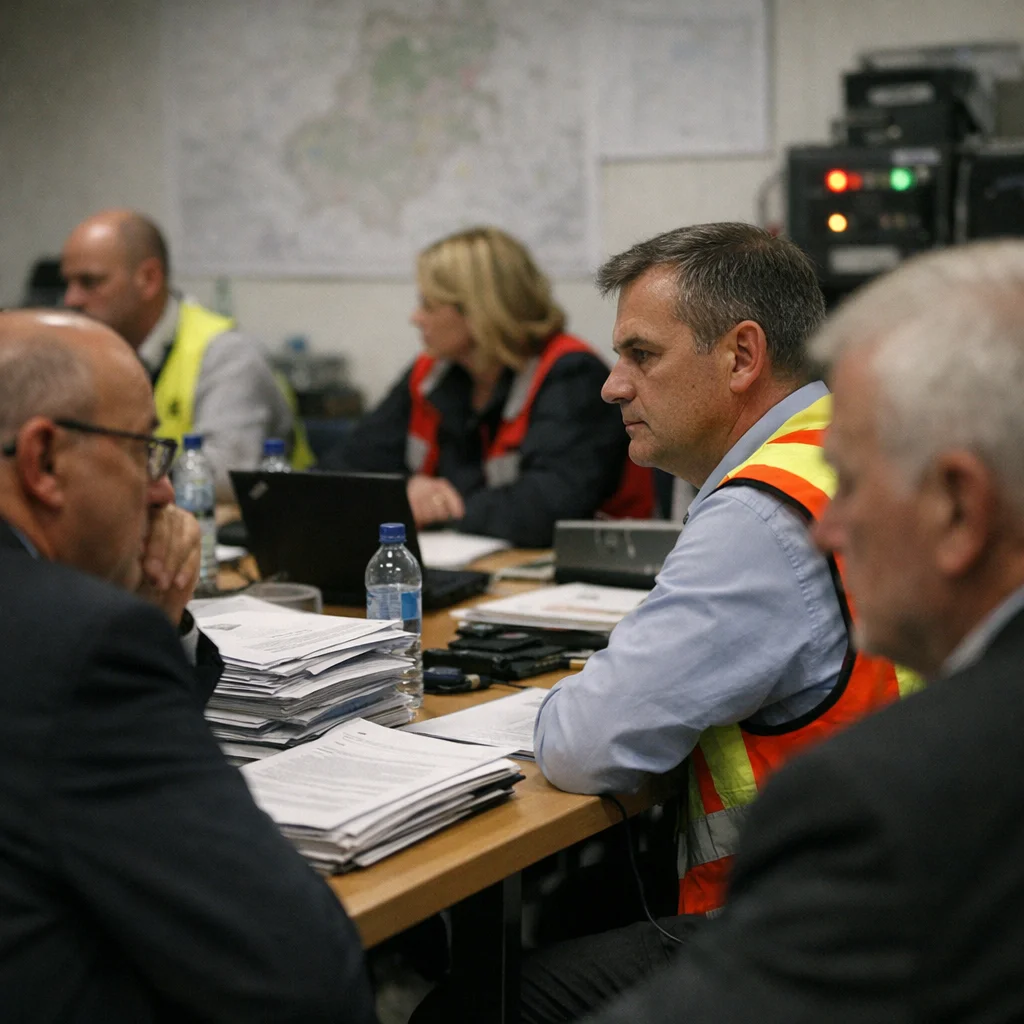
In Saxony’s new committee for protecting critical infrastructure, the state has discovered the oldest trick in politics: if you cannot stop the blackout, at least form a panel that can keep everyone in the room pretending the failure arrived by mutual consent.
After Berlin’s outage exposed how quickly a modern city can turn into an expensive candle convention, Saxony responded with something recognizably German and spiritually indecent: a standing body, a long table, and enough procedural upholstery to make panic look like governance. Officials call it coordination. In practice it is a sanctioned pile-on with stationery — the kind of arrangement where everyone wants a hand on the lever, nobody wants fingerprints on the switch, and the lights are still expected to go out on schedule.
The committee’s design is the tell. Interior officials want utilities, ministries, fire services, police, and the usual emergency priests of state all folded into one room, one agenda, one set of minutes, so the aroused little machinery of blame can be distributed before the first fuse snaps. That is the whole point: not control, but pre-cleared excuses. The agencies enter like practiced office adulterers, each eager to be seen in the act of preparedness and equally eager to deny they were anywhere near the bed when the outage hit.
A district employee in Wedding, speaking from the neighborhood and not from any sentimental notion of civic romance, said the last blackout already produced the local specialty: officials standing around a dead system like men admiring a locked door they were too timid to kick in. “We had plans,” the employee said. “We had folders. We had the kind of confidence that comes from never having to carry a generator up three floors.”
That is the Saxon offer now: a grand table where everyone can sit upright, spread their papers, and keep their hands visible while the actual wiring remains in the wall, sulking and undocumented. The committee gives each institution a turn to be touched by responsibility without ever having to hold it. Utilities get consulted. Ministers get serviced by the optics. Security offices get to speak in the tone of men adjusting cufflinks after a moral inconvenience. No one is asked to do the one vulgar thing that matters, which is admit the grid was underfed, overpromised, and left alone too long.
In Berlin, the response has been a familiar cocktail of envy and contempt. The infrastructure class loves a fresh committee because it extends the ritual: first the meeting, then the draft mandate, then the working group, then the sub-working group, then the emergency exercise where everyone acts surprised that a blackout is still a blackout and not a branding opportunity. They prefer the long warm-up to the actual event. It lets them keep their trousers on while talking about vulnerability, which is the closest some of these offices ever come to honesty.
A spokesperson for the energy sector praised “structured dialogue” and “cross-agency readiness,” the sort of phrase that sounds like foreplay to the public and like a sedative to the people paid to keep substations alive. A fire official put it less delicately: “We keep inventing committees because nobody wants to be alone with the consequences.” That, at least, is true. Nobody in this machinery wants the final touch to be theirs. Everyone wants to be present for the setup and absent for the mess.
The minutes will matter, of course. The minutes always matter after the lights go out. They will record who arrived first, who chaired, who objected, who was “tasked,” who was “to follow up,” and who was conveniently in another building when the grid went soft and the city had to discover how quickly it can be made compliant by darkness. By then the committee will already have learned the oldest bureaucratic pleasure: if you cannot prevent the collapse, at least make sure the paperwork shows you were involved from the beginning.
That is the modern German compromise, the one with the tie loosened but the collar still buttoned: arrange the chairs, circulate the mandate, assign the speaking order, and call the whole thing preparedness while the actual system waits outside, uninvited and fully capable of ruining the evening.