Reichinneks’ Dienstwagen: Not a Scandal, Just Berlin’s Political Disaster on Wheels
A chauffeured SUV becomes the mobile megaphone for a coalition that’s left steering to spin and parking tickets.
Imported Scandal & Local Hypocrisy Correspondent
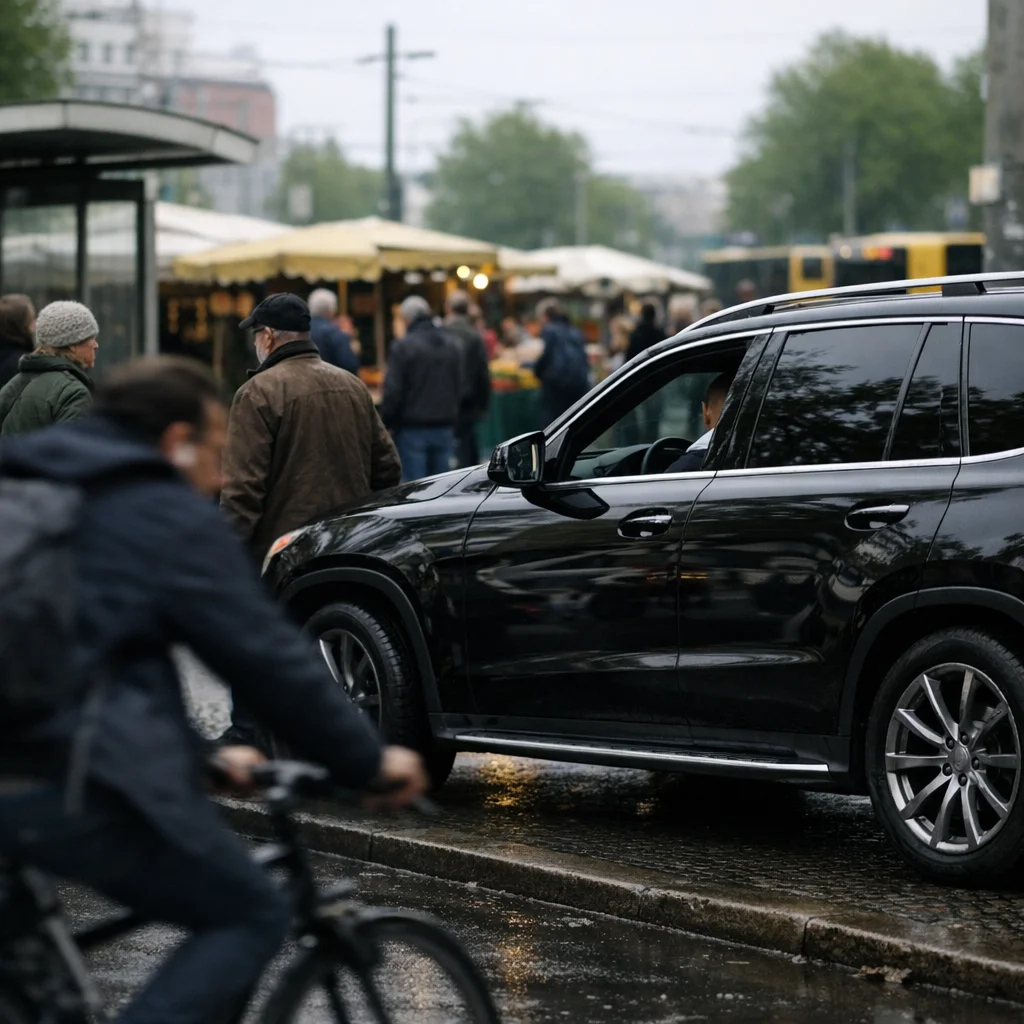
WEDDING—After the debate over why Heidi Reichinneks’ official service car is “not a scandal” but still a political disaster, the neighborhood staged its own moving exhibition this week: a black, chauffeur-driven SUV idling near Leopoldplatz, radiating the kind of calm authority that only comes from not having to look for parking.
It began in the morning when the vehicle rolled slowly down Müllerstraße, not quite brave enough for the bus lane, not quite ashamed enough for the bike lane. Witnesses said the driver maintained a serene, almost Kantian confidence—acting as if duty itself had four-wheel drive.
“Look, I don’t care if someone gets driven,” said Ayşe Demir, who runs a small bakery a few blocks away and watched the SUV coast past the morning market like it owned the concept of bread. “But when they show up in something that glossy to explain why nothing works, it’s like being offered a napkin after someone spit in your soup.”
By midday, the car had become a mobile press conference for every party’s favorite Berlin hobby: explaining failure with immaculate posture. A cluster of newcomers filmed it for social media, narrating in English about “accountability,” while standing directly in front of a tram stop, blocking an actual public service like it was a performance piece.
—sorry, the part everyone treated as normal—was the SUV’s navigation screen reportedly switching itself into “Moral Detour” mode, rerouting around visible problems: construction, crowding, and any street where human beings looked like they’d vote based on material conditions.
“It’s not the leather seats,” said district assembly member Jan Krüger, defending the vehicle with the practiced rhythm of a man who can keep a straight face while taking the long way around responsibility. “It’s the narrative. People are tired of symbolism.” Krüger added that the car’s presence was “operational necessity,” a phrase that, like a bad date, keeps insisting it’s here for a serious purpose.
A police spokesperson confirmed officers were called after the SUV briefly stopped in a loading zone and “mounted pressure on local traffic flow,” adding that no citation was issued “due to ongoing clarification of jurisdiction.” Translation: the city achieved full bureaucratic penetration and still didn’t finish.
In the evening, residents watched the SUV glide away toward the administrative center, its tires kissing potholes with the tenderness of a coalition agreement—firm grip, zero intimacy. A district office representative promised “a review of service-vehicle protocols” sometime soon, which in Berlin time means the car will outlive three mayors and at least one moral panic.
For now, the SUV remains what it always was: not proof of corruption, but proof of a politics that can keep itself polished while everything else grinds.