Rent Due, Soul Optional
Wedding’s landlords are discovering the final Berlin innovation: a “community” that exists mainly to justify higher deposits, worse repairs, and emails written in the tone of a hostage note from a property portal.
Gentrification & Moral Performance Correspondent
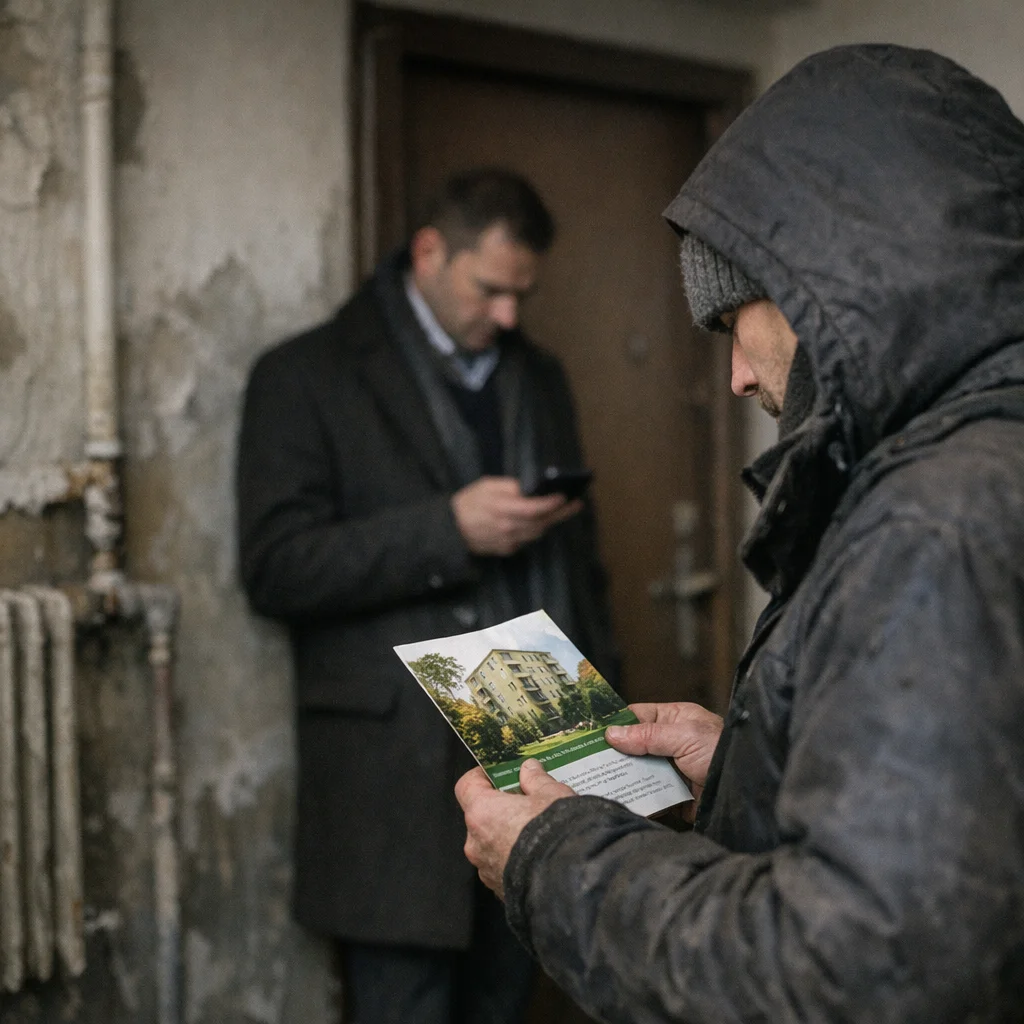
Heat Out, Branding In
Wedding’s landlords and building managers have discovered that if they say “sustainability,” “diversity,” and “shared values” often enough, tenants may briefly mistake them for adults. The trick works especially well between the U6 delays, the Müllerstraße traffic, and the smell drifting out of the Späti at midnight—a neighborhood already accustomed to being handled like an inconvenience with a postcode.
In practice, the new property class is less a class than a lubricated confidence trick. They pose in front of old Wedding brickwork with their little ethical stubble, their recycled-paper branding, their fake-clean handwriting, and their solemn expressions of concern for “the community,” by which they mean the monthly transfer that pays for the hand soap in their designer office toilet. They love the district the way a tourist loves a kebab: loudly, briefly, and only after it has been arranged to their taste.
The script is always the same. First comes the glossy email, written in the soft hostage-whisper of a property portal: Dear Community, we are committed to inclusive living, responsible stewardship, and a future-oriented rental experience. Then comes the radiator that stays dead, the hot water that “requires coordination,” and the repair ticket that enters the same limbo as a drunk at Leopoldplatz after the last train. “Under review” is landlord language for we have decided your discomfort is more economical than competence.
At a tired corner building off Müllerstraße, near a kebab shop with a better maintenance record than the owner, residents said the broker pitched the flats as “open, urban, and emotionally intelligent,” which is one way to describe a room that costs too much and smells faintly of wet plaster and institutional semen. After the first mold complaint, he vanished into the kind of silence usually reserved for men who have just been caught lying in a very small suit. The building manager, who liked to sign emails with a green leaf icon as if that made him a priest of nature instead of a landlord with a keyring, reportedly described the property as being “curated for long-term harmony.” It was a beautiful phrase. The walls were already sweating harder than he ever had.
The district office, naturally, remained in the realm of paperwork and regret. Officials said they had received complaints about heating failures and slow repairs but could not force owners to “align values with maintenance.” That is the bureaucratic soul of Berlin: it can forward a grievance, annotate a grievance, and schedule a follow-up on the grievance, but ask it to make a rich man fix a boiler and it behaves like a decorative cactus. The system doesn’t lack knowledge. It lacks shame, and shame would have to be installed separately.
A landlord association representative, speaking on condition of anonymity because he once posted a tote bag about ethics and now fears irony as a legal exposure, insisted owners were “balancing sustainability with economic reality.” Naturally. In landlord dialect, sustainability means the wallpaper survives until the next rent hike, and economic reality means your fingers stay numb while someone in a linen blazer explains “asset preservation” with the moist confidence of a man who has never unclogged anything.
The comedy is not subtle. These people sell community the way a butcher sells veganism: with clean hands, dead eyes, and a receipt. They adore “shared values” until a tenant asks for the sort of service that would disgrace a gas station toilet. Then the shared value is silence, and the only thing they maintain is the nerve to keep smiling while the building leaks through the ceiling like a confession from a bad priest.
By Thursday, several flats were still cold enough to make even the most performative leftist stop saying “temporary inconvenience” and start dressing like someone in the final act of a very expensive failure. Residents said they planned to keep filing complaints, but the sharper image was already there: the building’s polished entrance, the fake-ethical signage, the dead radiators behind it all, and a management company so committed to the performance that it would rather let the whole block rot than admit it had confused property ownership with personality.