Retirement Plan, Berlin Edition: Sell One (1) Painting, Buy Half a Carton of Eggs
A 65-year-old Wedding painter celebrates a lifetime of cultural contribution by learning that “legacy” is not accepted at discount supermarkets, even in a city built on vibes and unpaid invoices.
Arts Economy Coroner (On Probation)
A birthday cake made of receipts
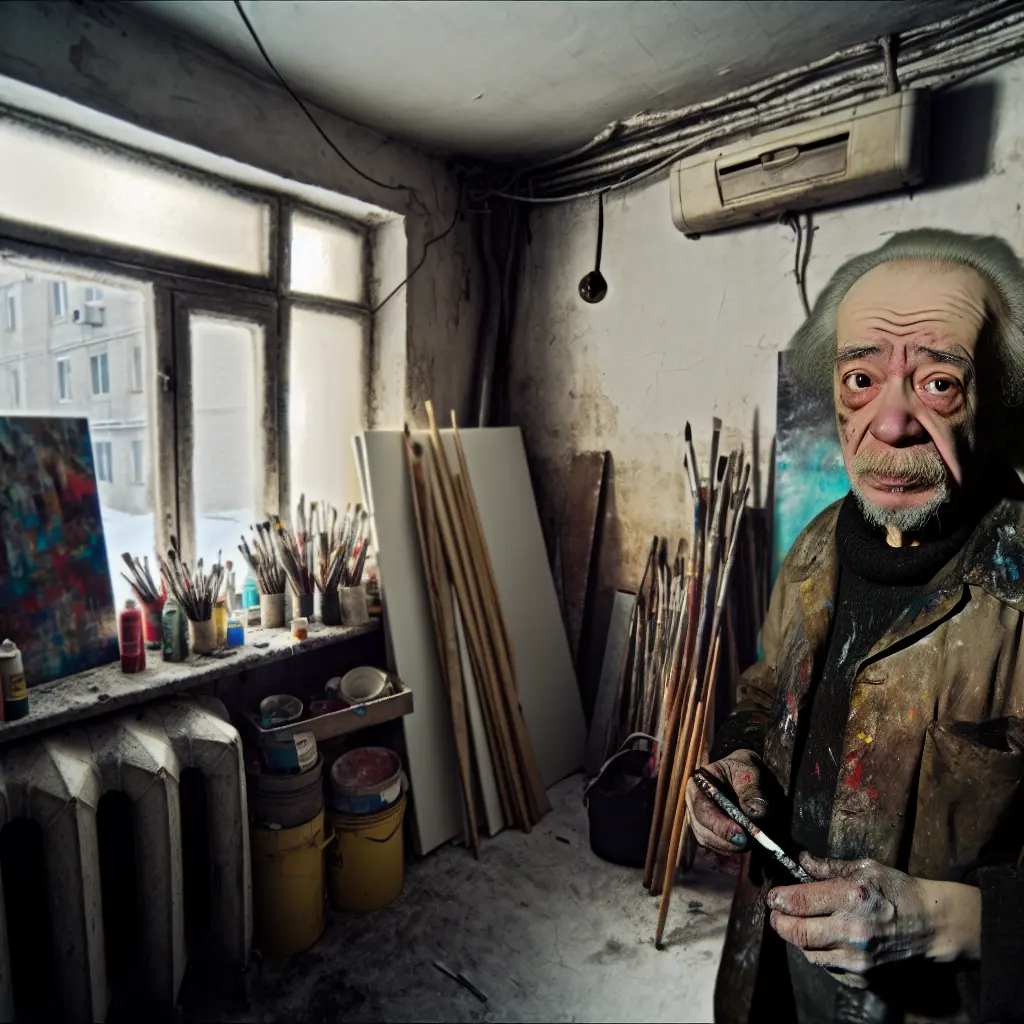
Klaus “I Still Use Oil Paint Like It’s Not a Hate Crime Against Laundry” Riemer turned 65 this week in Wedding, marking the traditional Berlin milestone where the city applauds your “practice” and then watches you quietly Google whether you can live on hummus and stubbornness.
He’s been painting in the same drafty Hinterhof studio since the Wall was still a thing people could point at instead of metaphorically living inside. The rent has tripled, the ceiling leaks with the confidence of a tech founder, and the neighborhood has developed a new species: the Cultural Consumer, identifiable by its tote bag and the dead look of someone who’s never asked a bartender for tap water.
“I thought retirement would be like… time,” Riemer told me, standing next to a canvas the size of a small existential crisis. “But apparently it’s more like… invoices.”
The market has spoken, and it’s clearing its throat
Berlin loves art the way it loves public transportation: as a concept. In practice, it prefers things that are cheap, “accessible,” and not too emotionally demanding before noon.
Riemer’s latest show was attended by 200 people, 14 dogs, and one guy who kept saying “liminal” like it was a safe word. Total sales: one postcard, purchased by Riemer’s cousin out of pity and mild confusion.
Collectors, meanwhile, continue their noble work of supporting culture by buying exactly one piece per decade—preferably something large enough to signal morality but small enough to hide during a breakup.
As Walter Benjamin might’ve put it, the aura of the artwork has been replaced by the soft glow of a phone screen photographing it for proof of attendance. Debord called it the Society of the Spectacle; Wedding calls it “Thursday.”
A deep dive into the funding swamp (bring waders)
Riemer tried applying for a senior-artist stipend, which went about as well as you’d expect in a city where even the pigeons have paperwork.
The application process is a Kafkaesque crawl through The Trial, except the court is a PDF, and the judge is a broken link. It demanded:
- A “project narrative” explaining how retirement will “activate the neighborhood” (by what, dying louder?)
- A budget plan proving he can survive on optimism and air
- Documentation that he is, in fact, an artist, and not just a person with stains on their pants
Riemer encountered stiff resistance at every step—mostly from the part where you must explain your life to a panel of people who discovered painting via an Instagram reel.
And yes, the whole thing felt like Foucault’s panopticon: not because anyone was watching him, but because he had to behave as if someone competent might.
Wedding’s new retirement scheme: “generational wealth, but make it theoretical”
The truth nobody likes to swallow is that Berlin’s art economy runs on three engines:
- Cheap rent (gone)
- Rich parents (imported)
- The belief that suffering is a brand identity (thriving)
Riemer never had the rich-parents DLC. He had the old model: jobs, side hustles, teaching workshops to tourists who want to “feel raw,” and occasional commissions from people who think a mural can fix a marriage.
Now the city’s taste has shifted. We’re deep in Baudrillard territory—simulacra on simulacra—where the idea of supporting the arts circulates more than money does. Everyone’s “in community,” but the only thing getting passed around is a sign-up sheet.
The neighborhood reacts with its usual compassion: performative, brief, and poorly ventilated
Locals offered solutions ranging from sincere to clinically insane:
- “Start a Substack.” (Translation: monetize your despair, but in paragraphs.)
- “Teach AI prompt painting.” (Translation: become a priest in a church that replaced God with autocorrect.)
- “Move to the countryside.” (Translation: disappear politely.)
One earnest newcomer suggested turning the studio into a “multi-use cultural salon.” A phrase so empty Derrida himself would’ve tried to deconstruct it just to feel something again.
Riemer nodded like a man being gently smothered with buzzwords.
A toast to the last ones still doing it wrong
If you’re wondering why this matters, it’s because Riemer represents the vanishing Berlin species: the person who makes work without a brand deck, without a “drop,” without networking like it’s foreplay.
Wedding still produces art, sure. But it increasingly produces content about art, which is like producing smoke and calling it dinner.
Riemer doesn’t want a parade. He wants enough money to stop hauling canvases up four flights of stairs like a penance. He wants to retire without being told his poverty is “real.”
Berlin will likely give him a certificate printed on recycled guilt and call it a day.
And when he finally shuts the studio door, the neighborhood will mourn by throwing an opening for a conceptual installation called “Rent,” featuring a single empty room and a suggested donation of whatever you were going to spend on groceries anyway.