Revo’s Berlin Hotels Go Insolvent; Wedding Ravers Celebrate by Doing MDMA Check-In at the Späti
With ten properties suddenly wobbling, visitors are discovering Berlin’s most stable lodging option remains “a friend’s floor” and an apology that can’t be verified.
Hospitality Collapse & Night-Aftermath Reporter
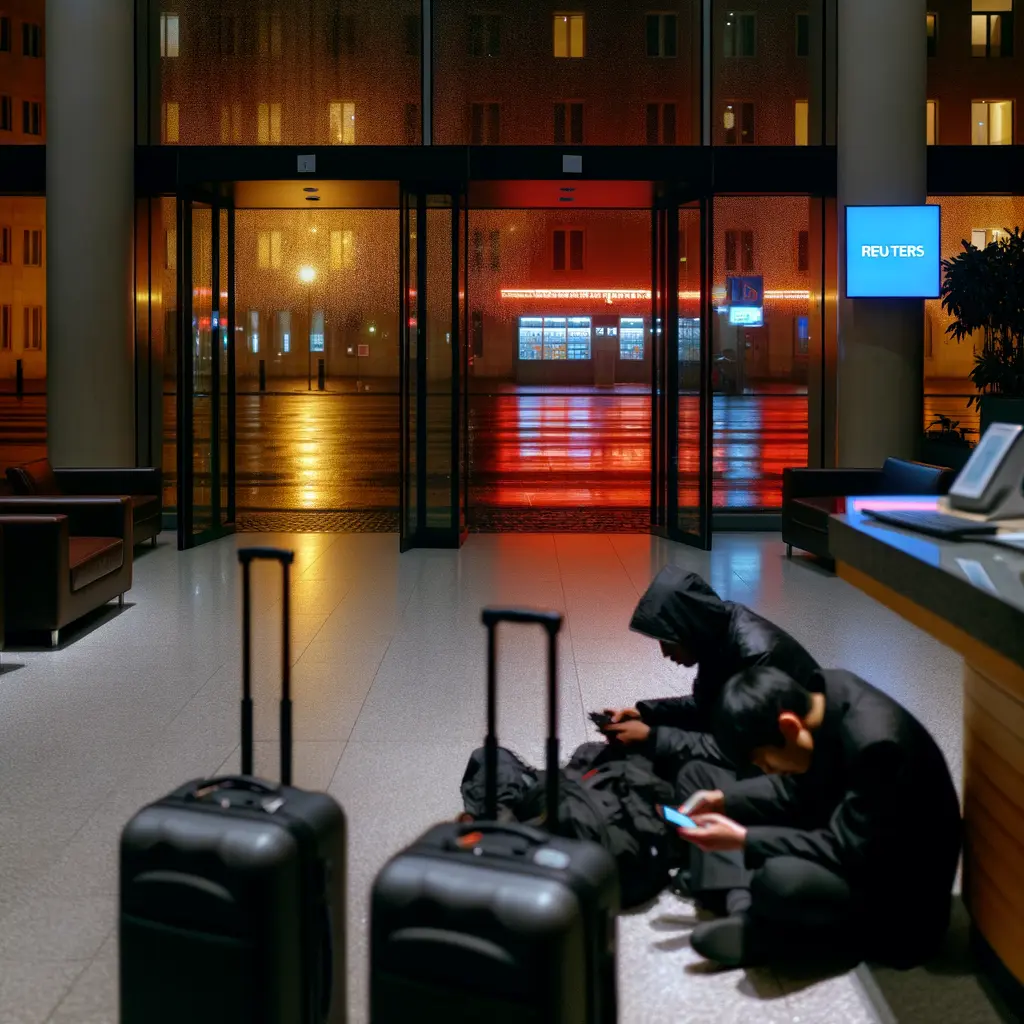
Ten Berlin hotels fall, and suddenly everyone becomes a host
Revo Hospitality Group is insolvent, and ten Berlin hotels are affected—an announcement that landed in Wedding with the soft, familiar thud of bad news followed by worse accommodation.
Berliners reacted with their usual mix of concern, cynicism, and a private little thrill that another polished concept is being quietly lowered into the river. Because nothing says “global city” like watching travelers sprint through insolvency like it’s a corridor at Tresor at 9 a.m.
Wedding’s emergency lodging plan: cruelty, mattresses, and fluorescent beer
Within hours, Wedding developed an unofficial contingency strategy, supported by the only institutions still open:
- Spätis offering “Check-in” via a nod, a $2.50 Sterni, and a bench that definitely saw things.
- Couch surfers promoting “authentic Berlin hospitality,” which is just homelessness with branding.
- One guy on Müllerstraße who insists he can get you a “suite” if you Venmo him and stop asking what the “suite” is.
The old hotel economy was simple: pay money, receive key card, pretend carpet stains aren’t history. Now we’re moving toward an artisanal model where the carpet stains stare back, and the “front desk” is just a WhatsApp voice note at 3:47 a.m. saying, “Door’s kind of sticky, push harder.”
Tourists forced into Berlin’s most sacred ritual: the after-hours friend request
As hotels wobble, a wave of travelers is entering Berlin’s most prestigious program: making a temporary friend while coming down.
If you’ve ever watched an exhausted stranger at About Blank say “I can’t go back to my hotel” like it’s a Greek tragedy, you understand the new lodging pipeline. Step 1: get rejected at the club by a bouncer who senses optimism. Step 2: do MDMA in someone’s kitchen and discuss urban planning as if Jane Jacobs personally lives in your chest cavity. Step 3: wake up at 1:30 p.m. under a thrifted coat, and attempt a deep dive into your dignity.
One traveler from Barcelona, wearing all-black as a spiritual apology, described their new lodging arrangement as “hard to swallow, but very Berlin.”
Local businesses rush to monetize the vacuum (as Marx predicted, bitterly)
The moment insolvency was announced, Wedding entrepreneurs began circling like it was a fresh donor kidney.
A Turkish bakery near Leopoldplatz introduced a “continental breakfast experience” consisting of tea and an uncomfortable question: “Why are you still here?” Meanwhile, a döner shop offered “room service,” which meant someone shouted your order up a stairwell and it arrived in 11 existential minutes, warm in the center, cold on the edges—like Berlin friendship.
Even the city’s spiritual class got involved. A breathwork instructor announced a new workshop titled “Hold Space, Lose Space: Somatic Release for the Recently Unbooked.” The room met stiff resistance from anyone with a functioning brain.
Hotel staff discover the real perk: no longer pretending anyone is happy
In a city where service culture is mostly conceptual art, the staff response was brutally honest. One former hotel worker described Berlin hospitality as “a Beckett play with towels,” adding: “Now that the company’s insolvent, I’m finally free to tell guests the truth—that their ‘quiet courtyard room’ faces a smoking area that behaves like a small republic.”
Another admitted they felt “lighter,” like a Milan Kundera character—if Kundera wore orthopedic sneakers and carried minibar inventories like moral injury.
Nightlife remains Berlin’s most solvent institution, legally speaking
Despite the hotel chaos, Berlin’s nightlife continues operating with its eternal business model: endless queues, selective entry, and a payment plan based on dopamine.
Wedding residents argue the clubs are basically hotels anyway:
- The line is check-in.
- The bouncer is concierge.
- The bathroom is a networking lounge, occasionally with cocaine and life advice.
- The after-hours is a mattress showroom where nobody buys anything and everyone leaves emotionally bankrupt.
And unlike hotels, clubs don’t go insolvent. They just “relocate,” “rebrand,” or become a furniture store with better lighting.
A hopeful outlook, in the same way Berlin has always been hopeful
Revo’s insolvency is sad for workers, chaotic for visitors, and perfectly on-brand for a city that sells instability as culture.
Still, Wedding is ready. Not with solutions—God no—but with improvisation, nicotine, and a Späti fridge that never sleeps.
If you’re looking for a room tonight, bring cash, lower your standards, and remember: in Berlin, the true five-star experience is simply finding a door that opens on the first try.