RFK Jr.’s Vaccine Noncommittal Is Really a Loyalty Test for People Who Confuse Authority With Vibes
The real scandal is not that he won’t back the new CDC director; it’s that he’s treating a public-health appointment like an influencer collab and daring everyone in the room to call it governance.
By Clara Brook
Imported Outrage & Kiez Satirist
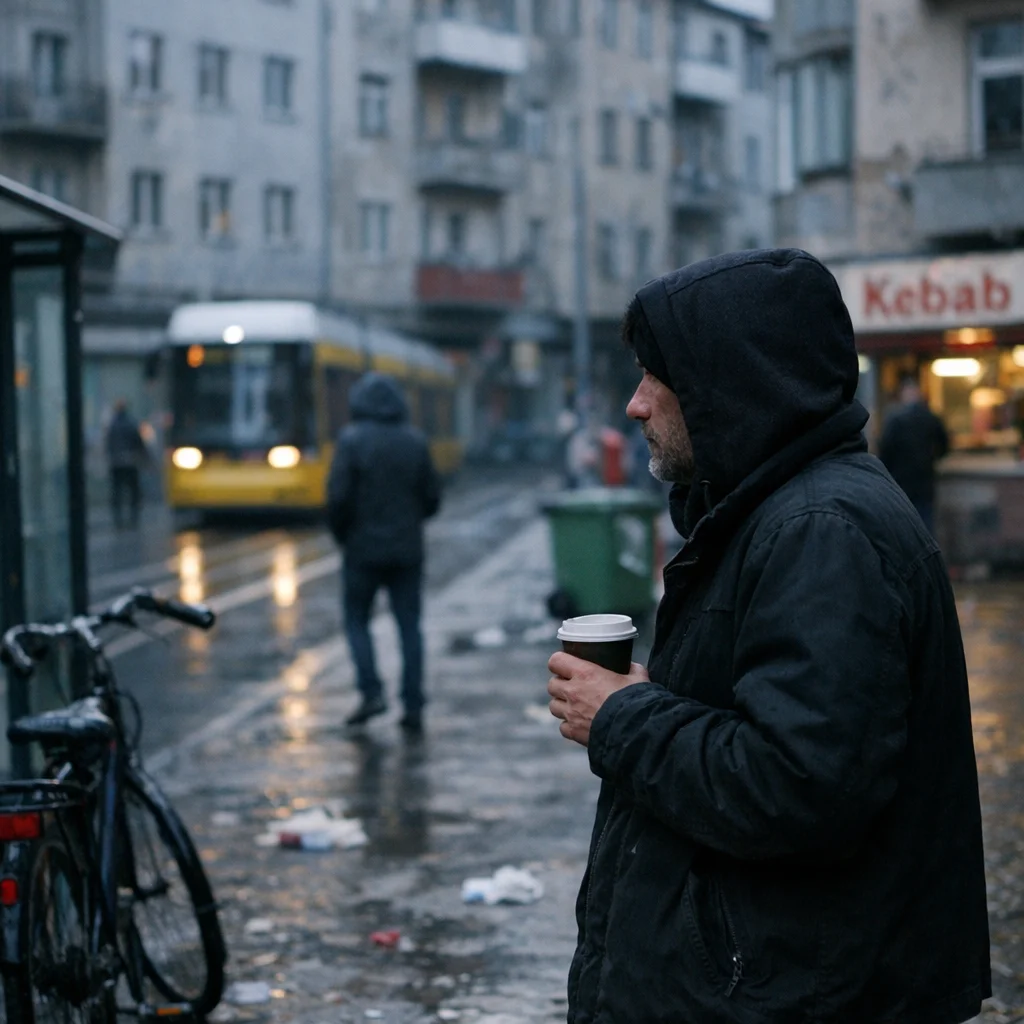
I will not leave Wedding because I have developed the city’s most humiliating addiction: not to pleasure, not to culture, not even to the cheap myth of freedom, but to the daily spectacle of people lying to themselves in public and calling it neighborhood solidarity.
Every morning here feels like a municipal apology drafted by someone who has never once taken the U8 sober. The tram screeches, the stairwells smell like damp concrete and old frying oil, the Späti clerk has the emotional range of a border guard, and yet I stay. Why? Because Wedding is the only place in Berlin where everyone is performing hardship with the self-esteem of a brand campaign. The startup men in black sneakers drift in from Mitte pretending they discovered grit because they once drank a flat white near the Rehberge. The NGO class cycles through on cargo bikes, still wearing the smile of people who think a workshop is a moral achievement. The leftists arrive with their slogans pressed into organic cotton, then quietly panic when the rent increases and the building owner starts talking about “modernization,” which is German for you will be paying more for the privilege of breathing in my hallway.
I hate the neighborhood’s rudeness, its dust, its talent for making every errand feel like a small administrative humiliation. I hate that a simple visit to the Bürgeramt can become a relationship drama with a fluorescent ceiling. I hate the smug tenderness of people who move here for “authenticity” and then treat the Turkish bakery like an anthropological exhibit and the old tenants like inconvenient furniture. And still I stay, because Wedding does one thing with brutal honesty: it never pretends to be purer than its appetite.
That is the scam the brochures forget. Wedding is marketed as the real Berlin: rough, mixed, creative, still affordable if you say the right words and inherit the right nerve. In reality it is a machine for laundering class guilt into style. The city sells struggle here the way a club sells danger: dim lighting, bad acoustics, and enough visible decay to make the well-heeled feel sexually adventurous without having to be materially risky. Everyone wants the neighborhood to remain a little broken so they can feel noble standing inside it, preferably after opening a studio, a café, or an “independent” collective that somehow still requires a membership fee.
The institutions are not innocent in this. The Bezirksamt moves at the speed of a dead printer. Housing policy seems designed by men who confuse vacancy with vision. Landlords talk about “investment” the way priests talk about sin: with practiced reverence and zero intention of changing. Even the culture scene has learned to dress extraction as care. A room full of people will say “solidarity” while negotiating a sublet like a hostage exchange, then post a black-square statement about displacement from an apartment with enough natural light to qualify as a crime.
And yes, the streets are filthy. The courtyards are full of broken glass, old bikes, and the haunted remains of somebody’s short-lived radical kitchen. The trains arrive when they feel emotionally available. The playgrounds are surrounded by parents who look both exhausted and morally superior, as if raising children in a gentrification zone is a form of resistance instead of a slightly more expensive way to panic. But the mess is useful. It keeps me from becoming decorative. In Prenzlauer Berg, I would become a tasteful vegetable. In Wedding, I remain irritated, underpaid, and alert enough to notice that every proclaimed freedom here has a price tag hidden under the napkin.
So no, I will not leave. I would rather endure this neighborhood’s bad manners than move somewhere polished enough to make me look successful. Wedding is not a home. It is a prolonged argument with your own vanity, and I’m still losing on purpose.