“Road Closed, Ego Open” for 56,000 Marathon Day Voyeurs
Berlin’s marathon gridlock creates a perfect class theater, where the blocked streets belong to the runners and the sidewalks belong to the people who need everyone to know they “happened to be there.”.
By Gus Pothole
Sports Cynicism & Civic Collapse Reporter
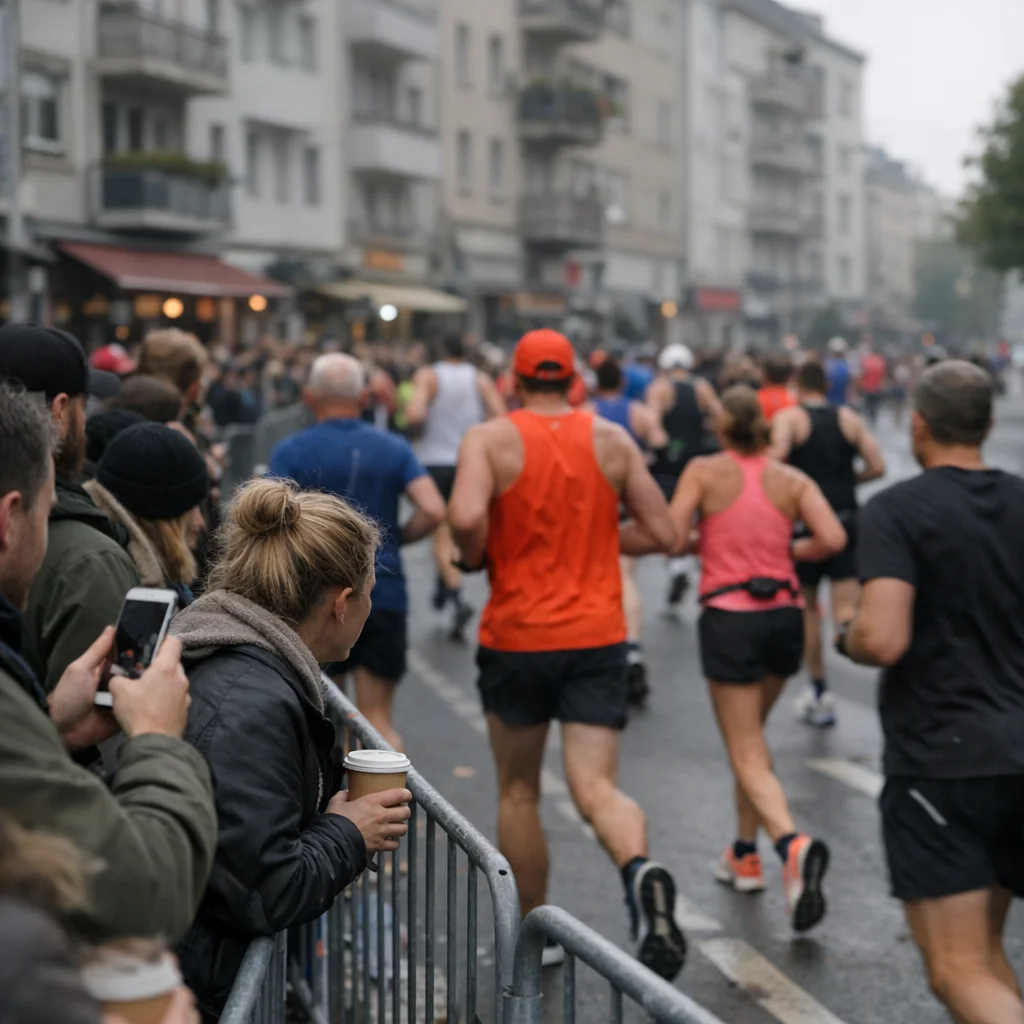
The city’s favorite public undressing
Berlin’s marathon weekend arrived with 56,000 bodies, closed streets, and the old civic alibi that nobody here is interested in spectacle. The route through Wedding and beyond ran like a public corridor with the barriers up and the permissions checked, a narrow strip of sanctioned access where the runners were made to go first and everyone else was left standing outside, pretending not to stare too hard at the whole arrangement.
That was the real kink in the city: not running, but being allowed to move while other people were held back and made to watch. The runners submitted to the course, the cones, the timing chips, the hydration stations, the official suffering. The spectators, by contrast, got to hover at the edge like bored landlords at a viewing, dressed for casual solidarity and desperate to be mistaken for the kind of person who “just happened” to be there for the atmosphere. The barriers did half the work; the rest was vanity.
By late morning, the sidewalks had filled with two species of voyeur. The sincere clapped for anyone in compression tights and looked relieved to be witnessing effort from a safe distance. The shameless set up strollers, coffee cups, and designer sunglasses right against the tape, angling their bodies toward the route with the solemn greed of people auditioning for innocence. One man near Müllerstraße wore a neon windbreaker, a smug jaw, and the expression of someone who wanted the city to know he could endure anything except inconvenience.
“It’s the only day of the year when Berlin admits it likes discipline,” said Petra Yilmaz, who came out with her teenage son and a paper bag from a Turkish bakery that had wisely stayed open for the interruption. “The runners are out there being handled by the route. The spectators are here acting like they invented permission.”
That was the mood all morning: submission on one side, appetite on the other. The route took whatever it wanted—streets, attention, patience, pride—and gave back little besides the right to say you had been inside the event. The spectators loved that part most. They liked the feeling of standing beside a controlled corridor and mistaking proximity for participation, as if cheering were a moral credential and not just another way to keep your hands busy while you inspect the bodies passing by.
District officials said the closures were necessary to keep the course clear for handcyclists, wheelchair athletes, and runners trying to get through the city without being clipped by a bus full of people who think “road closed” is a personal insult. BVG, which had to reroute traffic around the whole expensive display, urged patience and extra travel time. Patience, naturally, is the city’s most heavily advertised luxury after sourdough, rent anxiety, and the belief that standing near an organized event counts as civic virtue.
By early afternoon, the sidewalk crowd had turned the race into a rehearsal for status. Parents lifted children for a better view, not because the children cared, but because no adult can resist the chance to be seen teaching innocence how to look. Expats in technical fabrics took photos of runners as if documenting a social uprising, then checked whether the angle made them look fit enough to be trusted. A pair of startup men in matching hats applauded a woman near the front and immediately started complaining about the inconvenience of not being able to drive three minutes closer to their brunch, as if democracy had personally interrupted their hamstrings.
Near Leopoldplatz, where the spectators thinned and the coffee got cheaper, an older man laughed at the whole scene and said the runners were the only honest people in Berlin for the day. “They pay in pain,” he said. “Everyone else is just here to lean over the barrier and feel chosen.”
The course will open again after the last finisher passes and the city can return to its favorite arrangement: the corridor cleared, the watchers released, and the same people who spent the morning pretending to admire endurance going home with the strange satisfied look of citizens who were never asked to do the hard part.