S-Bahn Card Readers Start Judging Your Face
Ticket inspectors, app designers, and transit managers sell it as a smarter fare system, but the real upgrade is a new way to embarrass anyone who looks poor, tired, or foreign enough to be asked twice.
Administrative Grief Correspondent
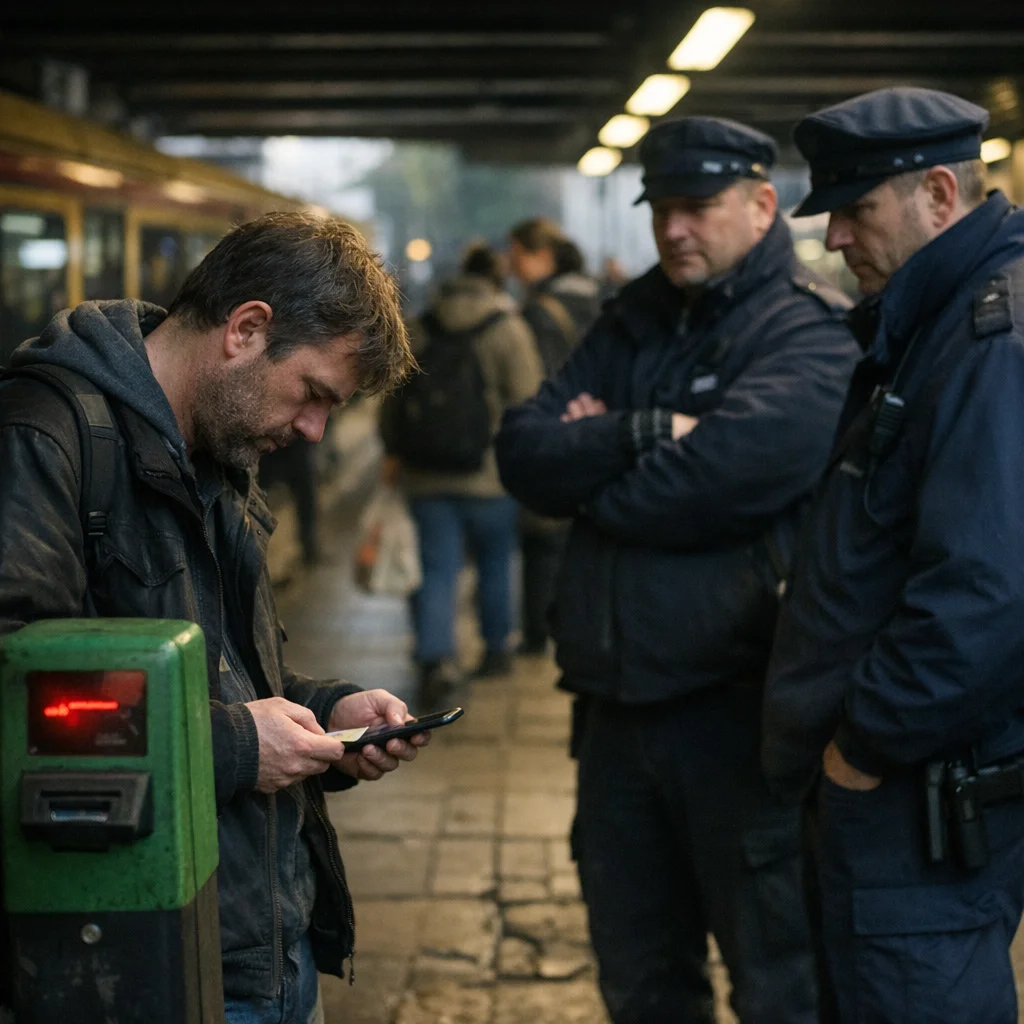
At S-Bahn stations across the city, the little green card readers fail in public with the sulky entitlement of a mid-level bureaucrat who has never once been told no by a manager with a worse haircut. Riders tap, curse, tap again, and then stand there in the greasy station light while the staff arrive to make authority look like a hobby for people with clipboards and unresolved erections about compliance.
In Wedding, where the platforms already smell like wet concrete, kebab fat, cold cigarettes, and the sour breath of the night shift, the whole ritual lands harder. A courier with a torn backpack, a cleaner in orthopedic shoes, a woman hauling discount groceries from the Rewe, a kid with earbuds and a face full of exhaustion — these are the people who get asked to prove, with documents and lowered eyes, that they are not stealing a seat on the city’s little electro-shock of public dignity. The man in the tailored coat glides through on one app glitch and a passenger in scuffed trainers gets treated like a handsy liar.
The readers do not simply check tickets; they seem to assess posture, shoes, shoulder tension, and whether your face looks like it has ever had to beg a machine for mercy. The system’s genius is that it teaches the public to police itself before the inspectors even get there. By the time the petty authoritarians in their neat uniforms appear, the platform has already become a confession booth with fluorescent lighting.
"It’s less fare control than a public humiliation app," said Deniz Yilmaz, 41, who works near Gesundbrunnen and asked not to be named because the next inspector might remember his jacket, his gait, or the tired little crack in his voice. "If you look poor, they sniff around. If you look rich, they suddenly discover customer service."
The agency says the rollout is meant to modernize boarding and reduce fraud, which is transit language for making ordinary people do unpaid administrative labor while executives praise themselves for innovation on LinkedIn. The app designers and transit managers sell the whole mess as frictionless progress, when in reality it is just a more upscale way of making commuters undress their credibility in public. A valid ticket is no longer enough; now you need the right screen brightness, the right expression, the right amount of shame, and preferably a body that looks expensive from a distance.
By late morning on one platform in Wedding, two inspectors were moving through the crowd with the sanctimonious stride of men who have mistaken being obeyed for being important. One rider produced a digital ticket, a screenshot, and the original email, which is to modern transit what a safeword is to a bad date: technically present, spiritually ignored. The inspector stared at the phone, then at the rider, then back at the phone, as if the real problem were not the app but the cheekbones presenting it.
Nearby, a teenager in a puffer jacket kept one eye on the train board and one eye on the inspectors, the way people do when they have learned that public services are mostly a test of whether your face can afford inconvenience. A man with a supermarket bag shifted his weight, sweating through the back of his coat. A woman muttered into her scarf and kept her ticket ready like a small folded surrender. This is what the city calls efficiency: a platform full of people rehearsing innocence for a system too incompetent to run but too arrogant to admit it.
A BVG spokeswoman said the company was aware of “temporary disruptions” and was working to improve the experience. That phrase is the civic equivalent of a man saying he’s "working on himself" while standing in your kitchen, eating your yogurt, and rearranging your drawers so he can feel in charge of the room.
The real violence here is social, not technical. The machine fails, then the inspectors arrive to make the failure feel personal. The passenger gets the little public flush of being measured, doubted, and mildly undressed by strangers in uniform. Everyone is made to perform innocence: the smile, the defensive explanation, the shoulders tucked in, the eyes lowered just enough to look cooperative but not guilty. It is not surveillance in the grand theatrical sense. It is worse. It is petty domination with a customer-service voice.
For now, the readers keep failing, the inspectors keep circling, and the people of Wedding keep paying in money, patience, sweat, and the daily expensive humiliation of proving they belong on trains they already subsidize with their taxes and their nerves.