S-Bahn Demands Final Squirt Before Any Signal Turns Green
Operators now require maintenance crews to perform one extra pressure test on every aging valve before clearing a track, ensuring overtime hours accumulate even as riders bake in motionless cars for up to forty minutes.
By Tess Lanyard
Institutional Vibes & Local Power Struggle Reporter
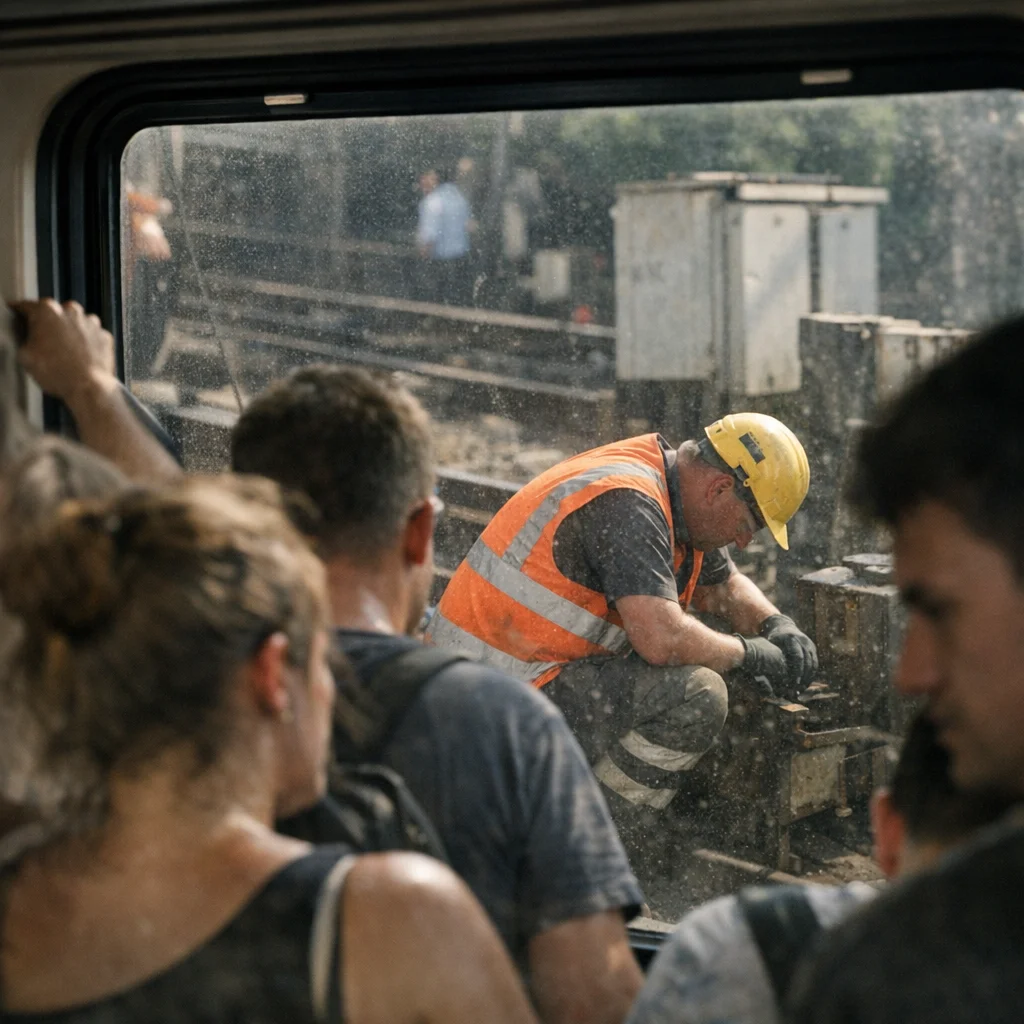
I have no problem with maintenance crews checking a valve twice. I have a problem with the people in charge turning the leak itself into a performance metric and then expecting riders to applaud while they sit in a metal tube inhaling recycled disappointment.
That, apparently, is the new religion at the S-Bahn: do not fix the thing, document the thing. Do not end the delay, certify the delay. If a crew can prove it performed one more pressure test, one more deliberate release, one more blessed little squirt of institutional obedience, then management can file the whole mess under progress and everyone gets to pretend the system is improving because the spreadsheet got fatter.
Passengers know the script already. A train stops outside Gesundbrunnen or Wedding or wherever the day has chosen to rot, and the voice over the speaker comes on sounding like a hostage reading a greeting card. There is always a technical reason, always a process, always somebody “working on it.” What is never mentioned is the career incentive built around keeping the problem alive just long enough to make room for another audit, another overtime claim, another memo written by a person who has never stood in a carriage with sweat running down his back and his dignity leaving the station one stop ahead.
At the Friedrichstraße control room, where the monitors glow like holy excuses, dispatchers were said to be chasing valve logs the way loan sharks chase late payments. One mechanic described the new protocol as a little foreplay for paperwork: the line does not go green until the last test has been squeezed out of the system, even if the thing is already spent and the passengers are cooking inside the cars. “They want the final squirt on record,” he said. “Not because it helps. Because it proves somebody was touched by the process.”
A maintenance worker who asked not to be named because he is still assigned to the same depot and would like to stay that way said the new rules “reward paperwork with a pulse.” He described crews being pushed to record each controlled release from aging valves before a line can be cleared, even when the obvious answer would be to replace the failing parts and get the line moving again. “The leak is what keeps everybody busy,” he said. “The fix is bad for scheduling.”
That is the real obscenity here: a transit company that speaks in the language of reliability while monetizing unreliability like a boutique sin. The executives pose as public servants, the consultants pose as surgeons, and the riders are left performing the oldest civic ritual in the city—standing still while strangers in cleaner clothes explain why this misery has been carefully measured. Somewhere in an office above the tracks, somebody is getting serviced by the delay and calling it operational discipline.
The transportation department said it expects operators to maintain safety standards and document maintenance properly. Fine. Safety matters. So does not pretending that a system can be healed by applauding the wound. If the trains are going to sit motionless for forty minutes, the public deserves the truth: the line does not go green because the people collecting the overtime need one more squirt before they let go.