S-Bahn Fare Inspectors Learn to Smell Shame
A new enforcement push in Wedding has turned ticket control into a small theater of humiliation, where riders perform innocence, inspectors perform authority, and everyone knows the real fare is paid in class anxiety.
Moral Contradictions & Night-After Reporting
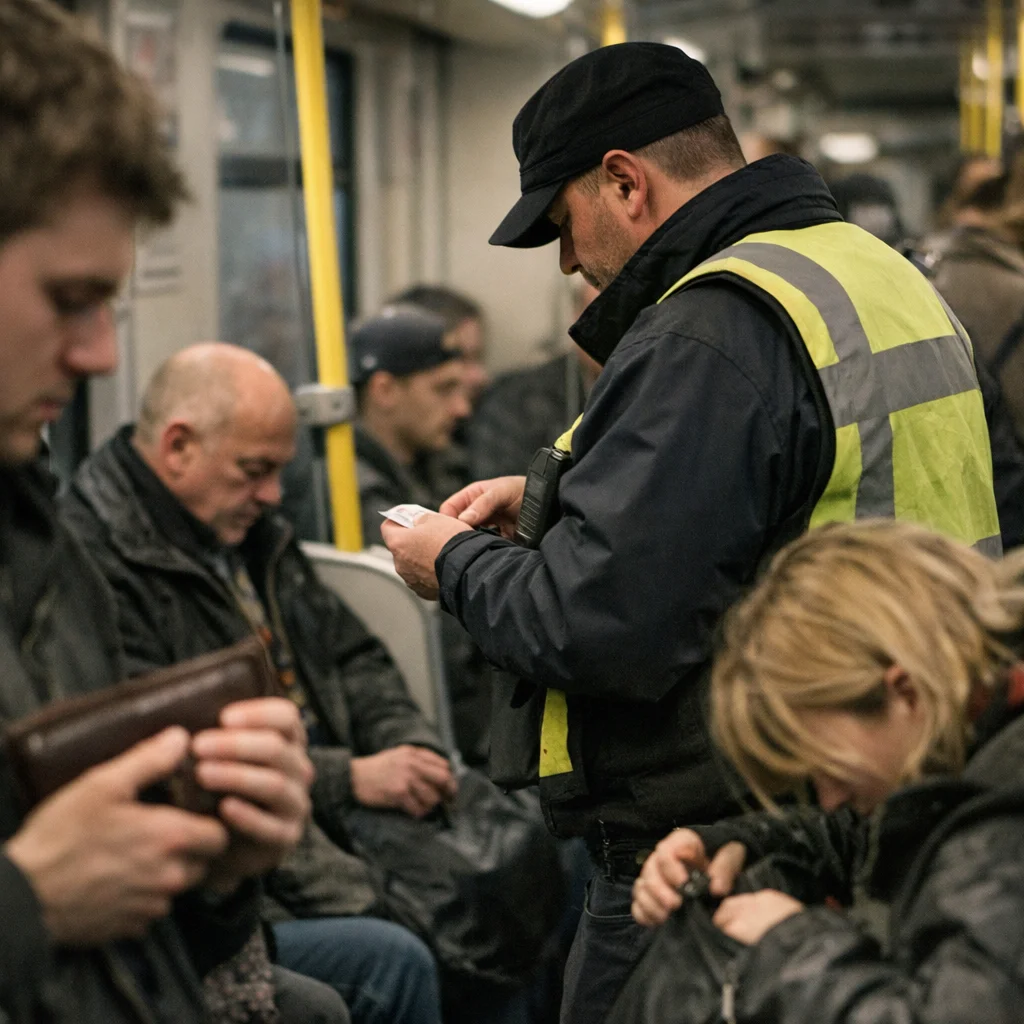
The inspector boarded like a man auditioning for a smaller dictatorship.
On the S-Bahn through Wedding this week, fare inspection stopped pretending to be administration and revealed its true hobby: public humiliation with a clipboard. The inspectors moved through the carriage in their reflective vests, soft-voiced and hard-eyed, the kind of men who look injured when you have the audacity to have a valid ticket and irritated when you do not. They do not enforce the rules so much as caress them into a weapon.
The carriage did what Berlin carriages always do when authority enters: it performed innocence like a cheap striptease. A man in a paint-stained jacket suddenly became fascinated by the floor. A teenager with headphones turned into a statue with a pulse. Near Osloer Straße, a woman in scrubs and cheap perfume rummaged through her bag with the sweaty panic of someone trying to recover a condom from under a bad decision. Across from her, a young man in a pristine coat and dead eyes stared at his phone as if a QR code might absolve him of being alive.
Nobody looked surprised. That was the most obscene part.
“It’s not the fine,” said Mehmet Yildiz, boarding near Gesundbrunnen and watching the inspection with the flat patience of someone who has seen every public lie the city can produce. “It’s the little ritual after. They don’t just want money. They want your face to fold. They want you standing there smelling your own fear while they pretend this is civilization.”
Berlin’s transit operator likes to talk about fairness the way a landlord talks about “community”: with enough sincerity to make the lie feel polished. A spokesperson said the checks protect paying riders and restore confidence, which is the sort of sentence that makes a broken escalator feel like a moral philosophy. The authority can’t keep trains clean, can’t keep delays from breeding like damp in the walls, can’t even keep the stations from smelling like old coins and wet wool—but it can still produce a man in a vest to peer into your bag like a disappointed doctor.
And what a pathetic little institution it is, really. Not a bold state, not even a competent one. Just a self-protective bureaucracy in safety gear, forever acting stern because the actual work of fixing anything would require courage, budget, and a spine not issued by procurement. The inspectors seem to know this. Some of them carry themselves like underpaid wardens of a collapsing zoo; others grin too quickly, eager for that tiny surge of borrowed power, that brief erection of authority before the next stop swallows them whole. Their cruelty is theatrical, almost needy. They do not merely check tickets. They enjoy the moment when a rider has to fumble for a wallet, a phone, a receipt, a lie—anything to keep from standing there exposed.
Wedding, naturally, is the perfect stage for this little civic strip search. At Leopoldplatz, where men in work boots stand beside mothers with discount groceries and students pretending their bankruptcy is a political position, the city’s class theater gets its worst lighting. The neighborhood is full of people who speak about solidarity like it is a lifestyle accessory, then clutch their monthly pass like a talisman and pray the machine does not spit out the wrong color. One rider in a West Berlin vintage jacket spent the whole inspection pretending not to notice the inspector because nothing says radical politics like desperate eye contact with state paperwork.
The riders are not innocent victims, and they know it. They are collaborators in the smallest possible corruption: they want public transport to be a social good as long as someone else pays the moral price. They want the system to be humane, efficient, and free of shame, provided nobody asks them to carry the shame on their own damp back. So they perform outrage, then compliance, then private arithmetic. They sigh about inequality and reach for the ticket app. They curse the state and still flinch when it leans close enough to smell the deodorant failing under their collar.
It is all so intimate. The inspection does not merely ask for proof of payment; it invites the whole carriage to inspect your life. Who is broke, who is careless, who is pretending to be above all this, who is one missed transfer away from panic? The train becomes a moving confessional with fluorescent lighting and stale air, a place where the city rubs its thumb over your insecurities until they shine.
By the time the train rolled toward Gesundbrunnen, the performance had settled into its usual civic afterglow: shoulders tight, eyes down, everyone acting as if humiliation were simply the price of urban adulthood. The transit authority will call this order. The inspectors will call it duty. The riders will call it unfair, then board again tomorrow with the same weak little faith in the system that keeps feeding it exactly what it deserves.