Söder’s Berlin Ticket: Party Loyalty, Pay Up
After denouncing punishment for election results in Saxony-Anhalt, Markus Söder suddenly wants Berlin fined for voting left.
Moral Contradictions & Night-After Reporting
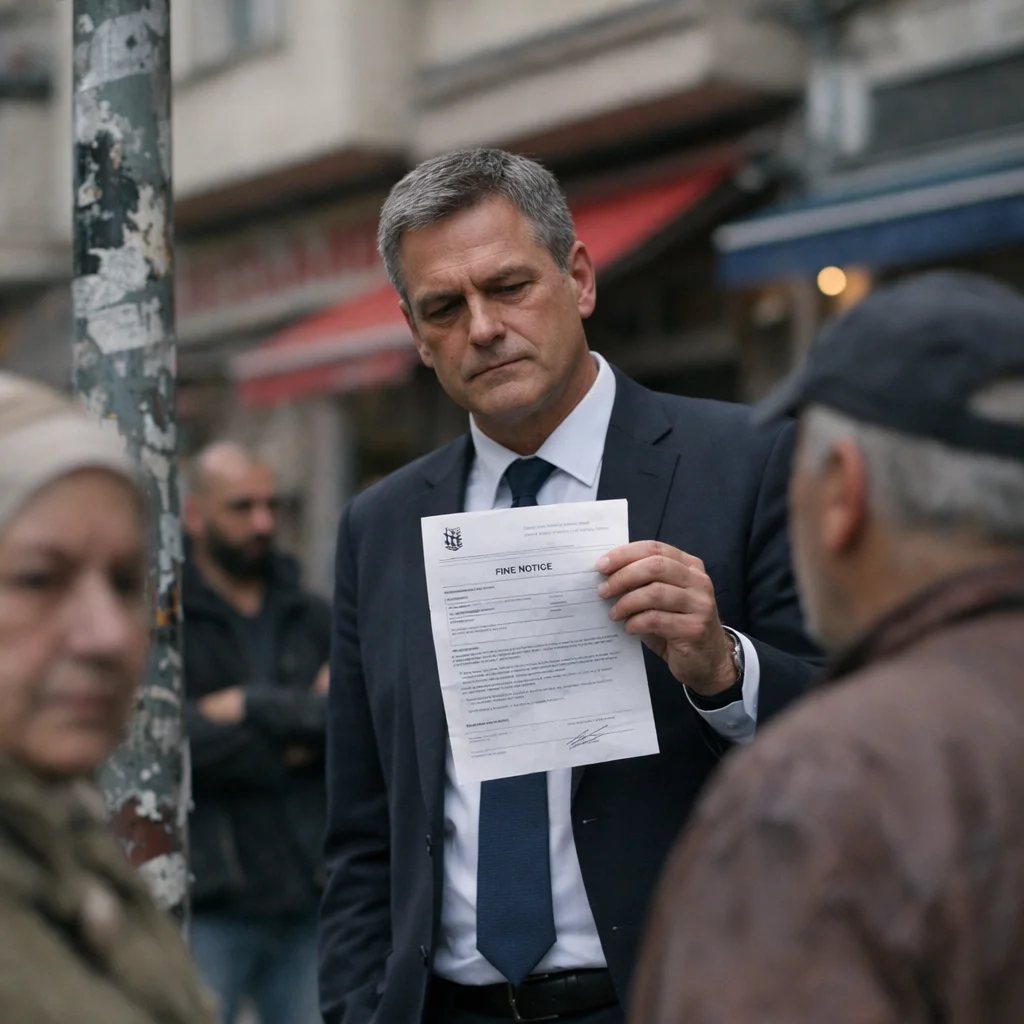
Markus Söder’s demand to fine Berlin for voting left arrived in the capital like a notice from a jealous creditor who has already decided the account must be paid in public, with interest, and preferably with a little shame attached. He had only recently rejected the idea of punishing Saxony-Anhalt for its election result. Now he wants Berlin billed for the same democratic act, as if ballots were a private vice and he were the landlord of the republic, collecting rent from the rooms he no longer controls.
The mechanism matters. A fine is not a policy argument; it is an invoice with a threat tucked inside the envelope. Söder’s version of civic order is simple: vote the way he prefers and you remain respectable, vote wrong and he wants the city handed a penalty notice, a compliance hearing, and a public reminder that your mouth opened in the wrong direction. It is not concern for constitutional discipline. It is a man trying to make obedience feel like consent while calling the whole thing responsibility.
At a bar near Leopoldplatz, where the tables wobble like they have seen too much and the coffee tastes punished before it reaches the cup, a district regular summed it up without bothering to perform sophistication. “He wants Berlin to pay for not laying still,” he said. “That’s the whole speech.” Around him, a delivery rider checked his phone, a pensioner folded a newspaper with the disgust of someone reading the same moral sermon for the twentieth year, and a pair of designers in expensive shoes tried to look like they had come for the neighborhood rather than the optics.
That is the useful humiliation of the proposal: it exposes the fetish for discipline behind all the polished talk about order. Söder does not sound like a democrat proposing consequences; he sounds like a man mistaking punishment for intimacy. Fine the city, shame the city, keep the city in a posture of apology, and maybe it will finally stop acting as if it owes him nothing. The problem is not merely that Berlin voted left. The problem, for him, is that Berlin did so without asking permission, without softening the edges, without pretending to be flattered by his authority.
Wedding, where the storefronts switch identities faster than party slogans, gave the idea the kind of welcome it deserved: laughter first, then the practical question of who would collect. On Müllerstraße, a grocer leaned on his counter and said the republic already had enough people trying to extract obedience from neighborhoods they only visit when they need a backdrop. “If they start fining votes,” he said, “they should at least send someone capable of blushing.” Outside, a woman in a battered coat dragged a stroller past a café selling oat-milk diplomacy to people who call themselves local after two months.
Inside the district administration, the fantasy becomes even filthier in bureaucratic form. A fine means a notice, a deadline, an appeals process, and a clerk whose job is to translate resentment into official language. It means the city must sit still while the state explains, with immaculate manners, that your political choices have become a billable offense. By the time the paperwork is done, the punishment has already done its real work: it has turned government into a hand on the back of the neck, pressing just hard enough to call it guidance.
That is why the whole performance reeks of overcompensation. Söder is not defending standards; he is auditioning for the role of the only adult in the room while reaching for the zipper of everyone else’s autonomy. His outrage has the rhythm of someone who enjoys the threat more than the principle, who wants the city to understand that approval is available, but only after submission has been properly processed.
Berlin, predictably, will not cooperate with the fantasy. It will mock the sermon, recycle the insult, and keep voting like a place that knows exactly how much contempt the nervous provinces need in order to feel important. The republic may yet survive Söder’s invoice culture. But if he gets his way, the message will be clear enough: the vote is free, the discipline is not, and Berlin is expected to pay extra for refusing to lie down on command.