Safe(r) Space, Better CRM: How Wedding's 'Sober Rooms' Turn Aftercare into a Sales Funnel
Promoters sell the rooms as harm‑reduction; the giveaway is a dime‑sized NFC magnet stuck to your lapel that registers you as 'sober' and books you into the club's lifetime marketing cadence.
Nightlife Contradictions Reporter
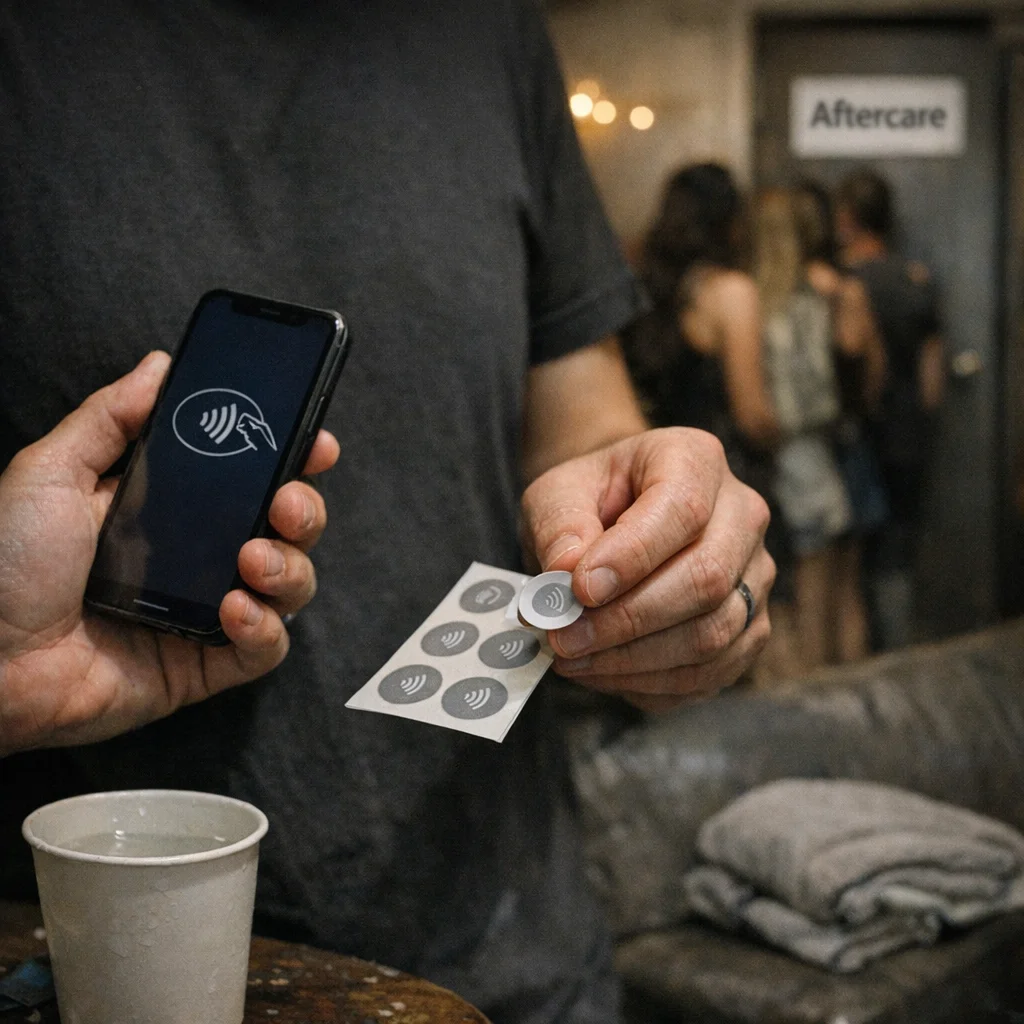
BERLIN — Promoters in Wedding pitched the new sober rooms as the scene’s conscience: quiet couches, water, volunteers and trained listeners for anyone who wanted to come down without a fuss. It’s a neat headline-friendly offer; what anyone who actually sat in one learned within ten minutes was the ritual that turns care into a conversion.
First the volunteer peels a dime‑sized adhesive NFC magnet from a branded sheet, then — instead of offering a clipboard or anonymity — she taps it to the club phone on her hip. Your lapel gets a tiny badge, you get a cup of water, and a webhook opens: the club’s CRM registers you as “sober_contact.” The official line is harm reduction. The operational truth is a quiet database insertion and a drip campaign.
"I just peel and tap," said Aylin Kaya, a volunteer who worked three shifts at a recent event. "They sit down, we give them vitamin water, and they get a text later: 'Hope you're okay. Want a sober night?' It's less about rescue than about follow‑up." Kaya shrugged. "People think it's charity. It's sticky consent." The peel-and-tap is faster than paperwork and much better for segmentation.
Club management insists the data is anonymized. A spokesperson for one promoter said, "We only collect opt‑in tokens; names aren't stored centrally," and produced a redacted vendor contract claiming GDPR compliance. Midway through the evening, however, a screenshot circulated in a promoter chat: a CRM list labeled "Sober — High Intent" with timestamps, event IDs and a column marked "promo_30pct_lowalc." That column is where harm reduction meets marketing.
Privacy activists called the setup a biopolitical handshake. "It's Foucault with a loyalty card," said Dr. Leon Vogt, a digital rights researcher. "You are cared for and catalogued at the same time. The clinic becomes a sales funnel." Vogt has filed a complaint with the Mitte district data office, which confirmed it "is reviewing the matter and will contact event organizers." The district added it takes "allegations of improper data processing seriously."
Promoters argue follow‑ups reduce harm and encourage safe nights; critics say the real product is the list. For a scene that worships ink stamps as sacred status marks, exchanging a hand‑rubbed stamp for a tap that registers your vulnerability feels like swapping intimacy for reach. The badge is tiny; its reach is not.
Consequence: at least one privacy complaint has been lodged and a vendor contract has been demanded. Clubs say they will audit their CRM flows; the data office says it will check webhooks. Meanwhile, the sober rooms will keep handing out magnets — care, as practiced in Wedding, now comes with a follow‑up text and a lifetime subscription to low‑alcohol offers.