“Safer Space” Signs, Sweat, and a Dealer in a Lanyard
A new crop of Wedding clubs and afterparties is selling its nightlife soul as harm reduction, with laminated rules, overpriced water, and “community” staff who look like startup interns in blackout sunglasses.
Nightlife Identity & Self-Deception Correspondent
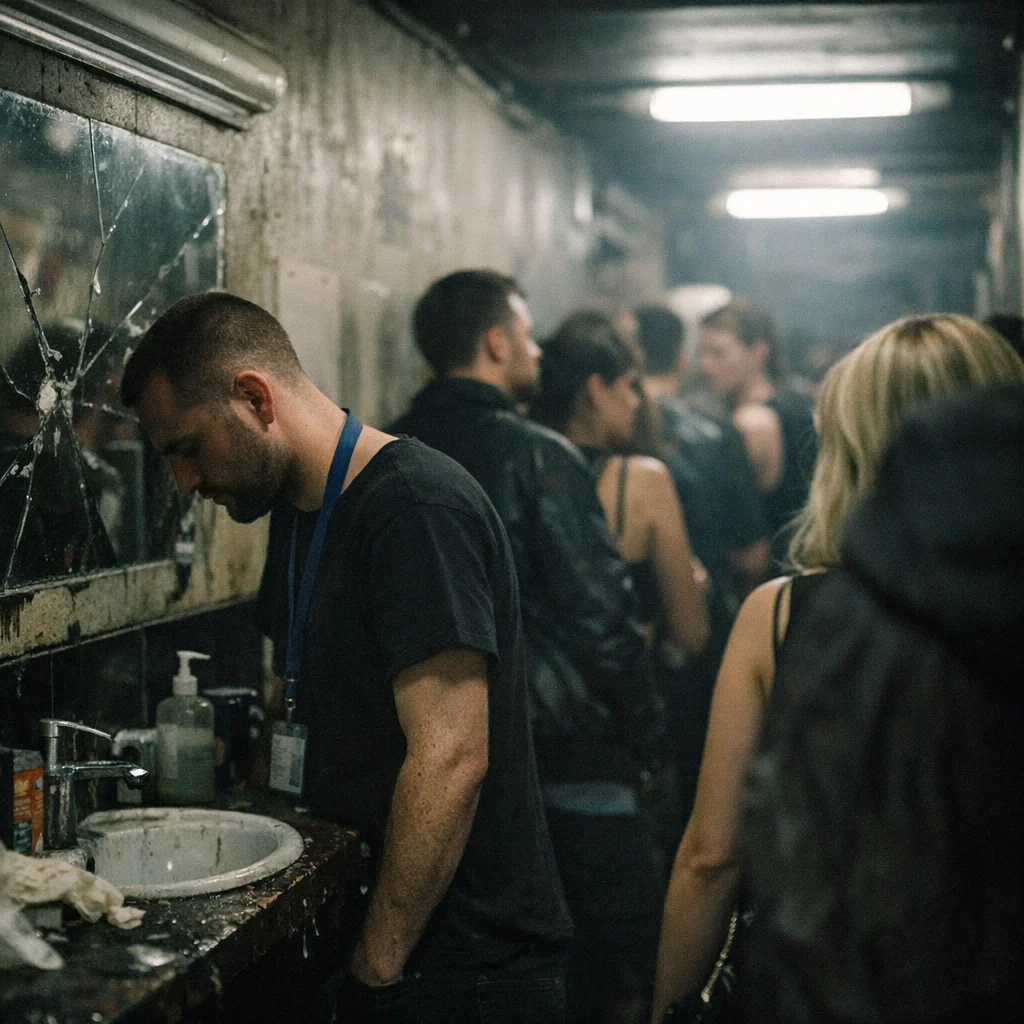
At a nightclub off Hermannstraße in Wedding, the bathroom mirror is doing more political work than the people paying rent on the room. Above the sink hangs a laminated code of conduct: respect, consent, community care. The language is soft enough to make a landlord blush and slippery enough to justify almost anything, which is exactly why it hangs there. By 2 a.m., the room behind the bathroom line has settled into its real purpose: a damp little stock exchange where attention, powder, cash, and self-respect are traded by the inch.
The club’s manager, Jale Demir, says the signs are about making the venue “less predatory and more legible.” That sentence is the whole scam in a nice blazer. “People want a place that feels ethical without having to behave ethically,” Demir said, leaning against the bar like a man auditioning to be forgiven. “If you give them a rulebook and a water menu, they call it progress.” It was the kind of quote that should come with a tax form.
The bathroom economy is where the branding peels off and the rot starts sweating through. The attendant, in a cheap lanyard and a face flattened by too many shifts, is supposed to be the guardian of all this civic tenderness. In practice he is a toll collector for shame. He decides who gets a fresh paper towel, who gets stared through the mirror, who can loiter long enough to fix their nose or their mascara or their personality. The pretty people drift in and out as if access were a birthright. The ones who look poor, drunk, or inconvenient get the kind of silence that means move along, darling, you are not part of the decorative economy.
A woman in a silver top waiting near the sink said the “safer space” talk mostly means the same old hierarchy with cleaner grammar. She had been in line for ten minutes while two men ahead of her negotiated over whether a stall was being used for cocaine or emotional support. “They love care as long as it’s branded,” she said. “The minute you ask who gets the good room, who gets ignored, and who is paying to feel morally hot for an hour, suddenly everyone becomes very busy.”
That is the modern Wedding trick: wrap nightlife in harm-reduction language and sell the wrapper as virtue. The venue advertises itself like a social worker with a booking fee. The promoters talk about consent the way real-estate people talk about sunlight. The crowd arrives eager to be seen as politically awake, which is a fine pose until you notice how fast they revert to the ancient religion of access: who knows the DJ, who gets the wristband, who can vanish into the back room, who has to queue under fluorescent light with the rest of the unpaid masses. The leftists come dressed like they invented guilt and then auction it off by the hour. The startup-adjacent little parasites from the north of the city arrive in black, as if wardrobe were a substitute for ethics. Even the macho boys, if they make it inside, understand the assignment: look contemptuous, spend money, pretend you are above the swamp while kneecap-deep in it.
The most intimate filth is always bureaucratic. The bathroom stall is too small, the lock is broken, and somehow the door still becomes a gatekeeping device. Some people are waved toward the cleaner cubicle near the staff corridor; others are sent to the sticky one with the dead bulb and the floor that smells like old piss and cheap cologne. The venue calls this “flow management.” In any honest language, it is class sorting with a bassline.
A kebab owner from around the corner, who asked not to be named because he has watched enough drunk sincerity at 4 a.m. to develop caution, said the place reminded him of the city’s favorite lie. “They say safe,” he said, handing over a foil packet of chili sauce like an indictment. “Then they charge twelve euros for water, hire one exhausted attendant to babysit the mess, and act wounded when the room starts behaving exactly like a room built for appetite.”
The licensing and policing side of it is almost funnier, if you enjoy watching institutions masturbate in public. Neighbors complain about noise, the precinct records “minor disturbances,” the city gets to perform concern without ever touching the financial engine under the floorboards. Everyone keeps the arrangement because everyone gets something: the venue gets plausible deniability, the police get paperwork, the neighborhood gets a nightly lesson in how gentrification sounds after midnight. The new Wedding nightlife does not hide its contradictions; it monetizes them, then calls the invoice compassion.
By sunrise, the laminated rules are still up, the sink is still sticky, and the room has done what it always does: turn loneliness into cover charge and morality into bottle-service perfume. The next afterparty is already being sold as ethical, which is how you know the lie is working. Nothing says care like a premium-priced alibi with a lanyard attached.