Sauna Union Demands a Full Opening
A members-only bathhouse in Wedding is selling “transparency” while using it to sort the desperate from the merely rich.
Nightlife Etiquette & Status Rituals Correspondent
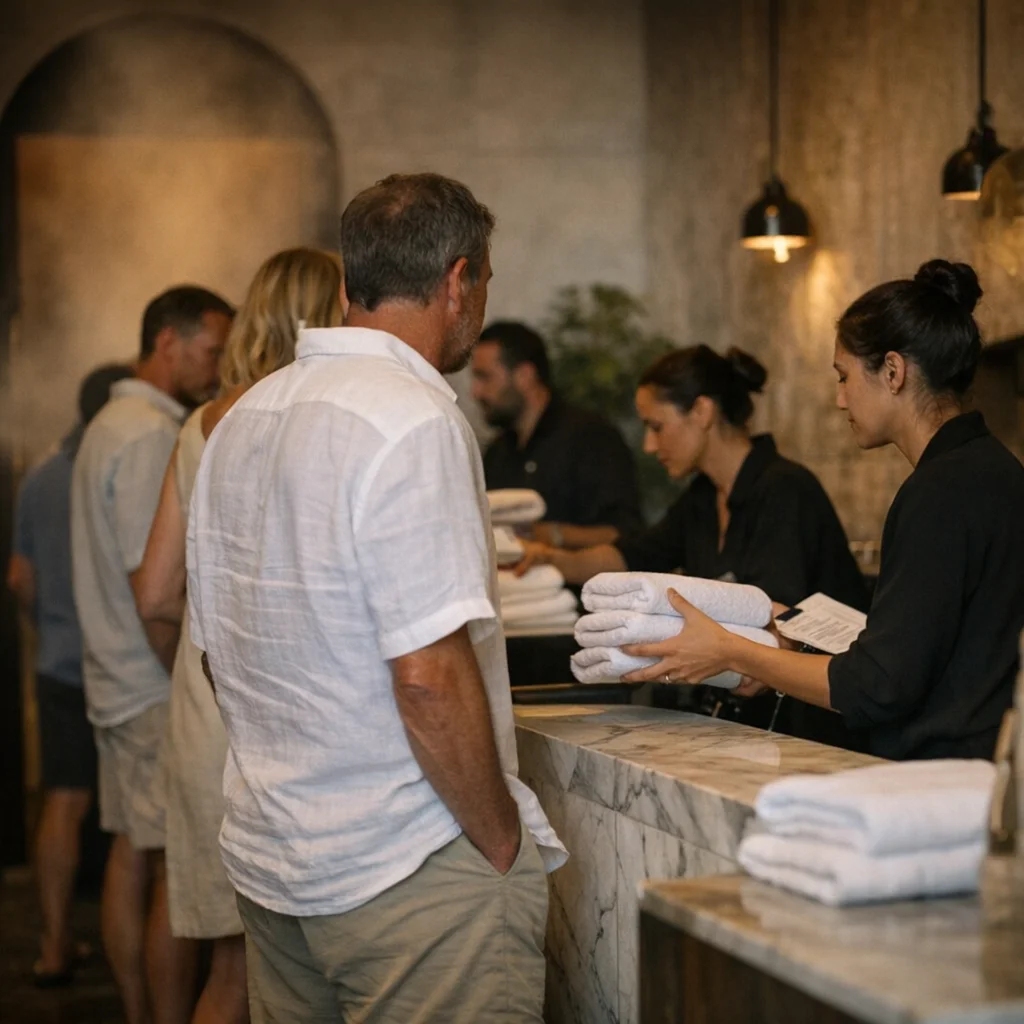
The bathhouse on Müllerstrasse drew a line through its marble foyer on Thursday morning and called it a safety measure. It looked more like an admission desk for desire: those deemed suitably polished were waved through to the hotter rooms, while everyone else was told to wait, hydrate, and present themselves again with less sweat, less need, and better shoes.
Sauna Union, the members-only operator that rents virtue by the hour, said the new entry protocol was meant to protect comfort and privacy. The words landed with the usual disinfected cruelty. Guests with glossy toiletries, pressed linen, and the serene dead-eyed confidence of money got the quick nod. The rest were left under a framed slogan about balance, queued like applicants for permission to be wanted, or at least to be tolerated in the same heat.
The new system was explained by owner-operator Martin Klose, who recently brought in a district-approved wellness consultant after complaints that the place was becoming too popular with people who did not look like they had come to be seen. Klose now speaks in the language of “opening hours,” “clearance,” and “room suitability,” as if entry were a moral test rather than a transaction. Staff were heard repeating that towels would be issued “according to comfort standard,” which is the kind of phrase bureaucrats and club owners both use when they want to touch you with a rule instead of a hand.
One receptionist said the house was protecting “the right atmosphere.” In practice that meant a softer version of the same old sorting: the polished were opened first, the eager were delayed, and anyone with the wrong kind of hunger was asked to cool down before being allowed back into circulation. A man in a bakery apron, who said he had stopped in after unloading flour near Leopoldplatz, called it “a velvet rope for people who need to pretend they’re not in the room for the same reason as everyone else.” He said the waiting area felt “less like privacy than a screening for who gets access and who gets left outside fully dressed.”
The place has become a private theater for Berlin’s favorite moral narcissists. There are the wellness purists who quote Simone Weil between eucalyptus rounds, the discreet men who speak in half-smiles and exact towels, and the imported ascetics from coworking money who believe restraint is a personality. They all insist they are there for restoration. None of them are there to be restored. They are there to be opened slowly, selectively, and only after the house has decided they have the right kind of body, the right kind of confidence, and enough cash to mistake exclusion for atmosphere.
By noon, the hottest cabins were full of polished bodies pretending to read magazines while bracelets, towel stacks, and practiced indifference did the real stripping. The staff moved between them with the solemnity of customs officers at a private border, checking who was ready to be let in, who was still too visible, and who had to wait outside until they looked less needy and more expensive. The message was plain enough: access would be granted in the usual order—first the rich, then the plausible, then everyone else if there was still heat left.
A district official declined to interfere, calling it “a private business question,” which is how public shame gets laundered before lunch. Outside, a notice on the glass promised that guests who failed the “comfort standard” could book again for a quieter hour, a sentence so sleek it almost disguised the insult. In Wedding, that is how the city’s soft power works now: it opens itself to the right people, keeps everyone else on the threshold, and calls the whole arrangement privacy.
By late afternoon, the rooms were full and the waiting list had become the real membership. Those admitted were left glowing in the approved way, with the pale satisfaction of people who had been chosen for the privilege of pretending they had not been chosen. The rest were told to come back another day, after they had become less eager, less visible, and more able to pay for the honor of being opened. Several said they would. That is the final efficiency of places like this: they train people to accept exclusion as a form of discipline, then sell them the next chance to be let in.