Scheuer on Trial, the Maut Keeps Asking for More
Andreas Scheuer’s court appearance over the failed toll project puts a simple question back on the table: did the former transport minister lie, or just keep the whole country waiting while he tried to force a bad fit.
Moral Contradictions & Night-After Reporting
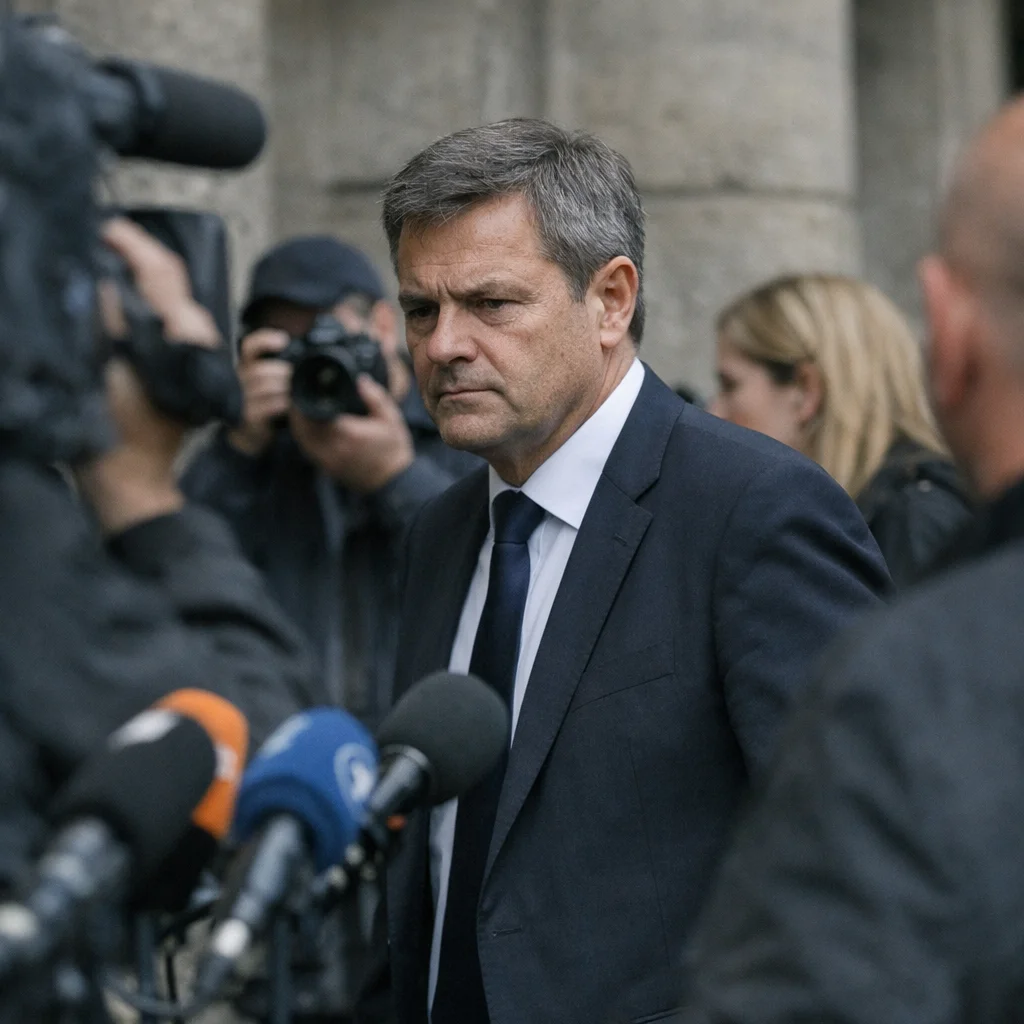
Andreas Scheuer appeared in a Berlin courtroom this week to answer the question that has followed the failed toll project like a cheap cologne: did he lie, or did he keep trying to ram a bad fit through the country until everyone else had to pay for the bruising? The former transport minister arrived in a dark suit with the expression of a man who thinks accountability is for clerks, not for men who sign things and then insist the world should absorb the shock.
The case, centered on the wreckage of the Pkw-Maut, opened with the familiar German ritual of officials pretending a bad idea only became fatal after it had already been forced in all the way. Prosecutors say Scheuer pushed ahead despite clear warnings that the project could collapse in court and cost taxpayers millions. The defense, naturally, is trying to rebrand the whole thing as an administrative misunderstanding, which is the political equivalent of calling a torn lining a “coordination issue” after the room has gone quiet.
Inside the courtroom, the language stayed bloodless and the damage did not. Each witness statement peeled back another layer of the old transport-ministry choreography: the firm jaw, the patriotic slogan, the little smirk of a man who treats resistance as proof that he is doing something vigorous. One prosecutor described the toll push as a decision made “against substantial legal concerns.” That is the polite version. The less polite version is that Scheuer kept trying to force a broken project into the national machinery and then acted insulted when the machinery seized up and everybody else had to hear the grinding.
Former officials who were around the project’s early stages said privately, and in one case on condition of anonymity because he still has a public office and would like to keep it, that the pressure to keep the toll alive came from above and arrived wrapped in the usual macho varnish of certainty. Nobody wanted to be the person who said stop, one source said, because stopping would have sounded weak. In Berlin, weakness is the one sin never forgiven unless it is attached to a ministerial pension.
That is the disease. In politics, especially the kind that dresses itself up as competence, the lie is often less important than the insistence. The project does not need to make sense; it only needs to be driven harder, as if the state were a body that would eventually give in if you kept pushing with enough confidence and a clipboard. Scheuer’s defenders call him energetic. His critics call him reckless. Both descriptions are far too gentle for a man whose style of governance looked less like transport policy than a public demonstration of how long one official can keep pressing before the rest of the country starts bleeding money.
The court is expected to hear more testimony in the coming weeks, with damages and responsibility still unresolved. The public, meanwhile, is left with the same rotten aftertaste: a toll that never fully arrived, and a political class that keeps demanding a wider opening, then acting shocked when the country remembers it was never asked for consent.